Loading product…
Loading product…
Need Help?
+91 98967 93832The Base Service Unit, is common for Heat Exchangers type "TI" and can work with one or several exchangers.
(for main items)
Complete Technical Specifications (for main items)
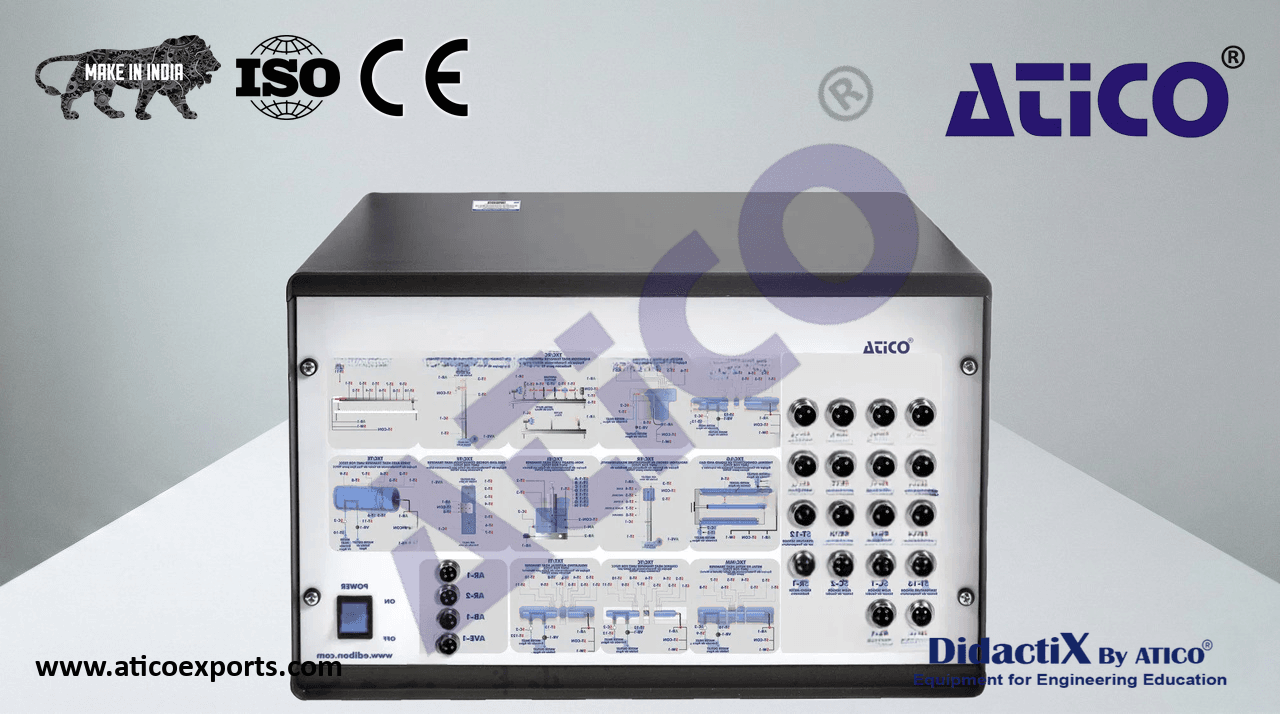
TICC/CIB. Control Interface Box:
This control interface is common for the required elements (at least one) (Not included).
Control interface box with process diagram in the front panel and with the same distribution that
the different elements located in the unit, for an easy understanding by the student.
All sensors, with their respective signals, are properly manipulated from -10V. to +10V. computer
output.
Sensors connectors in the interface have different pines numbers (from 2 to 16), to avoid
connection errors.
Single cable between the control interface box and computer.
The unit control elements are permanently computer controlled, without necessity of
changes or connections during the whole process test procedure.
Simultaneous visualization in the computer of all parameters involved in the process.
Calibration of all sensors involved in the process.
Real time curves representation about system responses.
Storage of all the process data and results in a file.
Graphic representation, in real time, of all the process/system responses.
All the actuators’ values can be changed at any time from the keyboard allowing the
analysis about curves and responses of the whole process.
All the actuators and sensors values and their responses are displayed on only one screen in the
computer. TICC/CIB
Shield and filtered signals to avoid external interferences.
Real time PID control with flexibility of modifications from the computer keyboard of the PID
parameters, at any moment during the process.
Real time PID and on/off control for pumps, compressors, heating elements, control valves, etc.
Real time PID control for parameters involved in the process simultaneously.
Proportional control, integral control and derivative control, based on the real PID mathematical
formula, by changing the values, at any time, of the three control constants (proportional, integral
and derivative constants).
Open control allowing modifications, at any moment and in real time, of parameters involved in the
process simultaneously.
Possibility of automatization of the actuators involved in the process.
Three safety levels, one mechanical in the unit, another electronic in the control interface and
the third one in the control software.
3 DAB. Data Acquisition Board:
Common for the required elements (at least one) (Not included).
PCI Express Data acquisition board (National Instruments) to be placed in a computer slot. Bus
PCI Express.
Analog input:
Number of channels= 16 single-ended or 8 differential. Resolution=16 bits, 1 in 65536.
Sampling rate up to: 250 KS/s (kilo samples per second).
Input range (V)=±10 V. Data transfers=DMA, interrupts, programmed I/0. DMA channels=6.
Analog output:
Number of channels=2. Resolution=16 bits, 1 in 65536.
Maximum output rate up to: 900 KS/s. DAB
Output range (V)=±10 V. Data transfers=DMA, interrupts, programmed I/0.
Digital Input/Output:
Number of channels=24 inputs/outputs. D0 or DI Sample Clock frequency: 0 to 100 MHz.
Timing: Number of Counter/timers=4. Resolution: Counter/timers: 32 bits.
The Data Acquisition board model may change at any moment, providing the same or better
features than those required for the unit.
4 Cables and Accessories, for normal operation.
5 Manuals:
This unit is supplied with 8 manuals: Required Services, Assembly and Installation, Interface and
Control Software, Starting-up, Safety, Maintenance, Calibration & Practices manuals.
9
Required elements (at least one) (Not included):
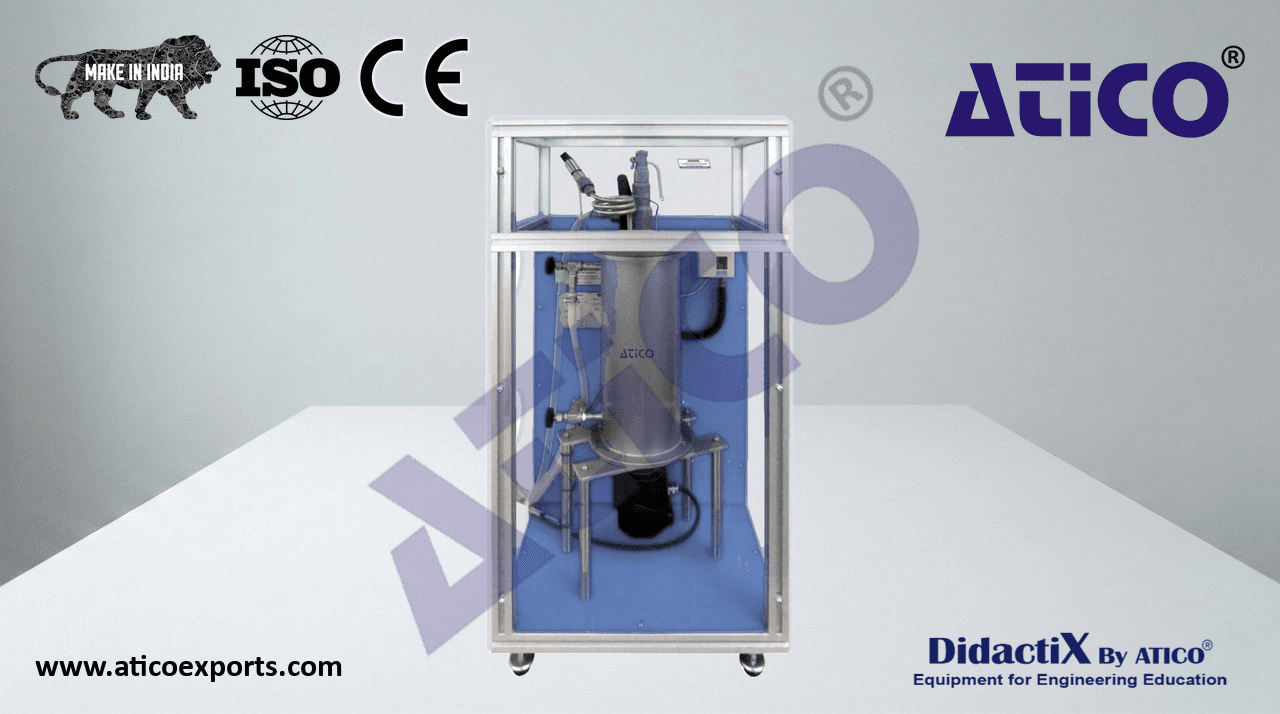
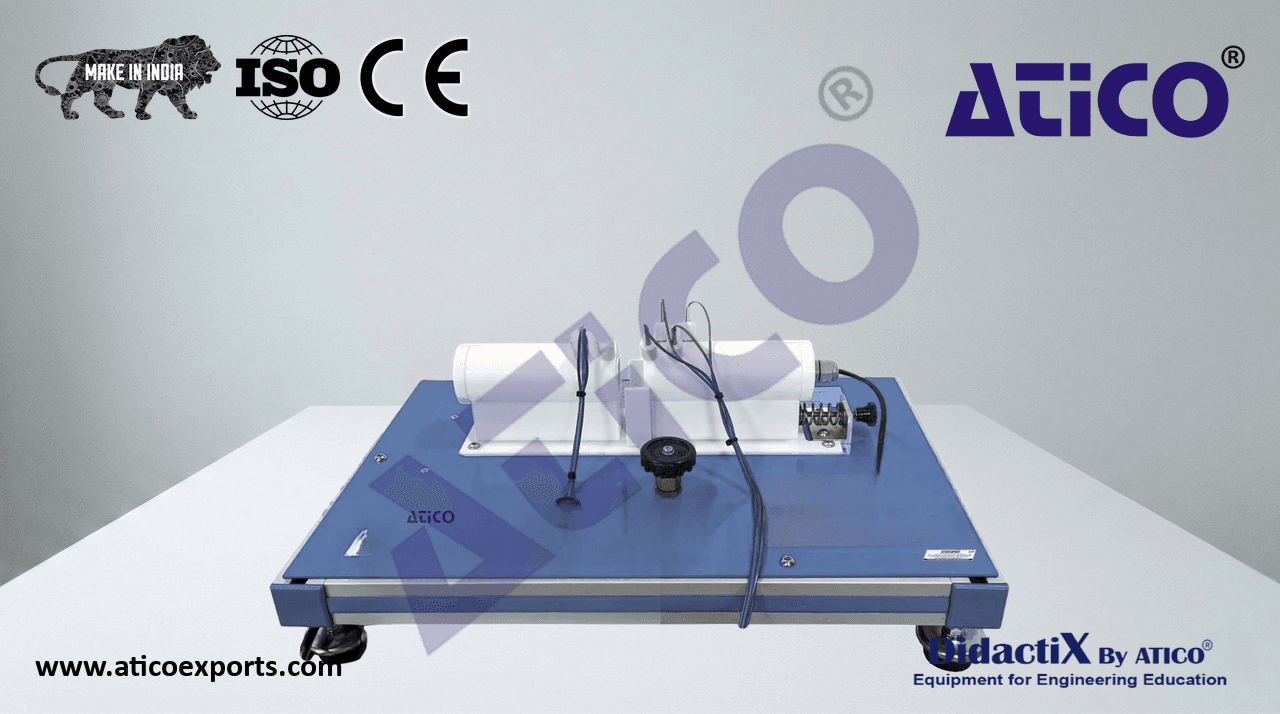
ATENG 12862. Extended Concentric Tube Heat Exchanger for ATENG 12857
Bench-top unit.
Anodized aluminum frame and panels made of painted steel.
Main metallic elements made of stainless steel.
Diagram in the front panel with distribution of the elements similar to the real one.
This Extended Concentric Tube Heat Exchanger for ATENG 12857 allows the study of
heat transfer between hot water flowing through an internal tube and cold water
flowing in the ring area lying between the internal and the external tubes.
This exchanger allows measuring hot and cold water temperatures at different
points of the exchanger.
“ATENG 12862” is a more sophisticated unit than “ATENG 12860”, with four longer tube sections,
giving four times the overall heat transfer area and three interim temperature
measurement points (temperature sensors) in each fluid stream.
This exchanger has sufficient heat transfer area for demonstrating the typical
counter-current flow conditions where the outlet of the heated stream is hotter
than the outlet of the cooled stream. ATENG 12862
The exchanger is formed by two concentric copper tubes with hot water
circulating through the interior tube and cold water circulating in the ring space.
This exchanger has four equal sections of 1000 mm each one, where heat
transfer takes place.
Exchange length: L=4x1=4 m.
Internal tube:
Internal diameter: D = 16 • 10-3 m.
int
External diameter: D = 18 • 10-3 m.
ext
Thickness = 10-3 m.
Heat transfer internal area: A = 0.0503 m².
h
Heat transfer external area: A = 0.0565 m².
c
External tube:
Internal diameter: D = 26 • 10-3 m.
int
External diameter: D = 28 • 10-3 m.
ext
Thickness = 10-3 m.
Ten temperature sensors (”J” type):
Five temperature sensors for measuring cold water temperature:
Cold water inlet.
Cold water at different interim positions (3).
Cold water outlet.
Five temperature sensors for measuring hot water temperature:
Hot water inlet.
Hot water at different interim positions (3).
Hot water outlet.
Easy connection to the Base Service Unit, “ATENG 12859”.
This unit is supplied with 8 manuals: Required Services, Assembly and
Installation, Interface and Control Software, Starting-up, Safety, Maintenance,
Calibration & Practices Manuals.
( )TITCA/CCSOF. PID Computer Control + Data Acquisition + Data
Management Software:
The three softwares are part of the SCADA system.
Compatible with actual Windows operating systems. Graphic and intuitive
simulation of the process in screen. Compatible with the industry
standards.
Registration and visualization of all process variables in an automatic and
simultaneous way.
Flexible, open and multicontrol software, developed with actual
windows graphic systems, acting simultaneously on all process parameters.
Analog and digital PID control.
PID menu and set point selection required in the whole work range.
Management, processing, comparison and storage of data.
Sampling velocity up to 250 KS/s (kilo samples per second).
Calibration system for the sensors involved in the process.
It allows the registration of the alarms state and the graphic
representation in real time.
Comparative analysis of the obtained data, after the process and
modification of the conditions during the process.
Open software, allowing the teacher to modify texts, instructions.
Teacher’s and student’s passwords to facilitate the teacher’s control on
the student, and allowing the access to different work levels.
This unit allows the 30 students of the classroom to visualize
simultaneously all the results and the manipulation of the unit,
during the process, by using a projector or an electronic whiteboard.
11
Required elements (at least one) (Not included):
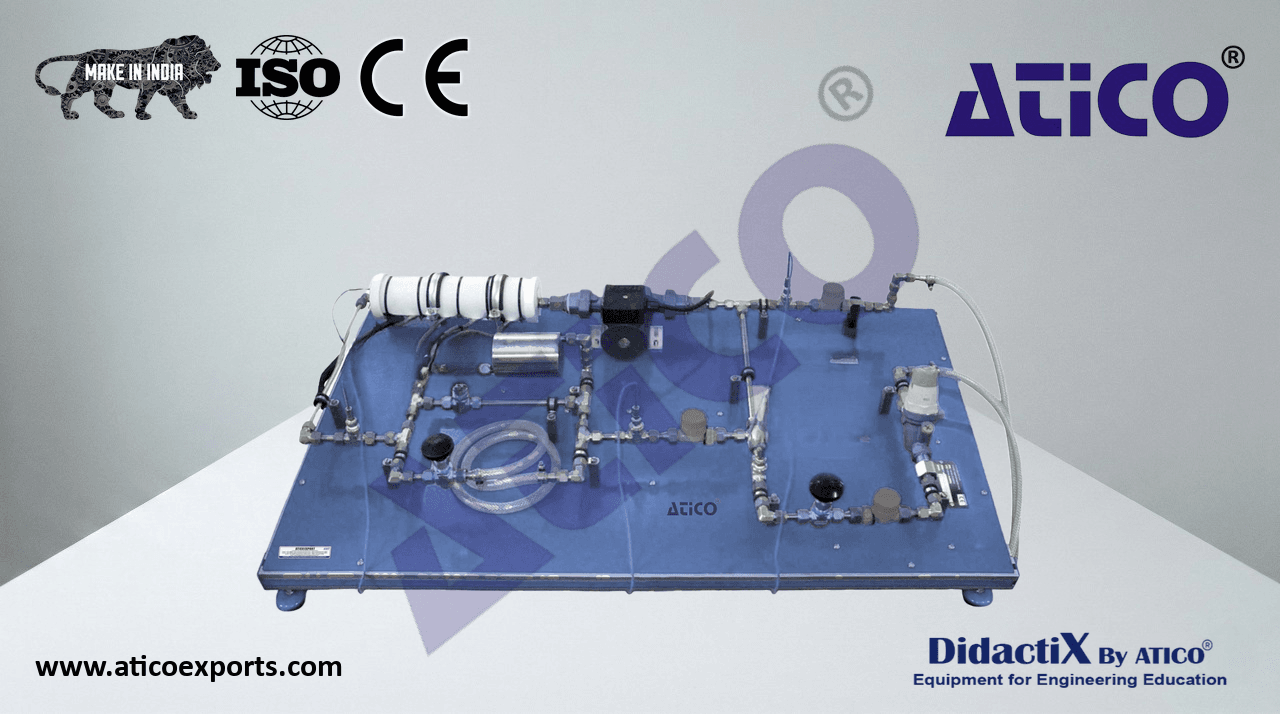
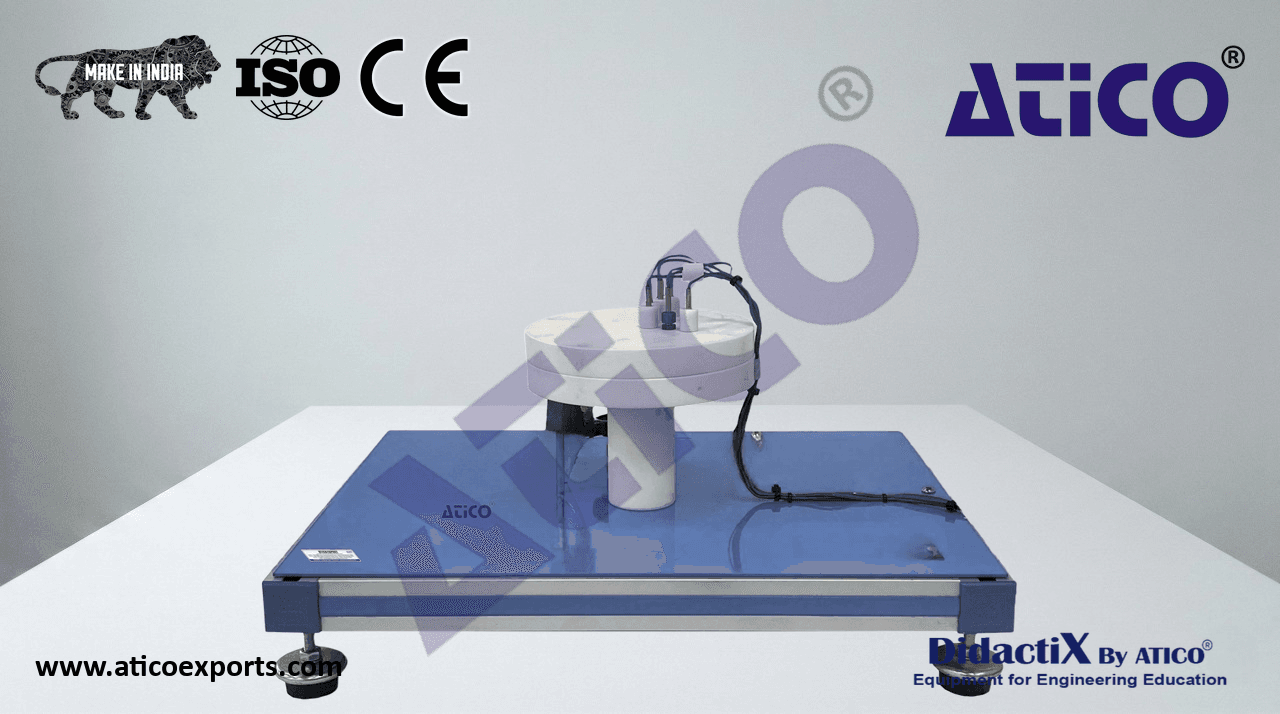
ATENG 12863. Plate Heat Exchanger for ATENG 12857
Bench-top unit.
Anodized aluminum frame and panels made of painted steel.
Main metallic elements made of stainless steel.
Diagram in the front panel with distribution of the elements similar to the real one.
This Plate Heat Exchanger for ATENG 12857 allows the study of heat transfer between
hot and cold water through alternate channels formed between parallel plates.
The exchanger allows measuring cold and hot temperatures at the inlet and
outlet of the exchanger.
Formed by corrugated stainless steel plates. It can be dismantled to observe its
structure.
Four ports or connections of hot and cold water input and output.
Maximum flow: 12 m³/h.
Maximum work pressure: 10 bar.
Maximum work temperature: 100 °C. ATENG 12863
Minimum work temperature: 0 °C.
Maximum number of plates: 20.
Internal circuit capacity: 0.176 l.
External circuit capacity: 0.22 l.
Area: 0.32 m².
Four temperature sensors (“J” type):
Two temperature sensors for measuring cold water temperature (inlet and
outlet).
Two temperature sensors for measuring hot water temperature (inlet and
outlet).
Easy connection to the Base Service Unit, “ATENG 12859”.
This unit is supplied with 8 manuals: Required Services, Assembly and
Installation, Interface and Control Software, Starting-up, Safety, Maintenance,
Calibration & Practices Manuals.
( )TIPL/CCSOF. PID Computer Control + Data Acquisition + Data
Management Software:
The three softwares are part of the SCADA system.
Compatible with actual Windows operating systems.
Graphic and intuitive simulation of the process in screen.
Compatible with the industry standards.
Registration and visualization of all process variables in an automatic and
simultaneous way.
Flexible, open and multicontrol software, developed with actual
windows graphic systems, acting simultaneously on all process parameters.
Analog and digital PID control.
PID menu and set point selection required in the whole work range.
Management, processing, comparison and storage of data.
Sampling velocity up to 250 KS/s (kilo samples per second).
Calibration system for the sensors involved in the process.
It allows the registration of the alarms state and the graphic
representation in real time.
Comparative analysis of the obtained data, after the process and
modification of the conditions during the process.
Open software, allowing the teacher to modify texts, instructions.
Teacher’s and student’s passwords to facilitate the teacher’s control on
the student, and allowing the access to different work levels.
This unit allows the 30 students of the classroom to visualize
simultaneously all the results and the manipulation of the unit,
during the process, by using a projector or an electronic whiteboard.
12
Required elements (at least one) (Not included):
ATENG 12865. Extended Plate Heat Exchanger for ATENG 12857
Bench-top unit.
Anodized aluminum frame and panels made of painted steel.
Main metallic elements made of stainless steel.
Diagram in the front panel with distribution of the elements similar to the real one.
This Extended Plate Heat Exchanger for ATENG 12857 allows the study of heat transfer
between hot and cold water through alternate channels formed between
parallel plates.
The exchanger allows measuring cold and hot temperatures at different points
of the exchanger.
Formed by corrugated stainless steel plates. It can be dismantled to observe its
structure.
Four ports or connections of hot and cold water input and output.
Maximum flow: 12 m³/h.
Maximum work pressure: 10 bar.
Maximum work temperature: 100 °C.
Minimum work temperature: 0 °C.
Maximum number of plates: 20.
Internal circuit capacity: 0.176 l.
External circuit capacity: 0.22 l. ATENG 12865
Area: 0.32 m².
Ten temperature sensors (”J” type):
Five temperature sensors for measuring cold water temperature (inlet, outlet
and interim positions).
Five temperature sensors for measuring hot water temperature (inlet, outlet
and interim positions).
Easy connection to the Base Service Unit, “ATENG 12859”.
This unit is supplied with 8 manuals: Required Services, Assembly and
Installation, Interface and Control Software, Starting-up, Safety, Maintenance,
Calibration & Practices Manuals.
( )TIPLA/CCSOF. PID Computer Control + Data Acquisition + Data
Management Software:
The three softwares are part of the SCADA system.
Compatible with actual Windows operating systems.
Graphic and intuitive simulation of the process in screen.
Compatible with the industry standards.
Registration and visualization of all process variables in an automatic and
simultaneous way.
Flexible, open and multicontrol software, developed with actual
windows graphic systems, acting simultaneously on all process parameters.
Analog and digital PID control.
PID menu and set point selection required in the whole work range.
Management, processing, comparison and storage of data.
Sampling velocity up to 250 KS/s (kilo samples per second).
Calibration system for the sensors involved in the process.
It allows the registration of the alarms state and the graphic
representation in real time.
Comparative analysis of the obtained data, after the process and
modification of the conditions during the process.
Open software, allowing the teacher to modify texts, instructions.
Teacher’s and student’s passwords to facilitate the teacher’s control on
the student, and allowing the access to different work levels.
This unit allows the 30 students of the classroom to visualize
simultaneously all the results and the manipulation of the unit,
during the process, by using a projector or an electronic whiteboard.
13
Required elements (at least one) (Not included):
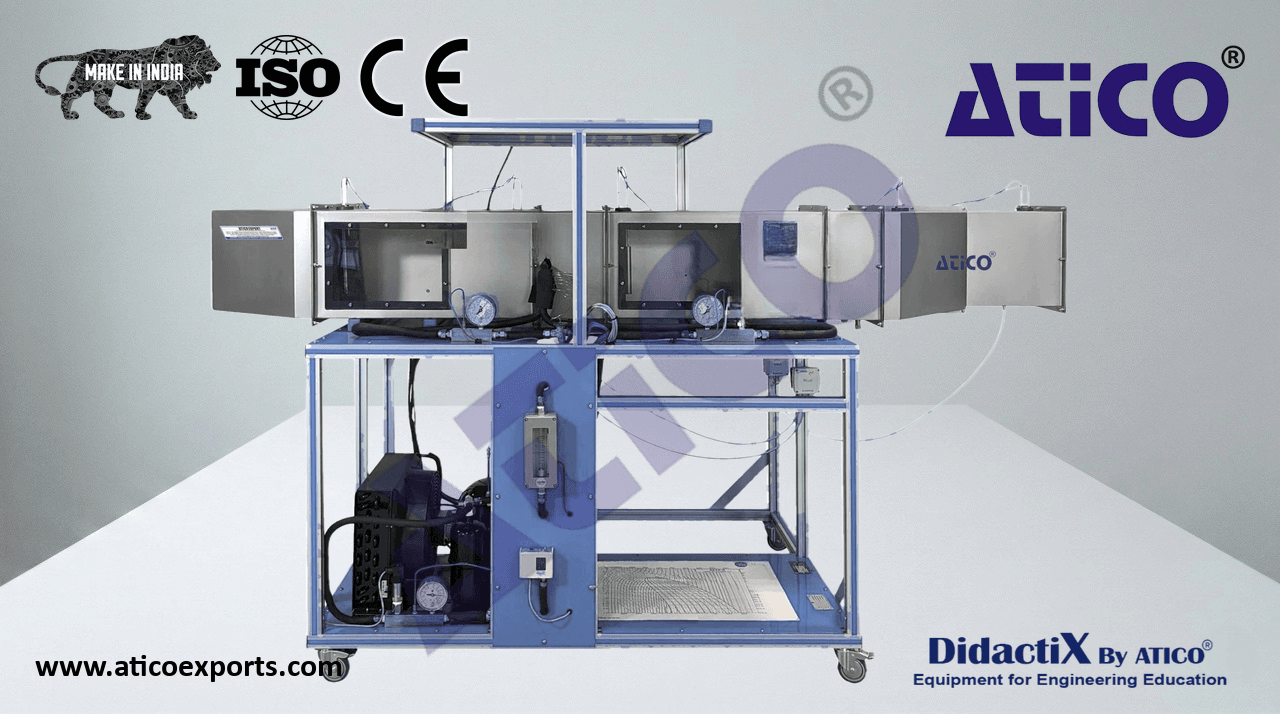
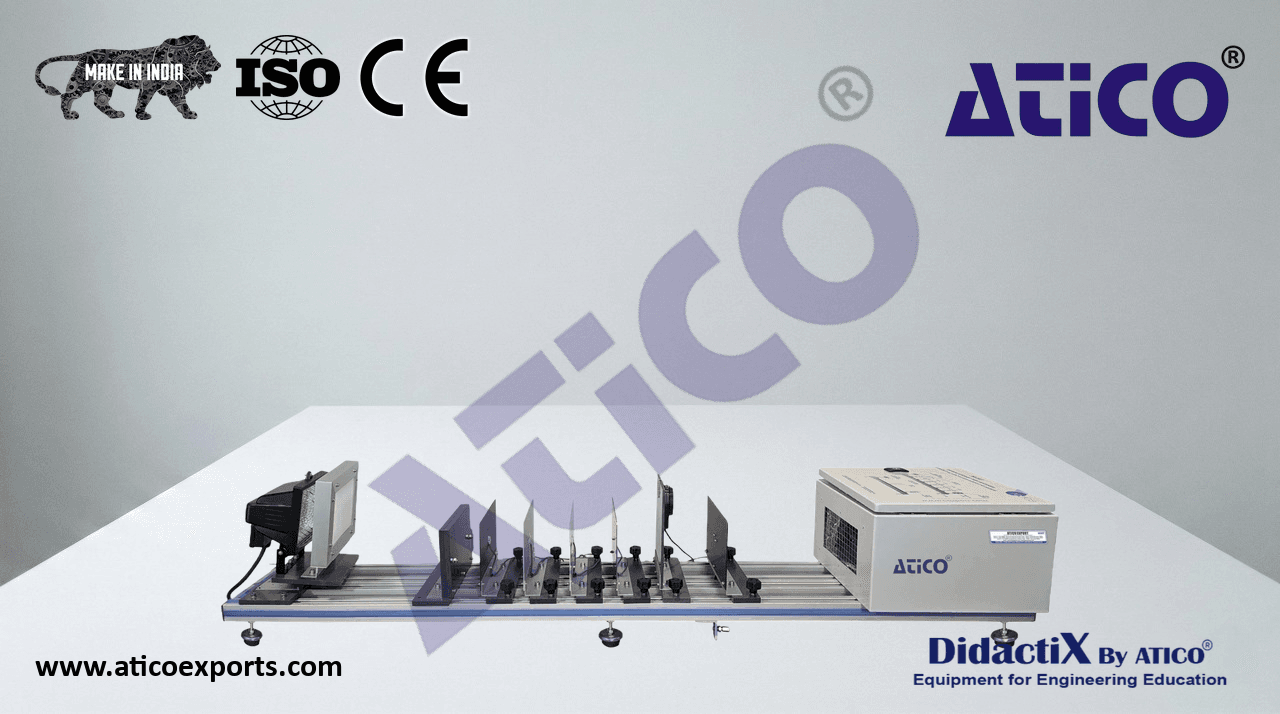
ATENG 12872. Cross Flow Heat Exchanger for ATENG 12857
Bench-top unit.
Anodized aluminum frame and panels made of painted steel.
Main metallic elements made of stainless steel.
Diagram in the front panel with distribution of the elements similar to the real one.
The Cross Flow Heat Exchanger for ATENG 12857 is designed to study heat transfer
between two fluids in cross flow configuration.
Hot water flow coming from the base unit enters and leaves a radiator
perpendicular to an air current, which is generated by a fan.
The heat exchanger allows to measure water and air temperatures at the inlet
and outlet of the exchanger.
Poly methyl methacrylate (PMMA) rectangular duct of 800 x 200 x 200 mm.
Radiator located across the air duct.
The fins of the radiator are made of aluminum and have a heat transfer area
of 35000 mm².
Axial fan with speed control from computer (PC). It provides a maximum air
velocity of 3 m/s.
Four “J” type temperature sensors to measure input and output water and air
ATENG 12872
temperatures.