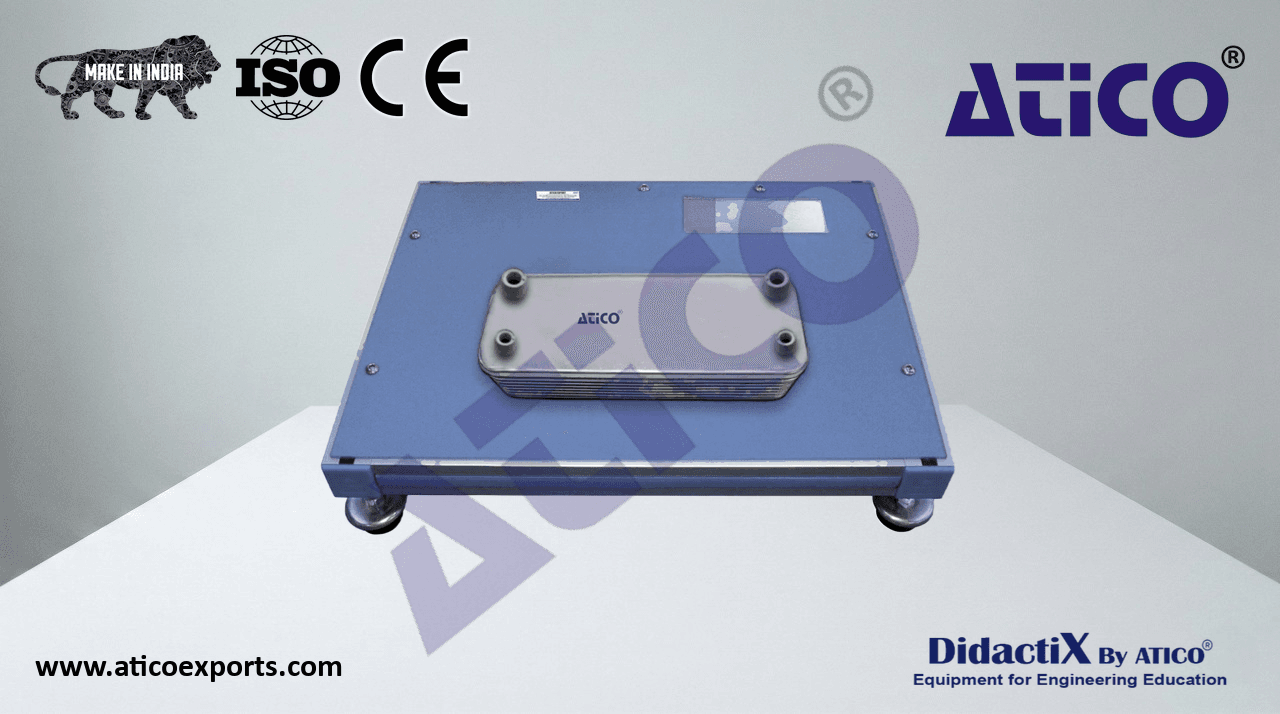
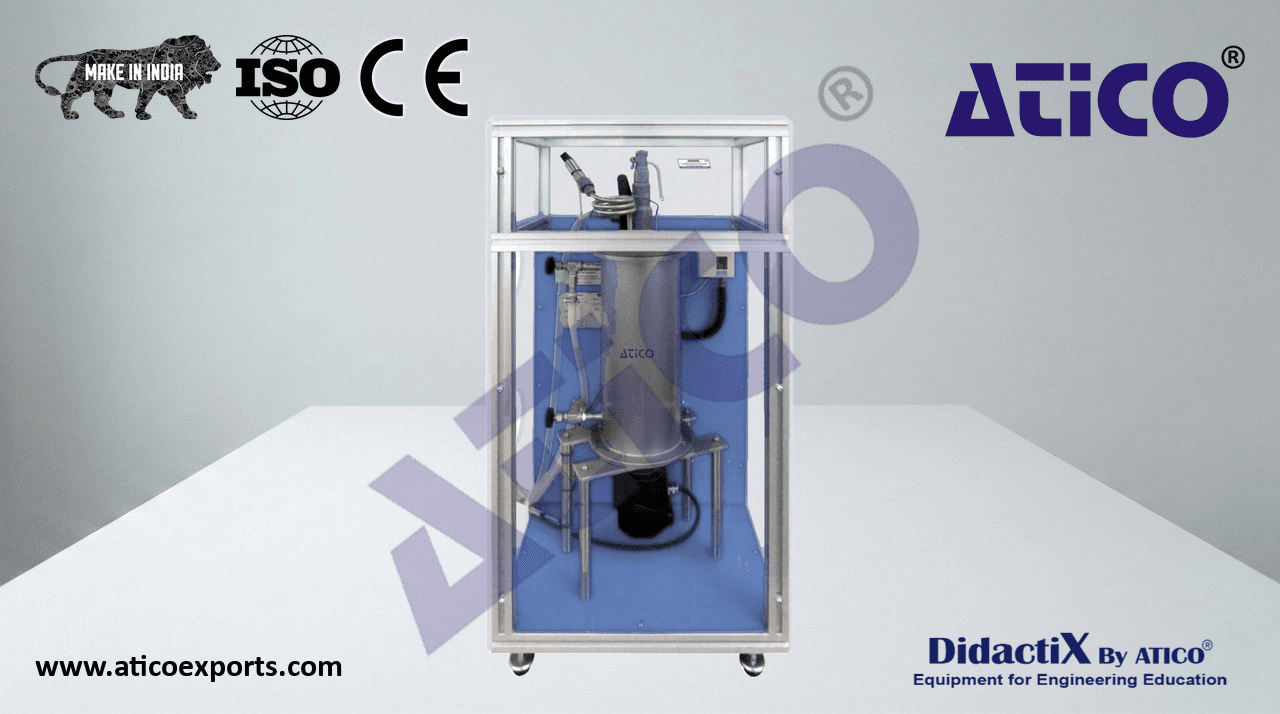
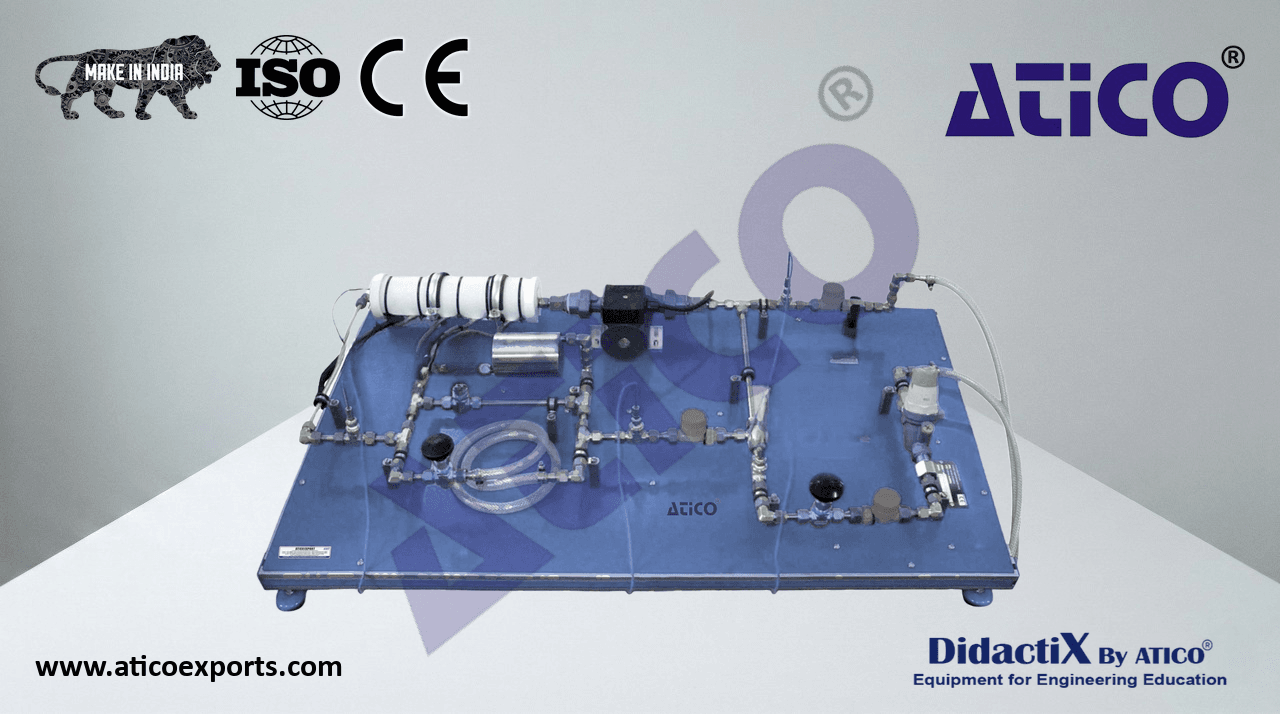
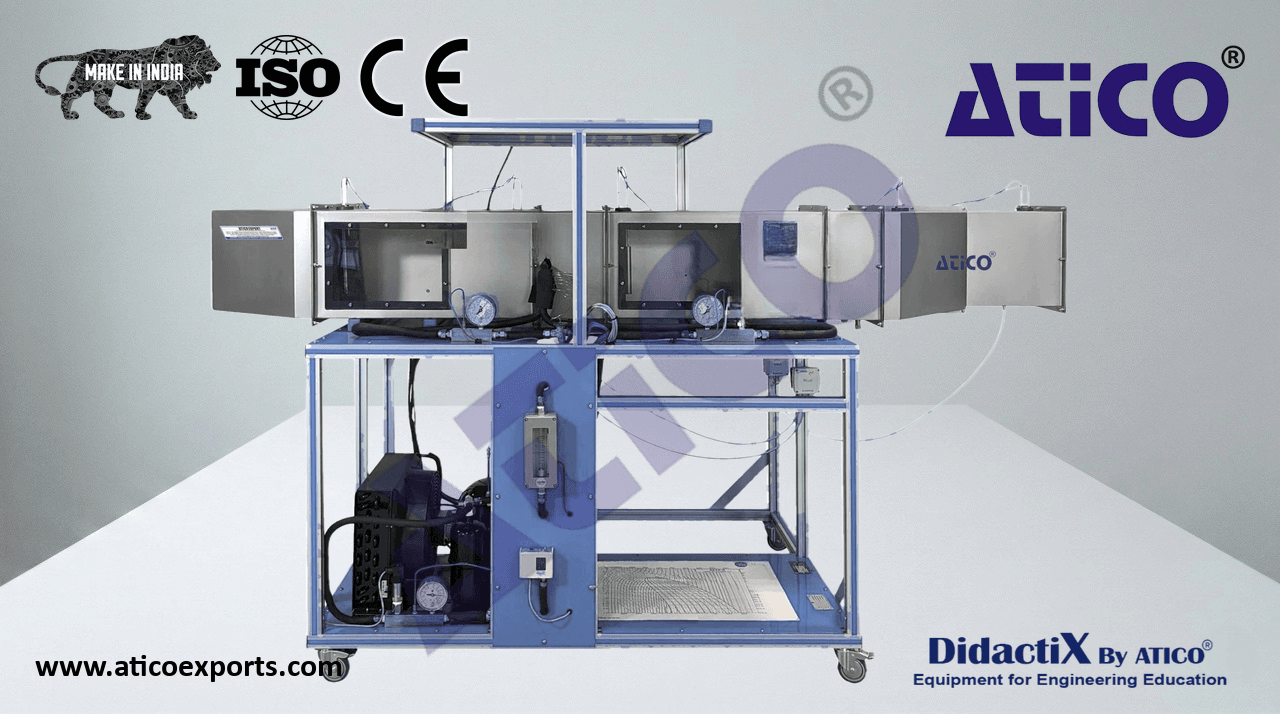
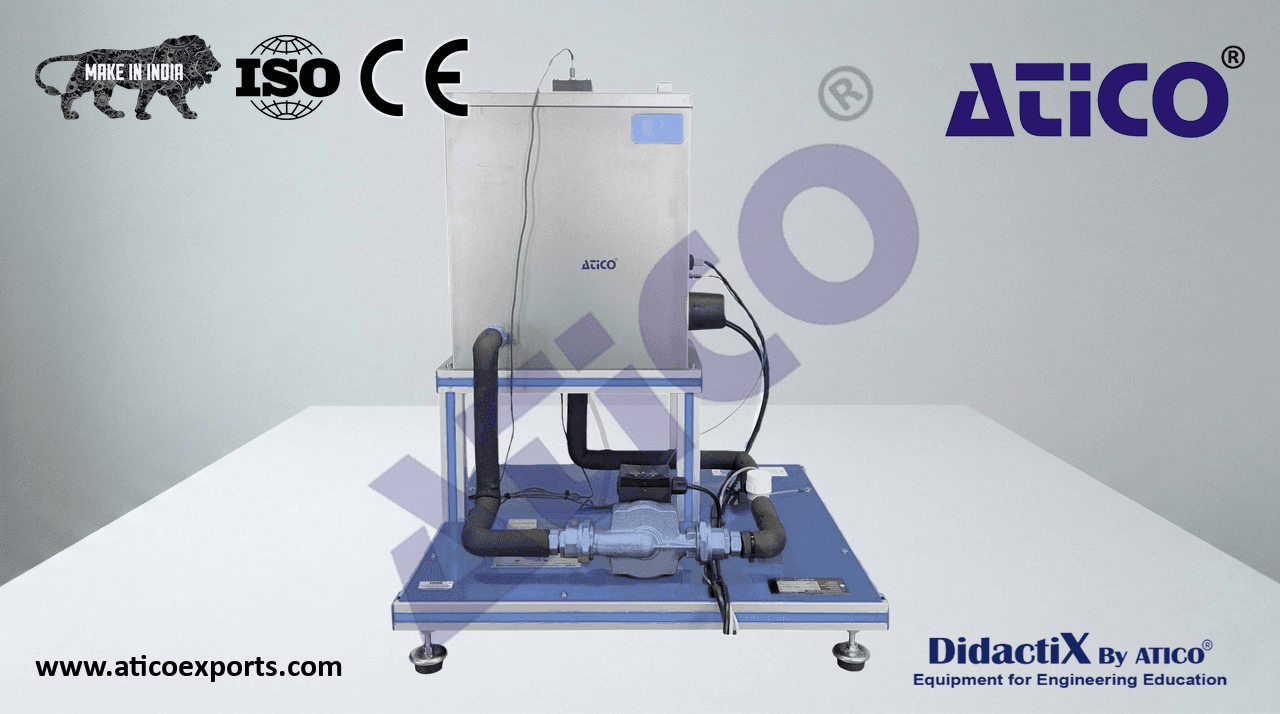
With this unit there are several options and possibilities:
Main items: 1, 2, 3, 4 and 5.
Optional items: 6, 7, 8, 9 and 10.
Let us describe first the main items (1 to 5):
1 ATENG 12892. Basic Service Base Unit:
Bench-top unit.
Anodized aluminum frame and panels made of painted steel.
Main metallic elements made of stainless steel.
Diagram in the front panel with distribution of the elements similar to the real one.
This unit is common for the required elements (at least one) (Not included).
Stainless steel tank (10 l), equipped with:
Computer controlled electric heating element (3000 W) with thermostat (70 ºC) to
heat water.
PID temperature control.
Temperature sensor (“J” type) to measure the water temperature.
Level switch to control the water level in the tank.
Stainless steel cover to avoid contact with hot water. The cover has a hole to visualize
the water level and to fill the tank.
Water drain valve.
Centrifugal pump with speed control from computer, range: 0 – 3 l/min.
Two flow sensors, one for hot water and the other for cold water, range: 0.25 – 6.5 l/min.
Two differential pressure sensors to measure the pressure drop in each exchanger.
Four “J” type temperature sensors to measure the inlet and outlet temperatures.
Control valves for cold and hot water.
ATENG 12892
Pressure regulator to prevent excess pressure in the exchangers, set to 0.6 bar.
Quick release fittings to connect the exchangers.
The complete unit includes as well:
Advanced Real-Time SCADA and PID Control.
Open Control + Multicontrol + Real-Time Control.
Specialized Control Software based on LabVIEW.
National Instruments Data Acquisition board (250 KS/s, kilo samples per second).
Calibration exercises, which are included, teach the user how to calibrate a sensor and the
importance of checking the accuracy of the sensors before taking measurements.
Projector and/or electronic whiteboard compatibility allows the unit to be explained and
demonstrated to an entire class at one time.
Capable of doing applied research, real industrial simulation, training courses, etc.
Remote operation and control by the user and remote control for technical support,
are always included.
Totally safe, utilizing 4 safety systems (Mechanical, Electrical, Electronic & Software).
Designed and manufactured under several quality standards.
Optional ICAI software to create, edit and carry out practical exercises, tests, exams,
calculations, etc. Apart from monitoring user's knowledge and progress reached.
This unit has been designed for future expansion and integration. A common expansion is
the Scada-Net (ESN) System which enables multiple students to simultaneously
operate many units in a network.