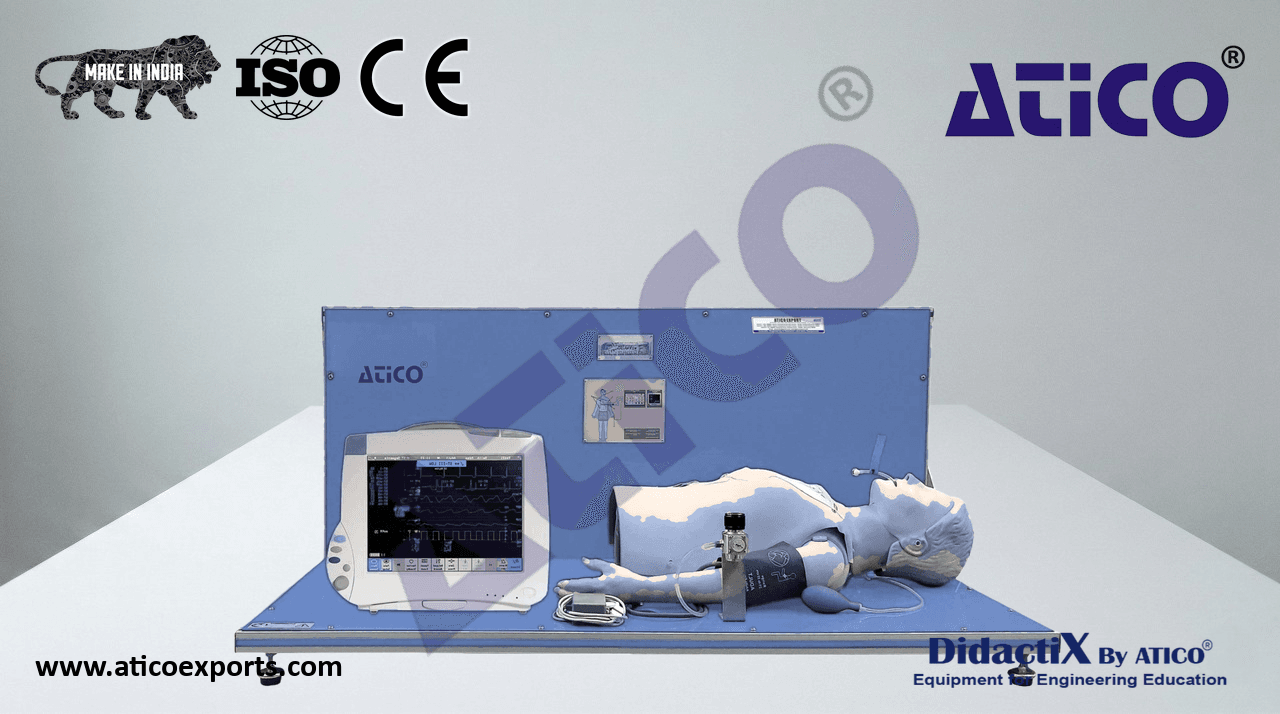
ATENG 10762 — Computer Controlled Biomedical Patient Biosignals Simulation Unit
(for main items)
- With this unit there are several options and possibilities:
- Main items: 1, 2, 3, 4, 5 and 6.
- Optional items: 7, 8 and 9.
- Let us describe first the main items (1 to 6):
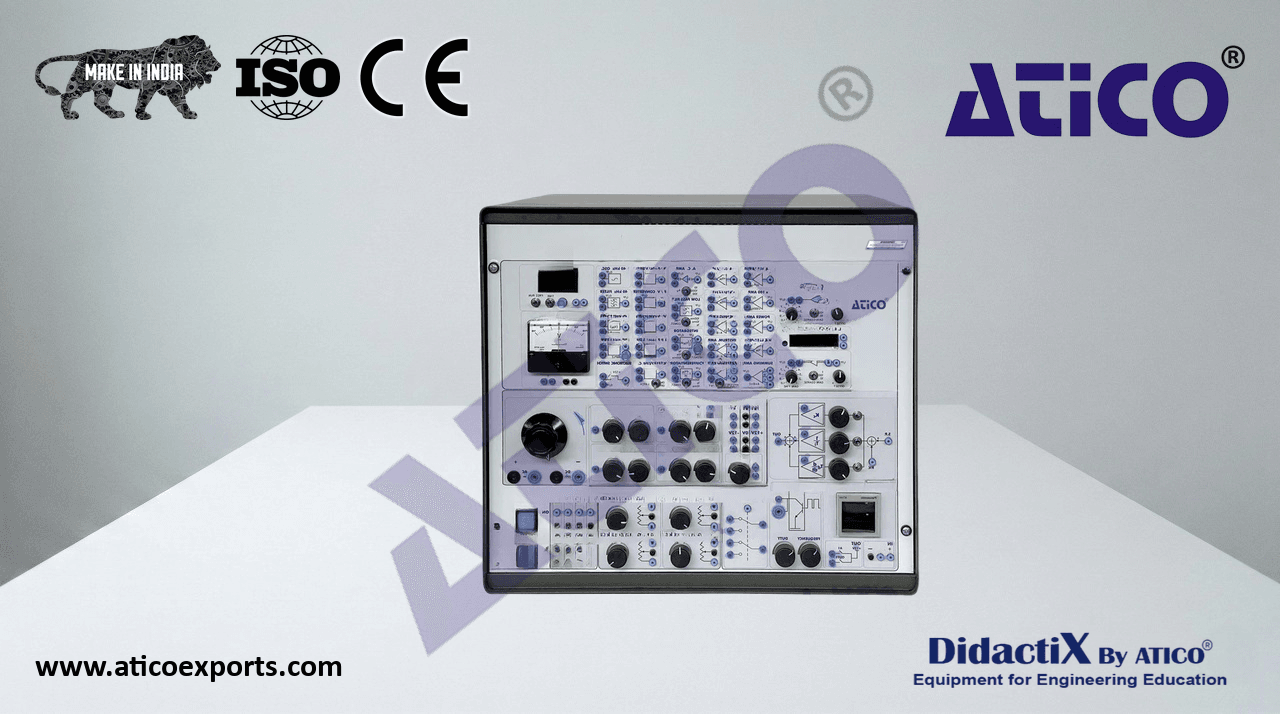
- 1BIPBSC. ATENG 10762 Unit Base:
Bench-top unit.
Anodized aluminum frame and panels made of painted steel.
Diagram in the front panel with distribution of the elements similar to the real one.
- This simulator is composed of:
- BIPBSC-UC. Control Unit for ATENG 10762.
Computer controlled biosignals simulator.
- The ATENG 10762 unit can simulate the following biosignals:
- Three-lead electrocardiogram (ECG):
Three-lead EGC output.
- Heart rate range: 30 – 145 bpm.
- Cardiovascular diseases: atrial fibrillation, atrial
flutter, asystole, first, second and third degree
atrioventricular block, right and left bundle
branch block, ectopic heartbeat, hyperkalemia,
- idioventricular rhythm, left ventricular hypertrophy, Unit: ATENG 10762
pacemakers, ST segment elevation, ischemia, torsades de pointes, ventricular fibrillation,
ventricular arrest and ventricular tachycardia.
- Temperature range: 25 – 43.5 °C.
- Oxygen saturation (SpO ):
- Pulxiometry sensor:
₂
- Red light wavelength: 658 – 664 nm.
- Infrared light wavelength: 897 – 915 nm.
- Capnography (etCO ):
- Proportional valve:
₂
- Power supply: 0 – 10 V.
- Maximum flow rate: 2.7 l/min.
- Working pressure: 50 psi.
- CO bottles:
- Amount of CO : 16 g.
₂
- Respiratory rate:
₂
- Respiratory rate range: 0 to 60 breaths per minute.
- Arterial blood pressure (ABP):
- Systolic pressure range: 90 – 180 mmHg.
- Diastolic pressure range: 50 – 100 mmHg.
- Servomotor:
- Supply voltage: 4.8 – 7.2 VDC.
- Velocity: 0.16s/60°.
- Angle of rotation: 180°.
- Pressure sensor:
- Maximum pressure: 5 ₃ psi.
- BIPBSC-PS. Patient Simulator.
Real size mannequin.
- Mannequin to perform a CPR maneuver:
Realistic chest rise and fall.
Positive pressure ventilation.
Possibility to perform the jaw-thrust and tilt-chin lift maneuvers releasing the airway occlusion.
Manual carotid pulses through a pulse bulb.
Three ECG electrodes located at the real position of the patient.
Latex free unit.
3
Complete Technical Specifications (for main items)
- Required elements of the “BIPBSC-UB” unit (Not included):
- BI-PM. Biosignals Patient Monitor.
- Input voltage (AC): 100 – 240 V, 50 Hz / 60 Hz.
12.1” TFT-LCD screen.
- ECG monitoring:
Three-lead ECG input.
- Selectable leads: I, II, III.
- Heart rate range: 15 – 300 ppm (adults) and 15 – 350 ppm (children and newborns). BI-PM
- Respiratory monitoring:
- Measuring method: thoracic impedance.
- Selectable leads: I, II.
- Respiratory impedance range: 0.5 – 3 Ω.
- Monitoring range: 0 – 120 rpm (adults) and 0 – 150 rpm (children and newborns).
- Resolution: 1 rpm.
- SpO monitoring:
- Monitoring parameters: SpO and pulse rate.
₂
- SpO range: 1 – 100 %.
₂
- Pulse rate range: 25 – 250 ppm.
₂
- Resolution: 1 %.
- Red light wavelength: 658 – 664 nm.
- Infrared light wavelength: 897 – 915 nm.
- NIBP monitoring:
- Measuring method: automatic oscillometric method.
- Working modes: manual, auto, STAT.
- Monitoring range:
- Systolic pressure: 41 – 270 mmHg (adults), 40 – 200 mmHg (children) and 40 – 135
mmHg (newborns).
- Average pressure: 20 – 230 mmHg (adults), 20 – 165 mmHg (children) and 20 – 110
mmHg (newborns).
- Diastolic pressure: 10 – 210 mmHg (adults), 10 – 150 mmHg (children) and 10 – 100
mmHg (newborns).
- Resolution: 1 mmHg.
- Temperature monitoring:
- Range: 0 – 50 °C.
- Measuring method: thermal resistance method.
- Resolution: 1 °C.
- CO monitoring:
- Type: lateral flow.
₂
- Measuring method: absorption of infrared radiation.
- Preheating time: 2 min.
- Range: 0 – 19.7 % (0 – 150 mmHg).
- Resolution: 0.1 mmHg (0 – 69 mmHg), 0.25 mmHg (70 – 150 mmHg).
- AEL-PC. Touch Screen and Computer.
- Touch screen:
- Energy efficiency class: A.
- Screen diagonal: 68.6 cm (27 inch (s)).
- Power consumption (operating): 26 W.
- Annual energy consumption: 38 kWh.
- Power consumption (standby / off): 0.49 W. AEL-PC
- Screen resolution: 1920 x 1080 pixels.
- Computer:
- Processor number: Intel Core i7-6600U processor (4M cache, up to 3.40 GHz).
- Cache: 4 MB Intel smart cache.
- Clock speed: 2.6 GHz.
-
Of cores / # of threads: 2/4.
- Maximum TDP / power: 15 W.
- Memory types: DDR4-2133, LPDDDR3-1866, DDR3L-1600.
- Graphics: Intel HD graphic 530.
Slot for PCI Express.
- All necessary cables to realize the practical exercises are included.
4
Complete Technical Specifications (for main items)
- The complete unit includes as well:
Advanced Real-Time SCADA.
Open Control + Multicontrol + Real-Time Control.
Specialized Control Software based on LabVIEW.
National Instruments Data Acquisition board (250 KS/s, kilo samples per second).
Calibration exercises, which are included, teach the user how to calibrate a sensor and the
importance of checking the accuracy of the sensors before taking measurements.
Projector and/or electronic whiteboard compatibility allows the unit to be explained and
demonstrated to an entire class at one time.
Capable of doing applied research, real industrial simulation, training courses, etc.
Remote operation and control by the user and remote control for technical support,
are always included.
Totally safe, utilizing 4 safety systems (Mechanical, Electrical, Electronic & Software).
Designed and manufactured under several quality standards.
Optional ICAI software to create, edit and carry out practical exercises, tests, exams,
calculations, etc. Apart from monitoring user's knowledge and progress reached.
This unit has been designed for future expansion and integration. A common expansion is
the Scada-Net (ESN) System which enables multiple students to simultaneously
operate many units in a network.
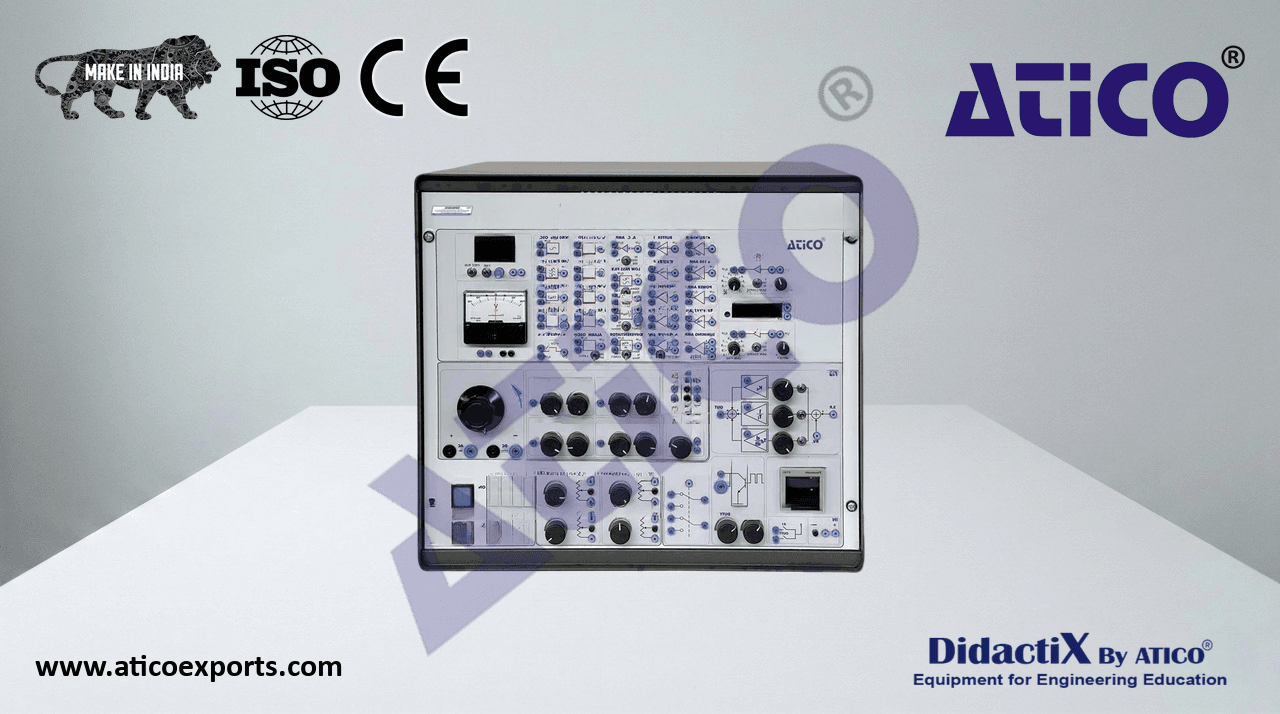
- BIPBSC/CIB. Control Interface Box:
The Control Interface Box is part of the SCADA system.
Control interface box with process diagram in the front panel and with the same distribution that
the different elements located in the unit, for an easy understanding by the student.
- All sensors, with their respective signals, are properly manipulated from -10V. to +10V. computer
output.
Sensors connectors in the interface have different pines numbers (from 2 to 16), to avoid
connection errors.
Single cable between the control interface box and computer.
The unit control elements are permanently computer controlled, without necessity of
changes or connections during the whole process test procedure.
Simultaneous visualization in the computer of all parameters involved in the process.
Calibration of all sensors involved in the process.
Real time curves representation about system responses.
Storage of all the process data and results in a file.
Graphic representation, in real time, of all the process/system responses.
All the actuators’ values can be changed at any time from the keyboard allowing the
analysis about curves and responses of the whole process.
BIPBSC/CIB
All the actuators and sensors values and their responses are displayed on only one screen in the computer.
Shield and filtered signals to avoid external interferences.
Real time computer control with flexibility of modifications from the computer keyboard of the
parameters, at any moment during the process.
Real time computer control for pumps, compressors, heating elements, control valves, etc.
Real time computer control for parameters involved in the process simultaneously.
Open control allowing modifications, at any moment and in real time, of parameters involved in the
process simultaneously.
Three safety levels, one mechanical in the unit, another electronic in the control interface and
the third one in the control software.
- 3 DAB. Data Acquisition Board:
The Data Acquisition board is part of the SCADA system.
PCI Express Data acquisition board (National Instruments) to be placed in a computer slot. Bus
PCI Express.
- Analog input:
Number of channels= 16 single-ended or 8 differential. Resolution=16 bits, 1 in 65536.
- Sampling rate up to: 250 KS/s (kilo samples per second).
- Input range (V)=±10 V. Data transfers=DMA, interrupts, programmed I/0. DMA channels=6.
- Analog output:
Number of channels=2. Resolution=16 bits, 1 in 65536. DAB
- Maximum output rate up to: 900 KS/s.
- Output range (V)=±10 V. Data transfers=DMA, interrupts, programmed I/0.
- Digital Input/Output:
- Number of channels=24 inputs/outputs. D0 or DI Sample Clock frequency: 0 to 100 MHz.
- Timing: Number of Counter/timers=4. Resolution: Counter/timers: 32 bits.
The Data Acquisition board model may change at any moment, providing the same or better
features than those required for the unit.
5
Complete Technical Specifications (for main items)
- 4 BIPBSC/CCSOF. Computer Control + Data Acquisition + Data Management Software:
The three softwares are part of the SCADA system.
Compatible with actual Windows operating systems. Graphic and intuitive simulation of the
process in screen. Compatible with the industry standards.
Registration and visualization of all process variables in an automatic and simultaneous way.
Flexible, open and multicontrol software, developed with actual windows graphic systems,
acting simultaneously on all process parameters.
Management, processing, comparison and storage of data.
Sampling velocity up to 250 KS/s (kilo samples per second).
Calibration system for the sensors involved in the process.
It allows the registration of the alarms state and the graphic representation in real time.
Comparative analysis of the obtained data, after the process and modification of the conditions
during the process.
BIPBSC/CCSOF
Open software, allowing the teacher to modify texts, instructions. Teacher’s and student’s
passwords to facilitate the teacher’s control on the student, and allowing the access to different work
levels.
This unit allows the 30 students of the classroom to visualize simultaneously all the results
and the manipulation of the unit, during the process, by using a projector or an electronic
whiteboard.
5 Cables and Accessories, for normal operation.
- 6Manuals:
- This unit is supplied with 8 manuals: Required services, Assembly and Installation, Interface and
Control software, Starting-up, Safety, Maintenance, Calibration & Practices manuals.
- References 1 to 6 are the main items: ATENG 10762 + BIPBSC/CIB + DAB + BIPBSC/CCSOF + Cables and Accessories + Manuals are
included in the minimum supply for enabling normal and full operation.
6