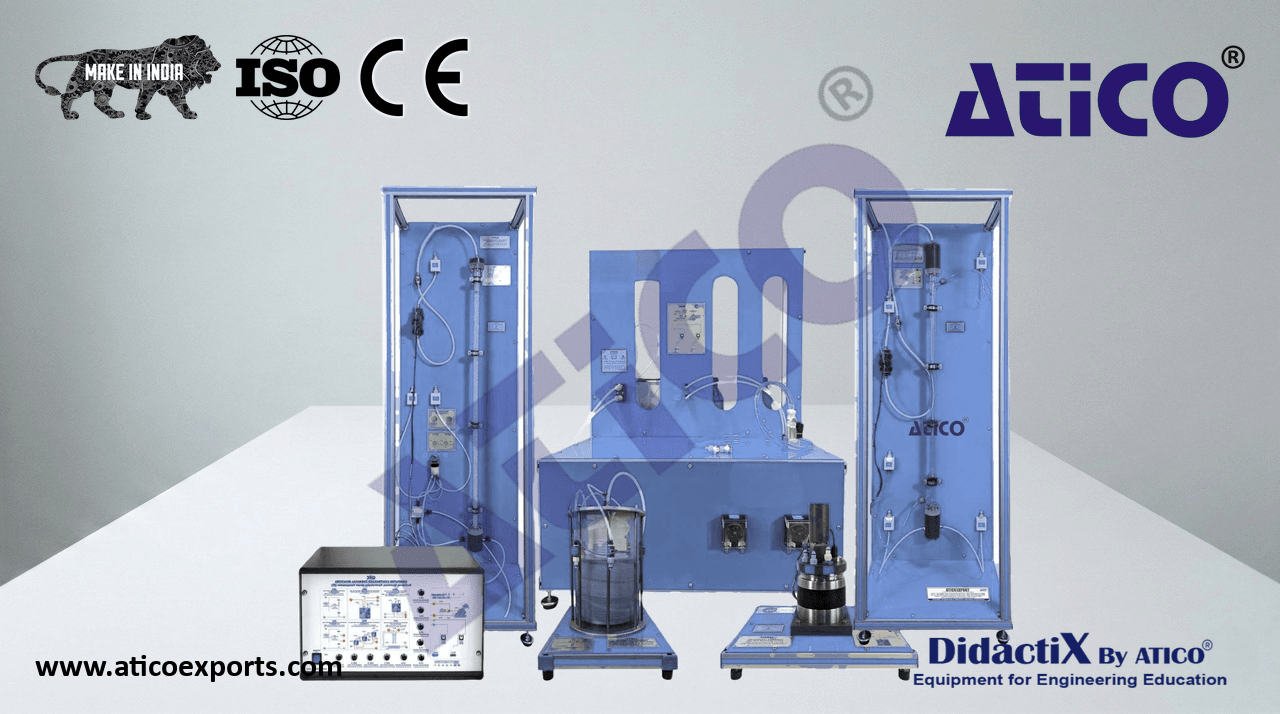
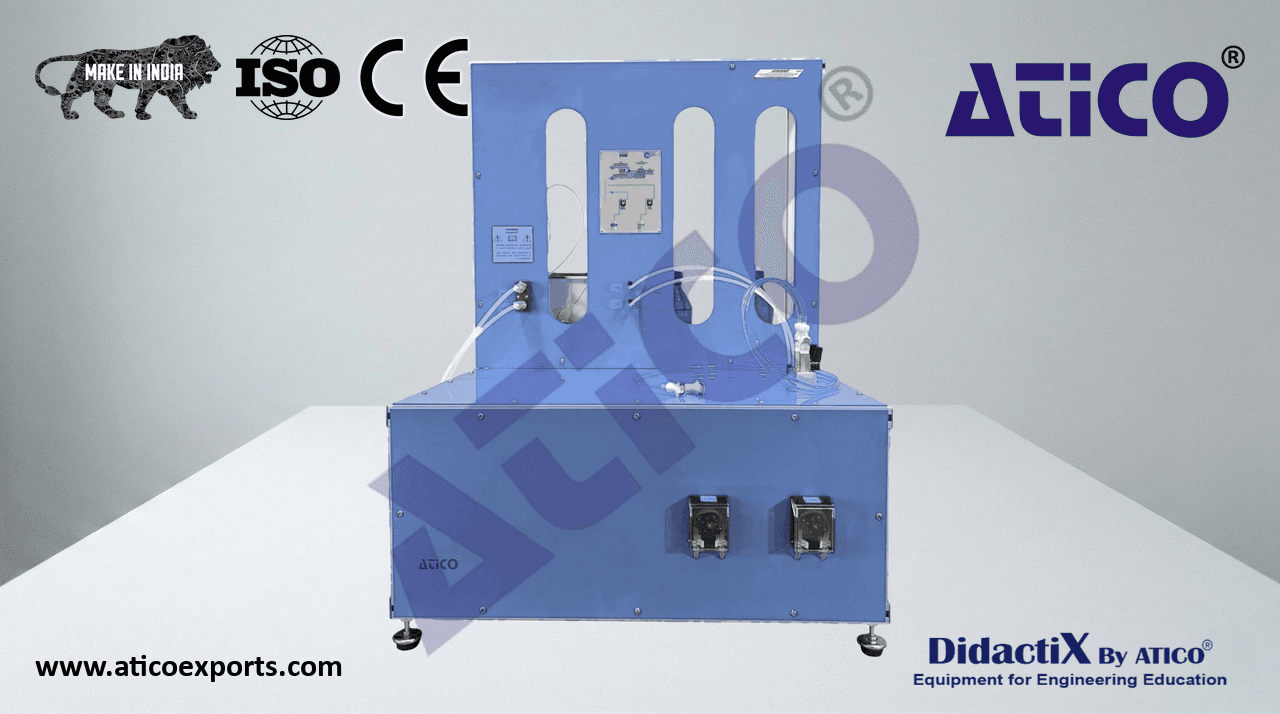
ATENG 10910 — Computer Controlled Chemical Reactors
(for main items)
- With this unit there are several options and possibilities:
- Main items: 1, 2, 3, 4 and 5.
- Optional items: 6, 7, 8, 9 and 10.
- Let us describe first the main items (1 to 5):
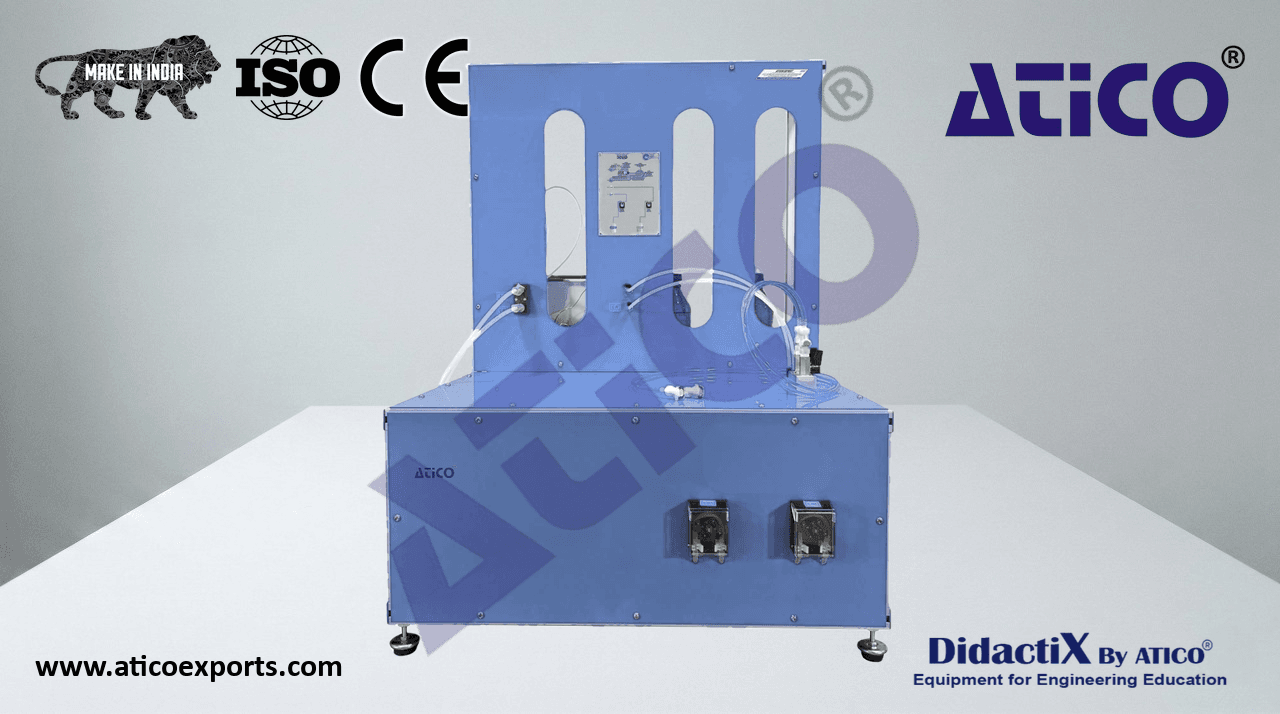
- 1 ATENG 10912. Base and Service Unit for ATENG 10910:
Bench-top unit.
Anodized aluminum frame and panels made of painted steel.
Main metallic elements made of stainless steel.
Diagram in the front panel with distribution of the elements similar to the real one.
This unit is common for the required elements (at least one) (Not included).
Accommodation and exchange system of the reactors, quick and easy to handle.
It supplies all the services for the operation of each reactor.
Safety, easy and quick connections.
All elements of this unit are chemically resistant.
- The “ATENG 10912” unit mainly consists of:
Two computer controlled peristaltic dosing pumps, with variable speed. Flow rate up ATENG 10912
to 3 l/h (unit standard disposition). With another disposition, they could reach a flow
rate up to 10 l/h.
- Computer controlled thermostatic bath, capacity: 6 l. Temperature PID control of the thermostatic
bath.
Pump of 3 l/min, to impel the thermostatization water from the bath to the reactor.
- Flow sensor, range: 0.25 – 6.5 l/min.
- Two tanks for the reagents, capacity: 1 l each one, made of Pyrex glass.
The control of the reaction is carried out by a conductivity sensor, which allows the reaction evolution
parameterization in real time.
Three “J” type temperature sensors, one to know the thermostatic bath temperature in a continuous
way and two sensors to know the water temperature of the thermostatic bath water inlet and outlet.
Quick connectors with shutoff valve that enable an easy coupling of the Service Unit to the chosen
reactor.
- The complete unit includes as well:
Advanced Real-Time SCADA and PID Control.
Open Control + Multicontrol + Real-Time Control.
Specialized Control Software based on LabVIEW.
National Instruments Data Acquisition board (250 KS/s, kilo samples per second).
Calibration exercises, which are included, teach the user how to calibrate a sensor and the
importance of checking the accuracy of the sensors before taking measurements.
Projector and/or electronic whiteboard compatibility allows the unit to be explained and
demonstrated to an entire class at one time.
Capable of doing applied research, real industrial simulation, training courses, etc.
Remote operation and control by the user and remote control for technical support,
are always included.
Totally safe, utilizing 4 safety systems (Mechanical, Electrical, Electronic & Software).
Designed and manufactured under several quality standards.
Optional ICAI software to create, edit and carry out practical exercises, tests, exams,
calculations, etc. Apart from monitoring user's knowledge and progress reached.
This unit has been designed for future expansion and integration. A common expansion is
the Scada-Net (ESN) System which enables multiple students to simultaneously
operate many units in a network.
- Required elements (at least one) (Not included):
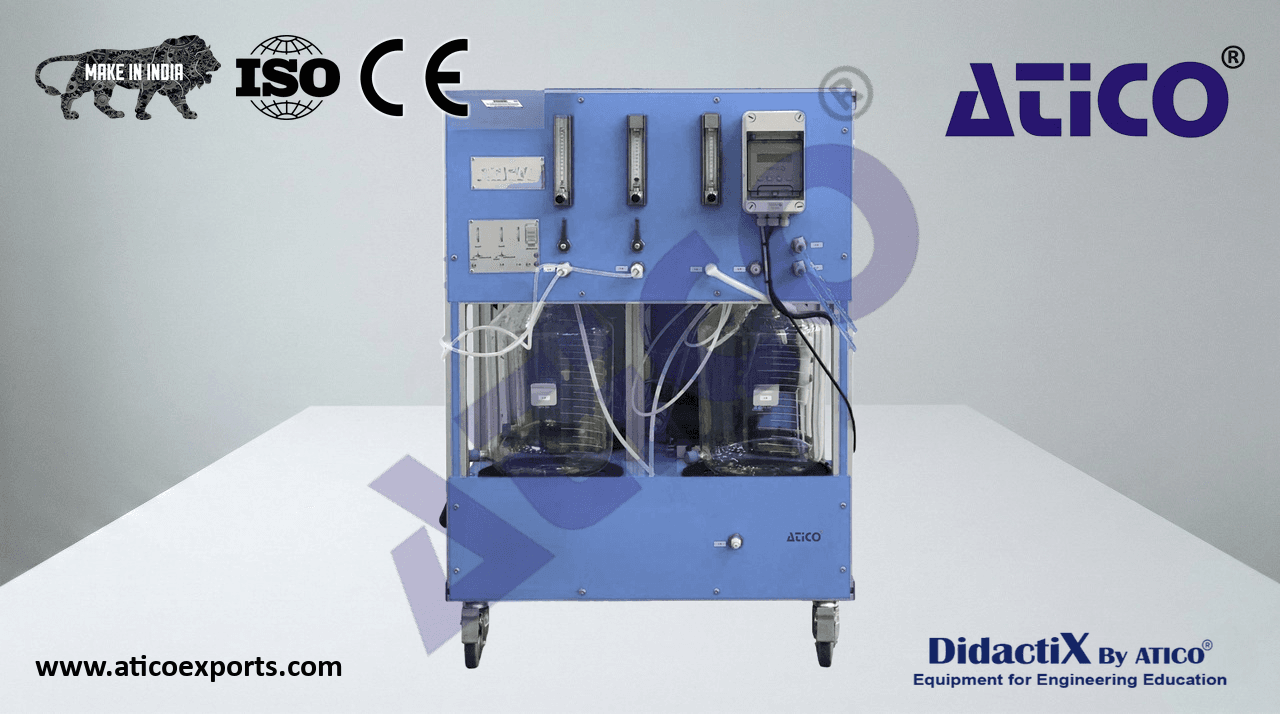
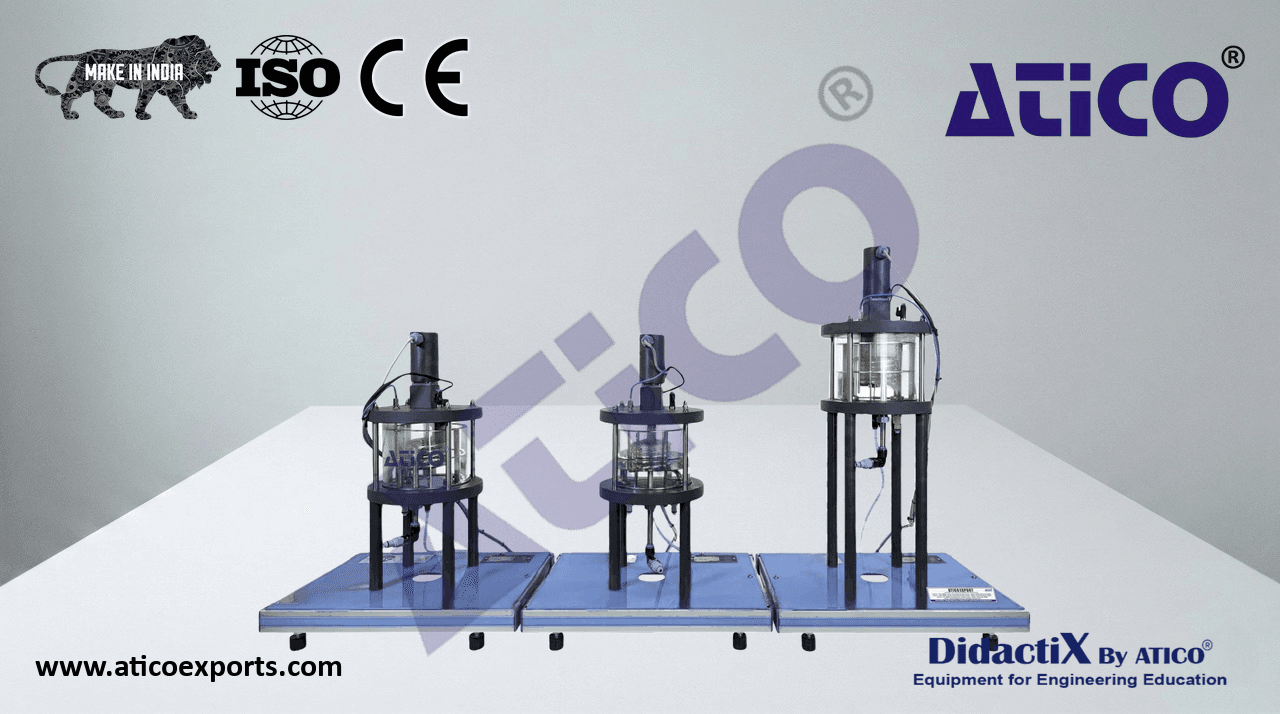
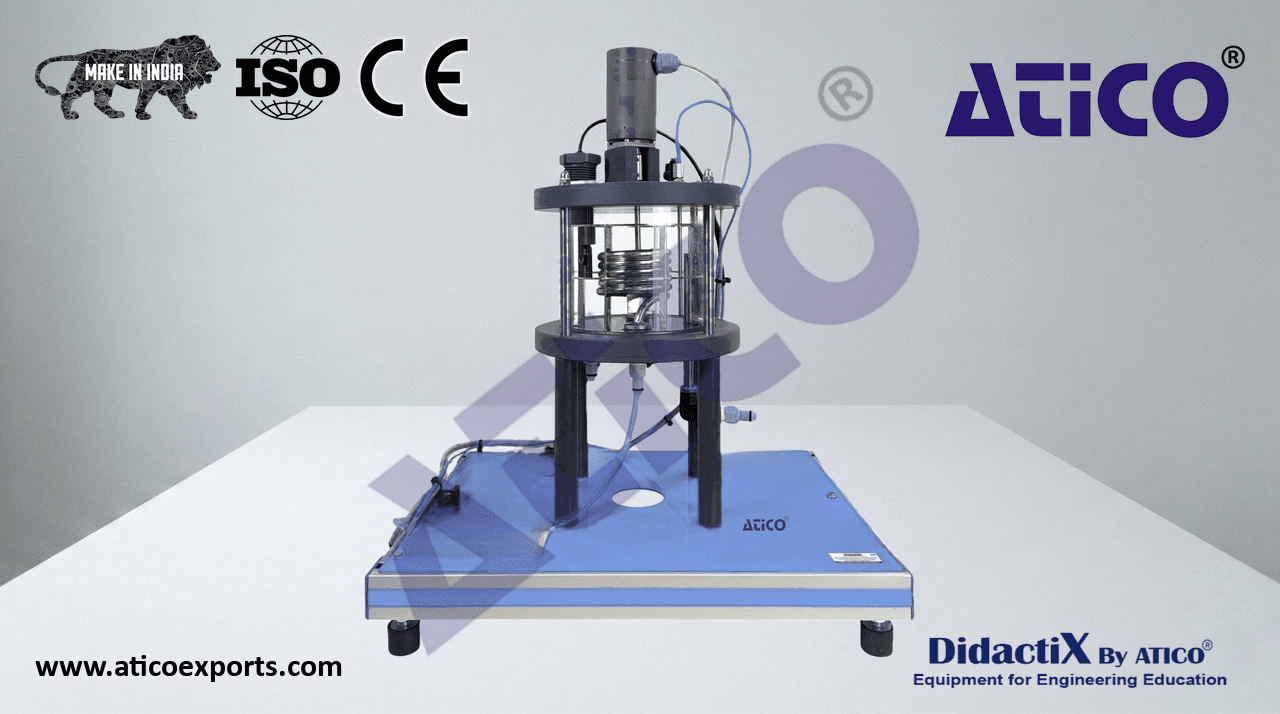
- ATENG 10913. Computer Controlled Continuous Stirred Tank Reactor for ATENG 10910.
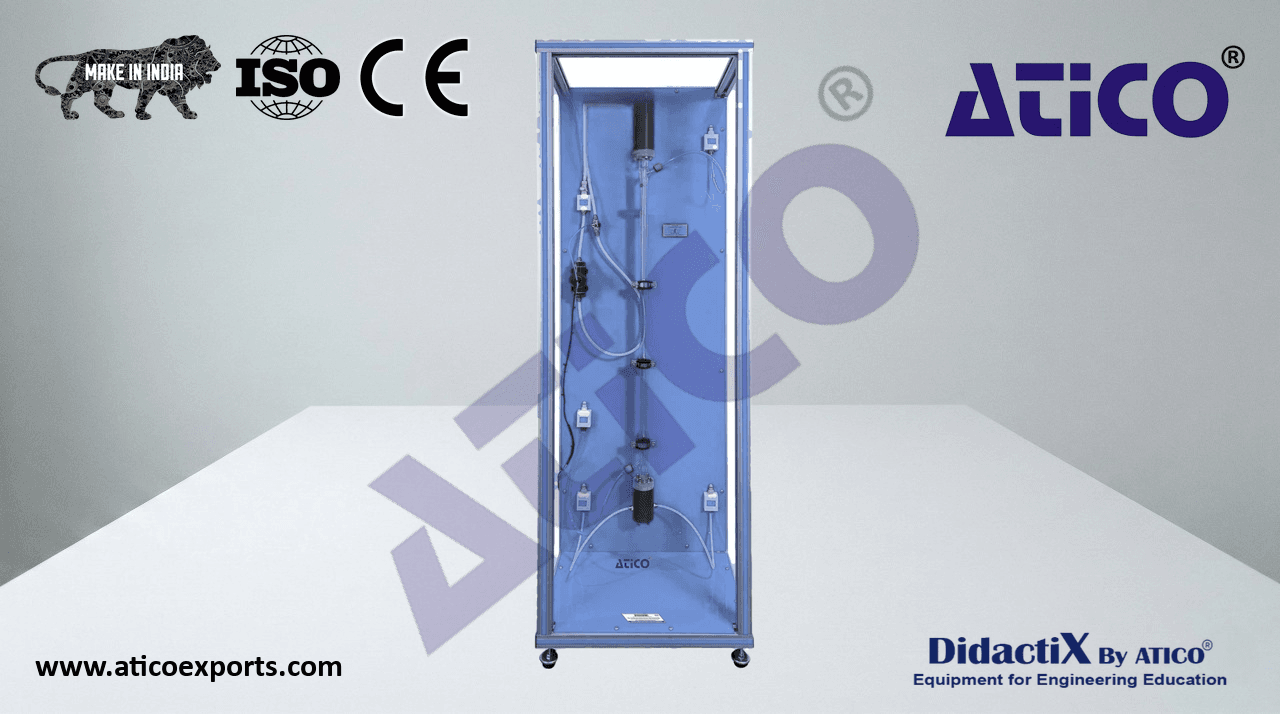
- ATENG 10915. Computer Controlled Tubular Flow Reactor for ATENG 10910.
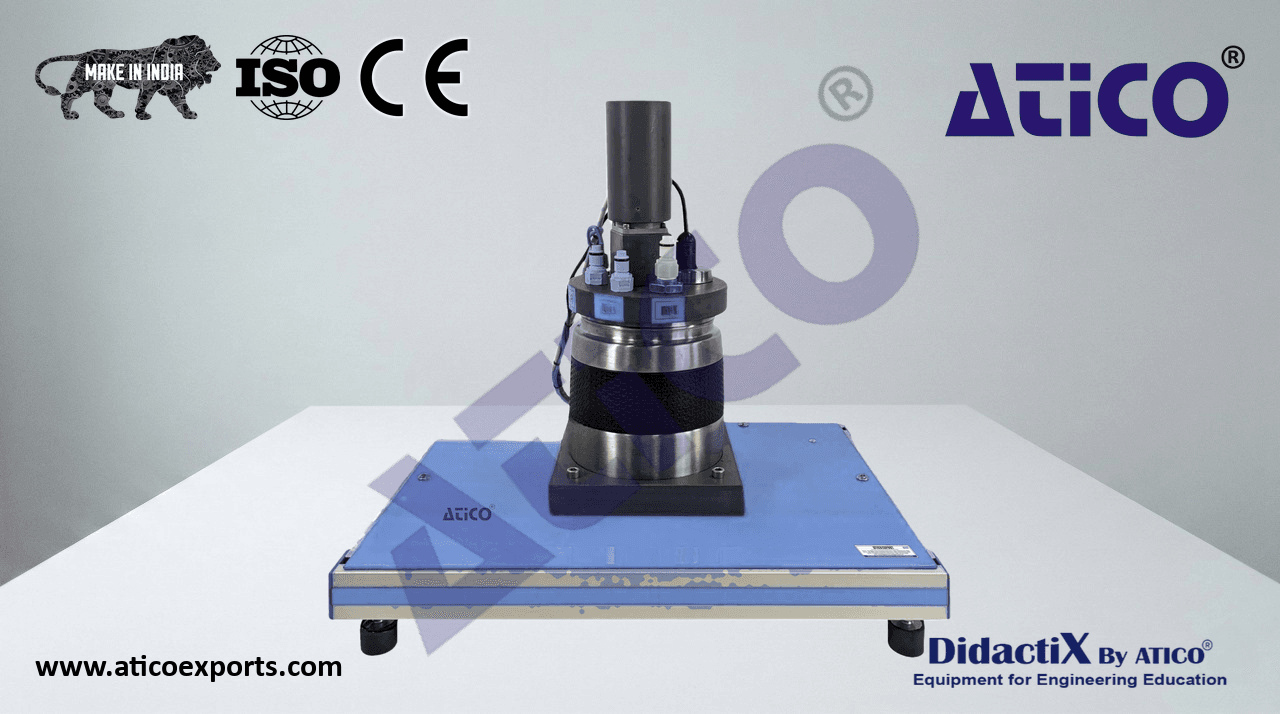
- ATENG 10916. Computer Controlled Batch Reactor for ATENG 10910.
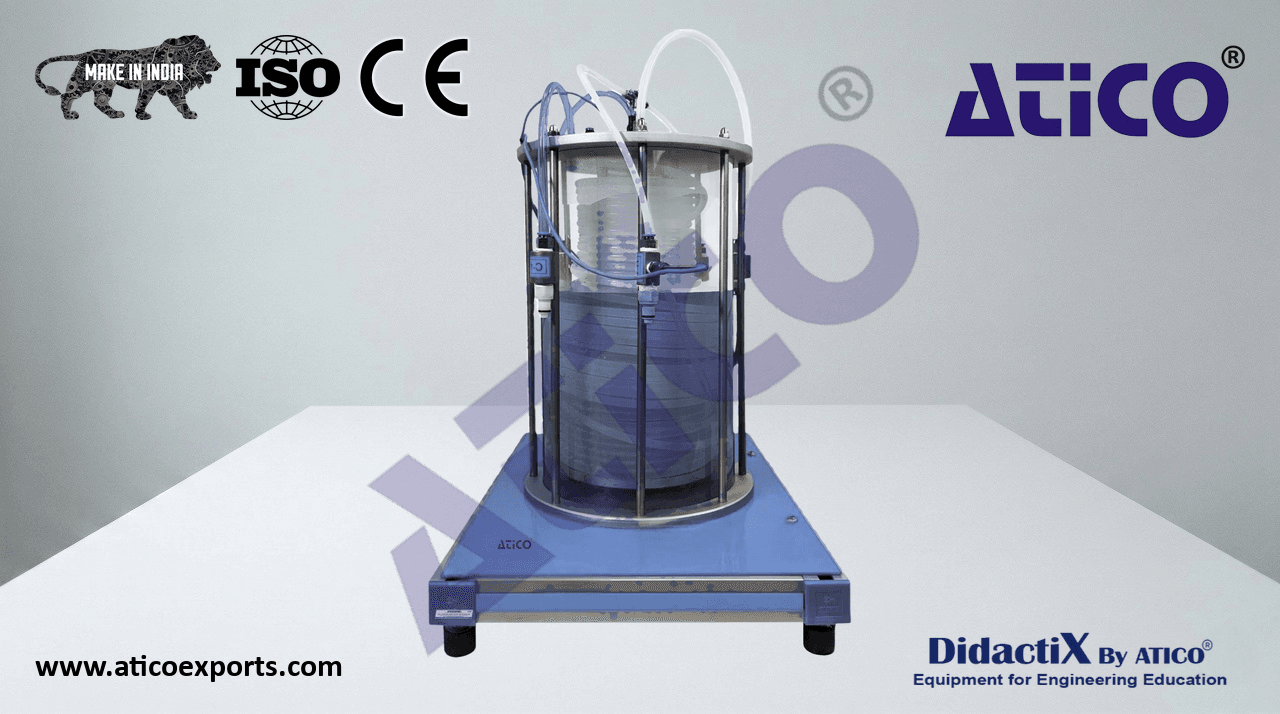
- ATENG 10918. Computer Controlled Stirred Tank Reactors in Series for ATENG 10910.
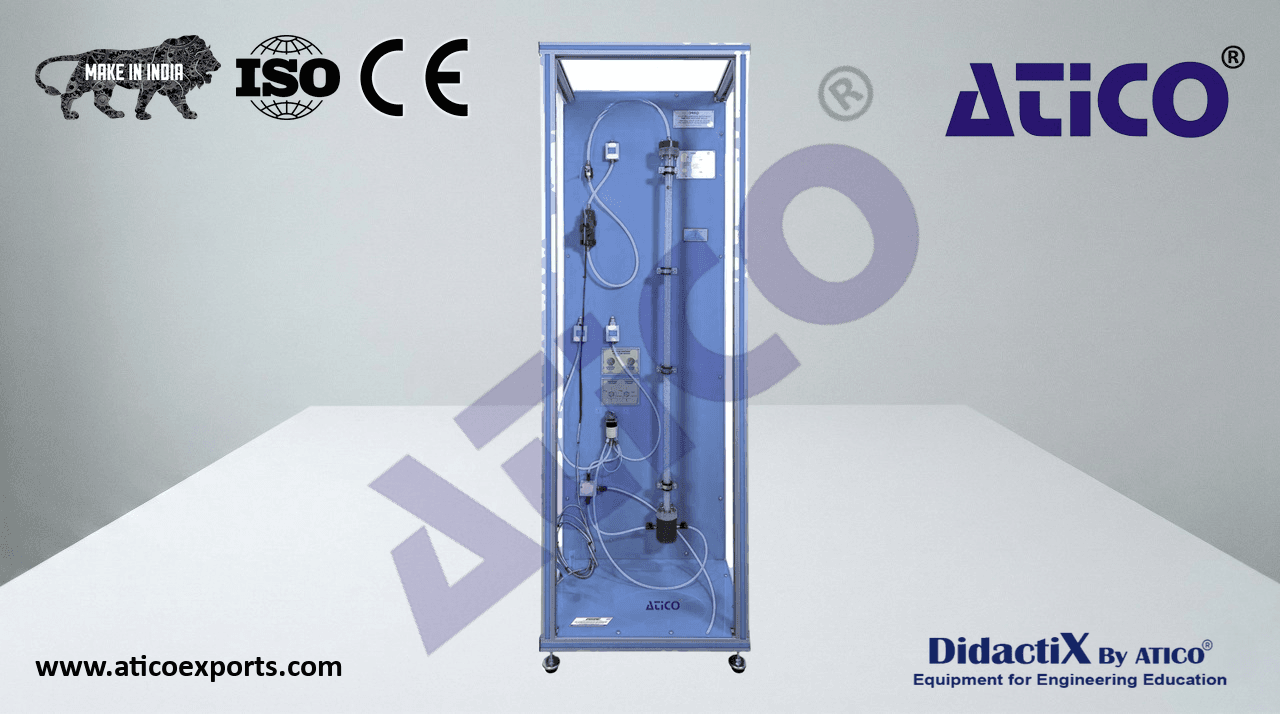
- ATENG 10919. Computer Controlled Laminar Flow Reactor for ATENG 10910.
- ATENG 10921. Computer Controlled Plug Flow Reactor for ATENG 10910.
5
Complete Technical Specifications (for main items)
- QRC/CIB. Control Interface Box:
This control interface is common for the required elements (at least one) (Not included).
Control interface box with process diagram in the front panel and with the same distribution that
the different elements located in the unit, for an easy understanding by the student.
- All sensors, with their respective signals, are properly manipulated from -10V. to +10V. computer
output.
Sensors connectors in the interface have different pines numbers (from 2 to 16), to avoid
connection errors.
Single cable between the control interface box and computer.
The unit control elements are permanently computer controlled, without necessity of
changes or connections during the whole process test procedure.
Simultaneous visualization in the computer of all parameters involved in the process.
Calibration of all sensors involved in the process.
Real time curves representation about system responses.
Storage of all the process data and results in a file.
Graphic representation, in real time, of all the process/system responses.
All the actuators’ values can be changed at any time from the keyboard allowing the
analysis about curves and responses of the whole process.
All the actuators and sensors values and their responses are displayed on only one screen in the
computer. QRC/CIB
Shield and filtered signals to avoid external interferences.
Real time PID control with flexibility of modifications from the computer keyboard of the PID
parameters, at any moment during the process.
Real time PID and on/off control for pumps, compressors, heating elements, control valves, etc.
Real time PID control for parameters involved in the process simultaneously.
Proportional control, integral control and derivative control, based on the real PID mathematical
formula, by changing the values, at any time, of the three control constants (proportional, integral
and derivative constants).
Open control allowing modifications, at any moment and in real time, of parameters involved in the
process simultaneously.
Possibility of automatization of the actuators involved in the process.
Three safety levels, one mechanical in the unit, another electronic in the control interface and
the third one in the control software.
- 3 DAB. Data Acquisition Board:
Common for the required elements (at least one) (Not included).
PCI Express Data acquisition board (National Instruments) to be placed in a computer slot. Bus
PCI Express.
- Analog input:
Number of channels= 16 single-ended or 8 differential. Resolution=16 bits, 1 in 65536.
- Sampling rate up to: 250 KS/s (kilo samples per second).
- Input range (V)=±10 V. Data transfers=DMA, interrupts, programmed I/0. DMA channels=6.
- Analog output:
Number of channels=2. Resolution=16 bits, 1 in 65536.
- Maximum output rate up to: 900 KS/s. DAB
- Output range (V)=±10 V. Data transfers=DMA, interrupts, programmed I/0.
- Digital Input/Output:
- Number of channels=24 inputs/outputs. D0 or DI Sample Clock frequency: 0 to 100 MHz.
- Timing: Number of Counter/timers=4. Resolution: Counter/timers: 32 bits.
The Data Acquisition board model may change at any moment, providing the same or better
features than those required for the unit.
4 Cables and Accessories, for normal operation.
- 5 Manuals:
- This unit is supplied with 8 manuals: Required services, Assembly and Installation, Interface and
Control software, Starting-up, Safety, Maintenance, Calibration & Practices manuals.
6
Required elements (at least one) (Not included)
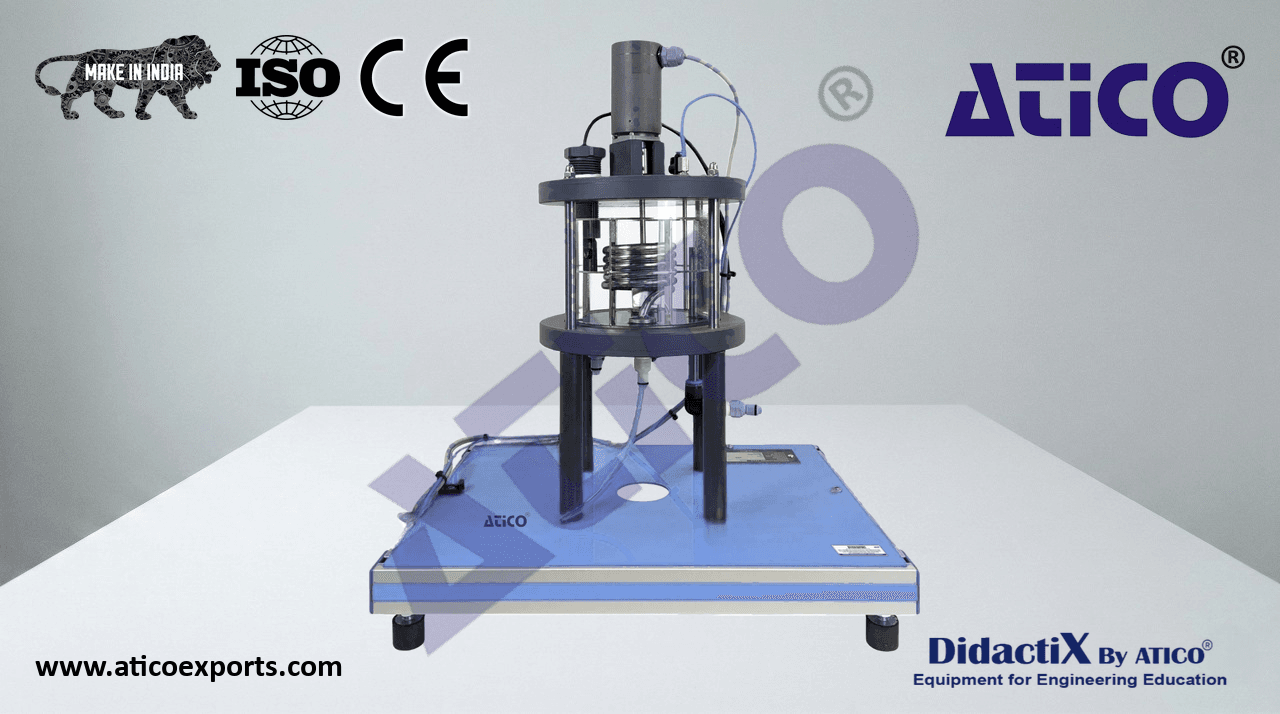
ATENG 10913. Computer Controlled Continuous Stirred Tank Reactor for ATENG 10910
Bench-top unit.
Anodized aluminum frame and panels made of painted steel.
Main metallic elements made of stainless steel.
Diagram in the front panel with distribution of the elements similar to the real one.
All elements of this unit are chemically resistant.
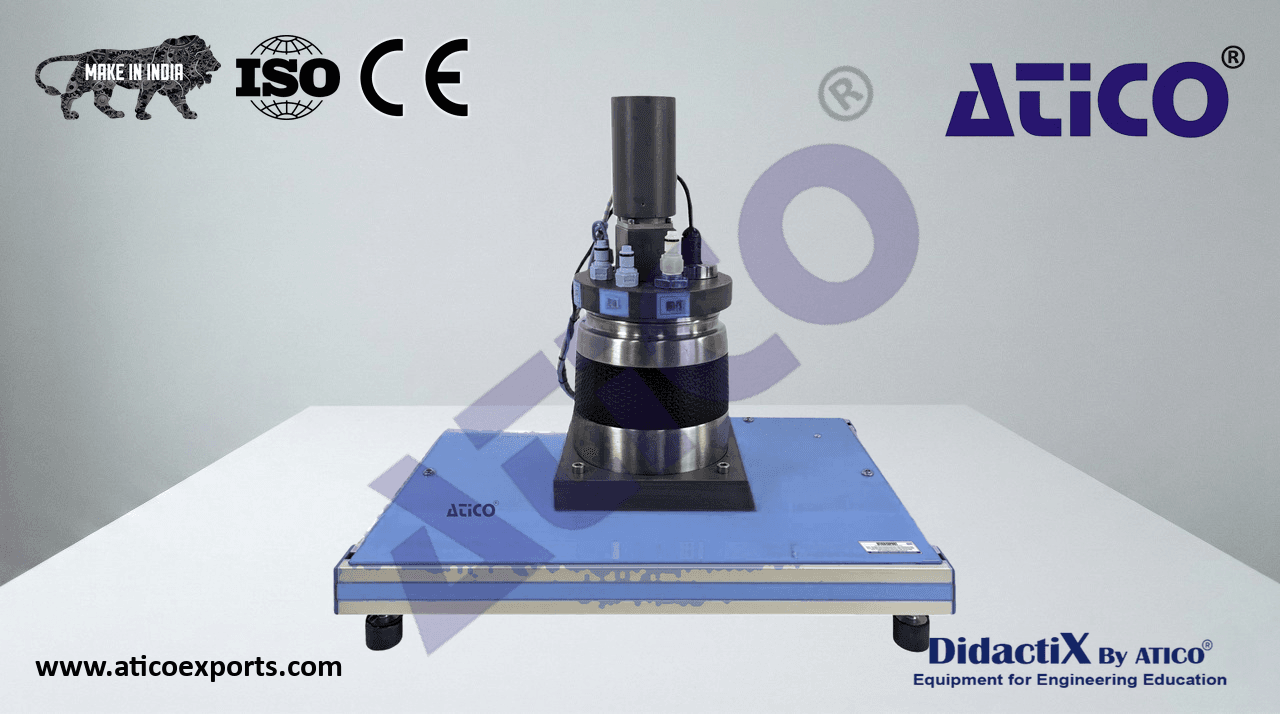
Designed to demonstrate the behaviour of a reactor used for homogeneous
reactions liquid-liquid.
Reactor body made of borosilicate glass, with a maximum capacity of 2 l,
specially designed to work in continuous. It also allows batch operation.
- Adjustable volume, range: 0.4 – 1.5 l.
- Stainless steel heat transfer coil (5 loops of 60 mm of diameter) and a baffle
(removable).
Computer controlled stirring system, with speed control and indication. Stirrer
- range: 0 – 220 rpm.
Reactor lip with connectors for the appropriate sensors.
Temperature sensor “J” type to control the temperature into the reactor.
ATENG 10913
Conductivity cell to control the reaction. Measurement range up to 20 mS.
Quick connectors with shutoff valve that enable an easy coupling of the reactor
to the Base and Service Unit for ATENG 10910, “ATENG 10912”.
- This unit is supplied with 8 manuals: Required Services, Assembly and
Installation, Interface and Control Software, Starting-up, Safety, Maintenance,
Calibration & Practices Manuals.
( )QRCAC/CCSOF. PID Computer Control + Data Acquisition + Data
- Management Software:
The three softwares are part of the SCADA system.
Compatible with actual Windows operating systems. Graphic and intuitive
simulation of the process in screen. Compatible with the industry
standards.
Registration and visualization of all process variables in an automatic and
simultaneous way.
Flexible, open and multicontrol software, developed with actual
windows graphic systems, acting simultaneously on all process parameters.
Analog and digital PID control.
PID menu and set point selection required in the whole work range.
Management, processing, comparison and storage of data.
Sampling velocity up to 250 KS/s (kilo samples per second).
Calibration system for the sensors involved in the process.
It allows the registration of the alarms state and the graphic
representation in real time.
Comparative analysis of the obtained data, after the process and
modification of the conditions during the process.
Open software, allowing the teacher to modify texts, instructions.
Teacher’s and student’s passwords to facilitate the teacher’s control on
the student, and allowing the access to different work levels.
This unit allows the 30 students of the classroom to visualize
simultaneously all the results and the manipulation of the unit,
during the process, by using a projector or an electronic whiteboard.
7
Required elements (at least one) (Not included)
ATENG 10915. Computer Controlled Tubular Flow Reactor for ATENG 10910
Bench-top unit.
Anodized aluminum frame and panels made of painted steel.
Main metallic elements made of stainless steel.
Diagram in the front panel with distribution of the elements similar to the real one.
All elements of this unit are chemically resistant.
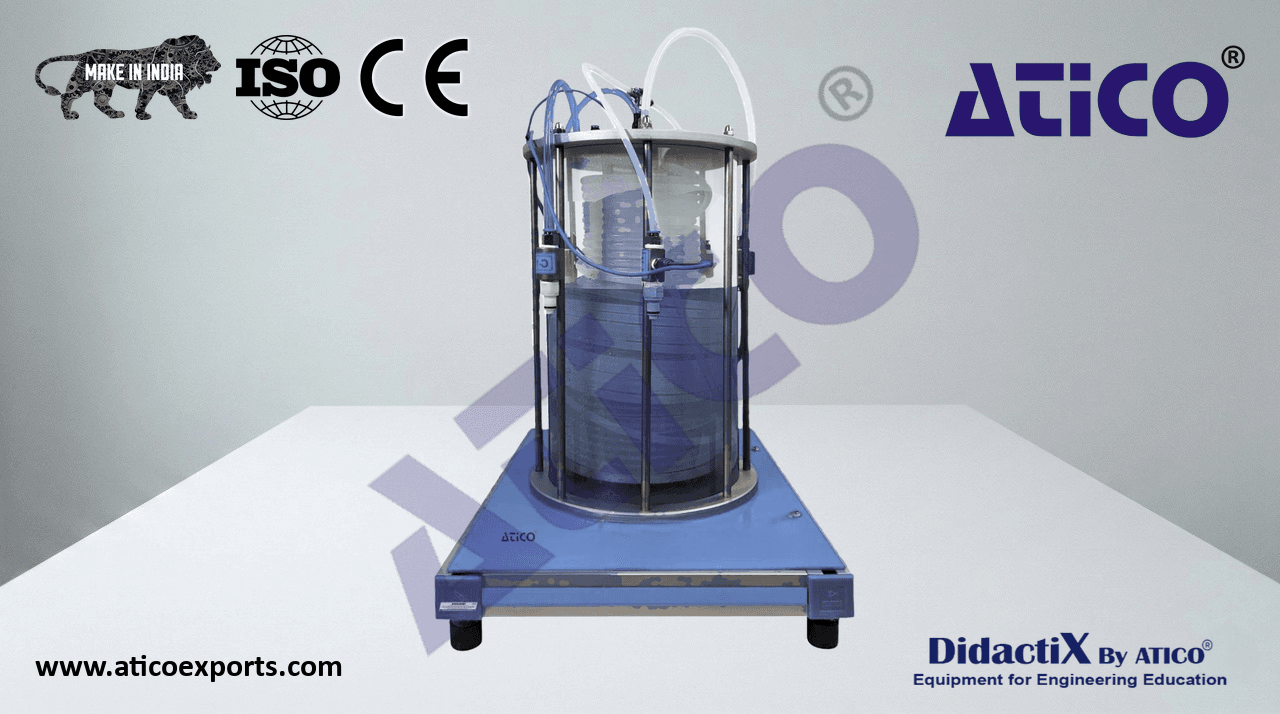
Reactor composed by a continuous tube where the reagents are introduced
through the coil end and the products are obtained through the inverse end. Into
it, a continuous reagent mix is produced, so the composition will be different
at each point. This type of reactors are industrially used for homogeneous
reactions liquid-liquid, generally in isothermal conditions.
With this small computer controlled scale reactor, the behaviour of this type of
reactors used at industrial level can be observed.
- Tubular flow reactor, volume: 0.4 l. Coil shaped. Placed into an acrylic vessel
- through which the cooling or heating medium circulates. Coil length: 20 m.
- Electric pre-heater of 12 loops, and loop diameter of 70 mm approx, for the
two reagents feed lines. It is placed before the mix and the currents inlet to the
reactor.
Temperature controlled by water jacketed.
ATENG 10915
Two temperature sensors “J” type to know the reagents outlet temperature from
the pre-heater.
Conductivity cell to control the reaction. Measurement range up to 20 mS.
Reactor lip with connectors for the appropriate sensors.
Quick connectors with shutoff valve that enable an easy coupling of the reactor
to the Base and Service Unit for ATENG 10910, “ATENG 10912”.
- This unit is supplied with 8 manuals: Required Services, Assembly and
Installation, Interface and Control Software, Starting-up, Safety, Maintenance,
Calibration & Practices Manuals.
( )QRTC/CCSOF. PID Computer Control + Data Acquisition + Data
- Management Software:
The three softwares are part of the SCADA system.
Compatible with actual Windows operating systems. Graphic and intuitive
simulation of the process in screen. Compatible with the industry
standards.
Registration and visualization of all process variables in an automatic and
simultaneous way.
Flexible, open and multicontrol software, developed with actual
windows graphic systems, acting simultaneously on all process parameters.
Analog and digital PID control.
PID menu and set point selection required in the whole work range.
Management, processing, comparison and storage of data.
Sampling velocity up to 250 KS/s (kilo samples per second).
Calibration system for the sensors involved in the process.
It allows the registration of the alarms state and the graphic
representation in real time.
Comparative analysis of the obtained data, after the process and
modification of the conditions during the process.
Open software, allowing the teacher to modify texts, instructions.
Teacher’s and student’s passwords to facilitate the teacher’s control on
the student, and allowing the access to different work levels.
This unit allows the 30 students of the classroom to visualize
simultaneously all the results and the manipulation of the unit,
during the process, by using a projector or an electronic whiteboard.
8