Loading product…
Loading product…
Need Help?
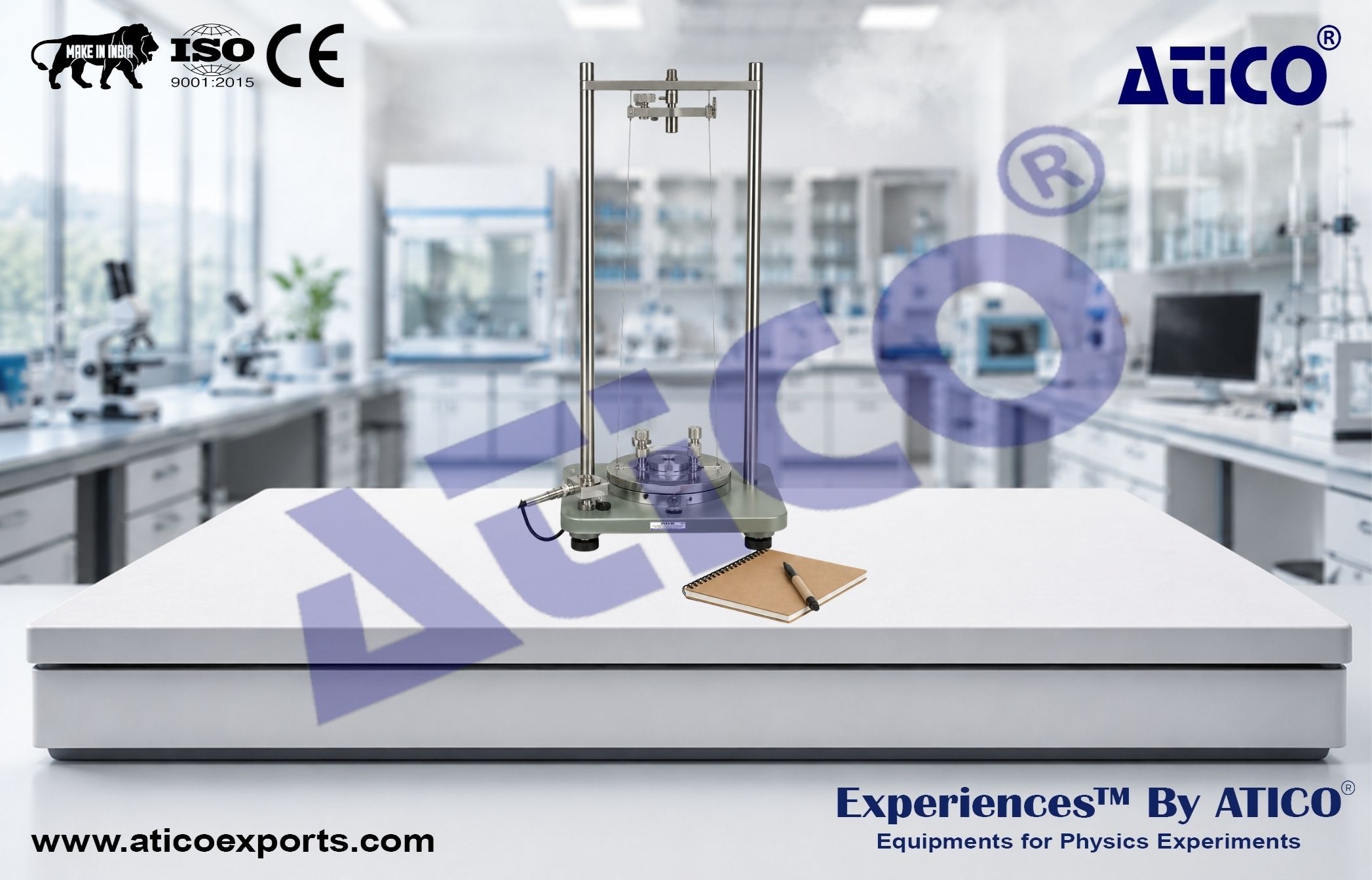
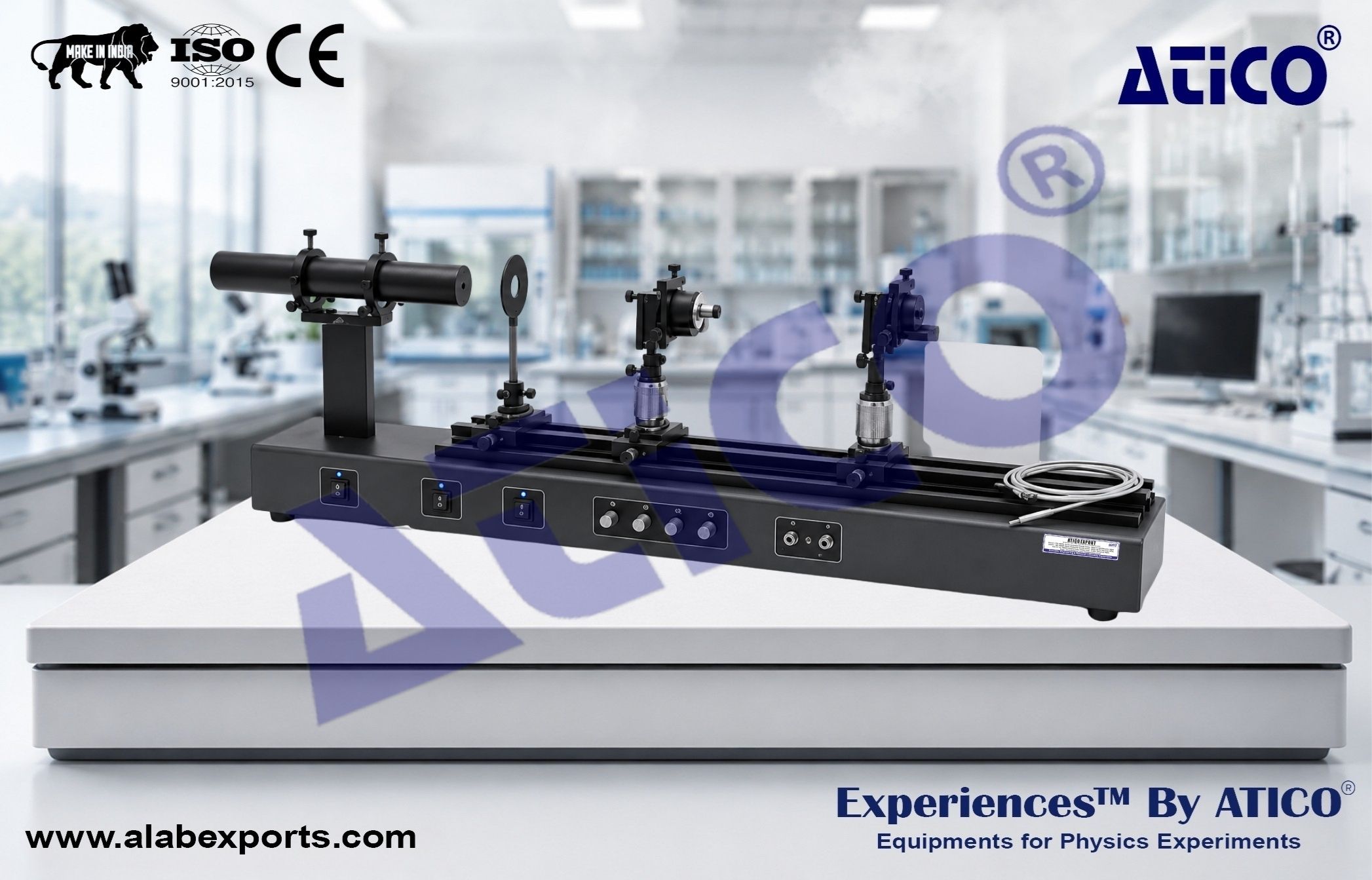
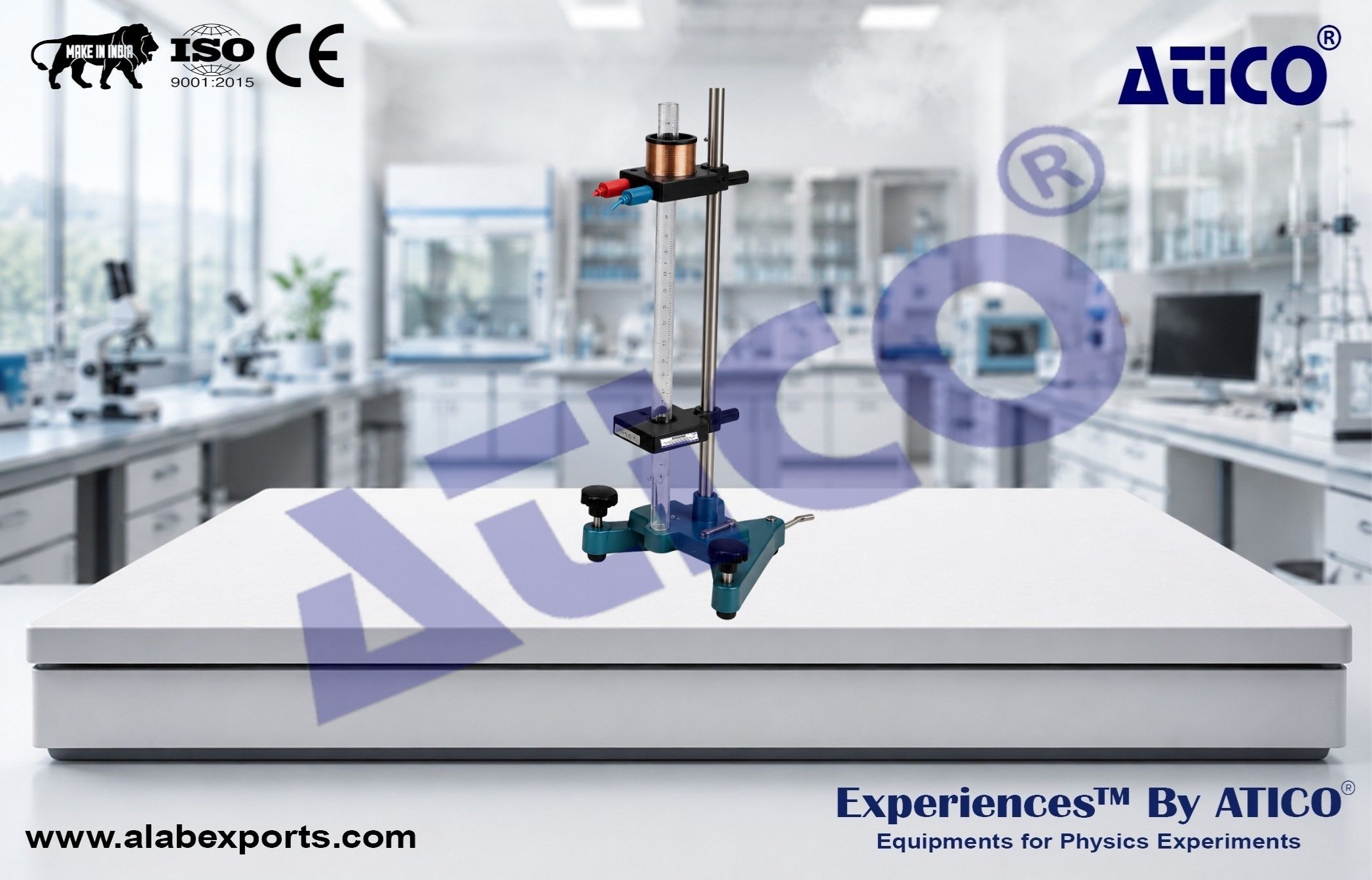
+91 98967 93832The Gas Elastic Resonance Apparatus is designed to determine the adiabatic exponent of gases by studying gas elastic resonance. The apparatus uses a sealed air column with a magnetic piston that is excited into forced oscillations using an alternating electromagnetic field. By determining the resonance frequency of the system, students can calculate the adiabatic exponent of air and compare the behavior of different gases such as carbon dioxide and neon. Manufactured by Atico Export India.
Principle
The experiment is based on the resonance of a gas column enclosed within a sealed chamber. A magnetic piston oscillates under the influence of an alternating electromagnetic field, causing periodic compression and expansion of the gas. When the excitation frequency matches the natural frequency of the gas column, resonance occurs and the piston oscillates with maximum amplitude. The measured resonance frequency is used to determine the adiabatic exponent of the gas.
Objectives
System Components
Gas Elastic Resonance Apparatus :
Analog Multimeter :
Function Generator :
V-Shaped Stand Base :
Fine Regulating Valve :
Neon Gas Canister :
Carbon Dioxide Gas Canister :
Three-Way Valve :
Silicone Tubing :
Rubber Tubing :
Tubing Connector :
Connecting Lead :
Connecting Leads :
Gas Elastic Resonance System :
Magnetic Piston :
Forced Oscillation Mechanism :
Multiple Gas Compatibility :
Accurate Frequency Measurement :
Educational Design :