
Loading product…
Loading product…
Need Help?
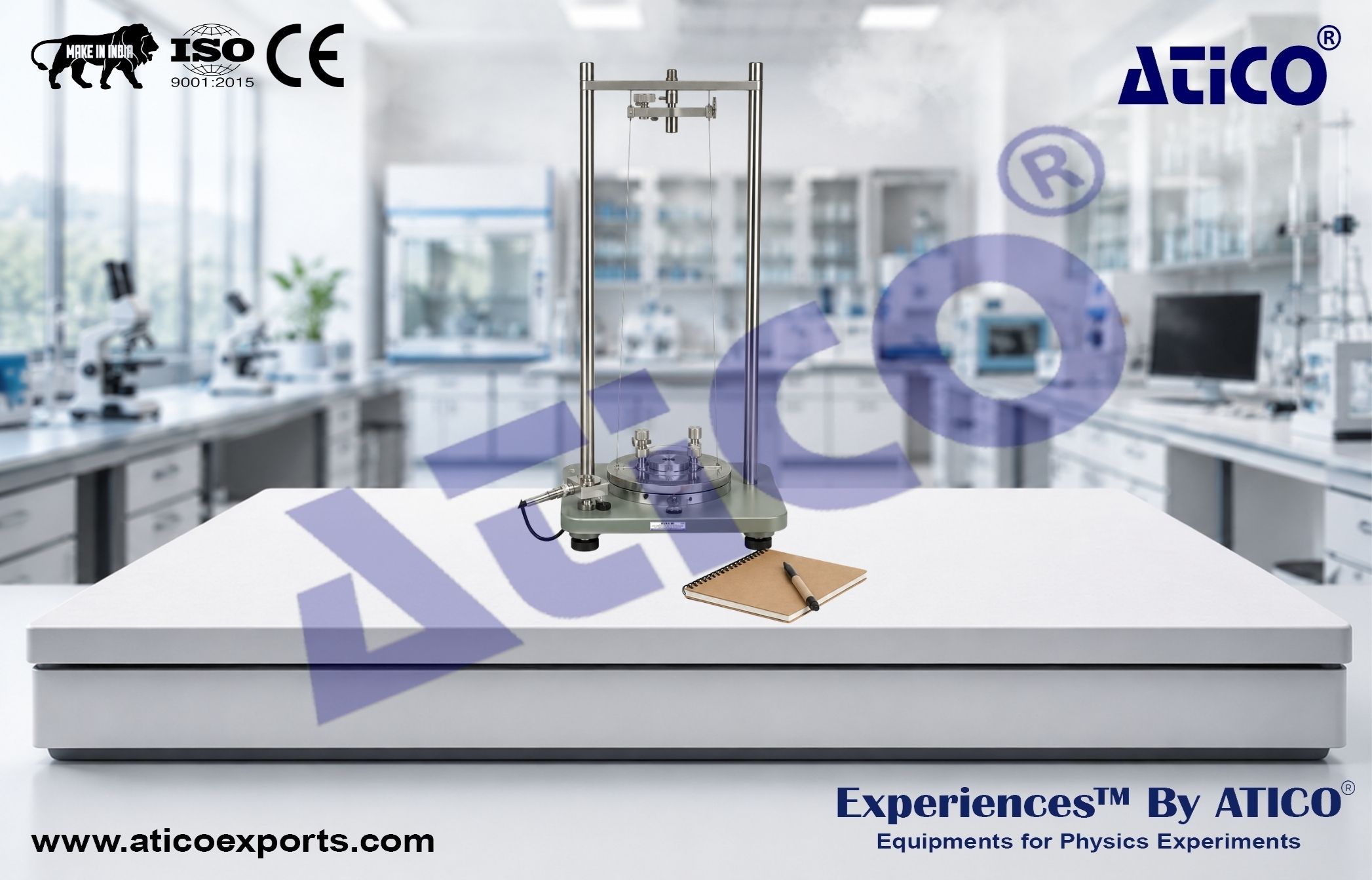
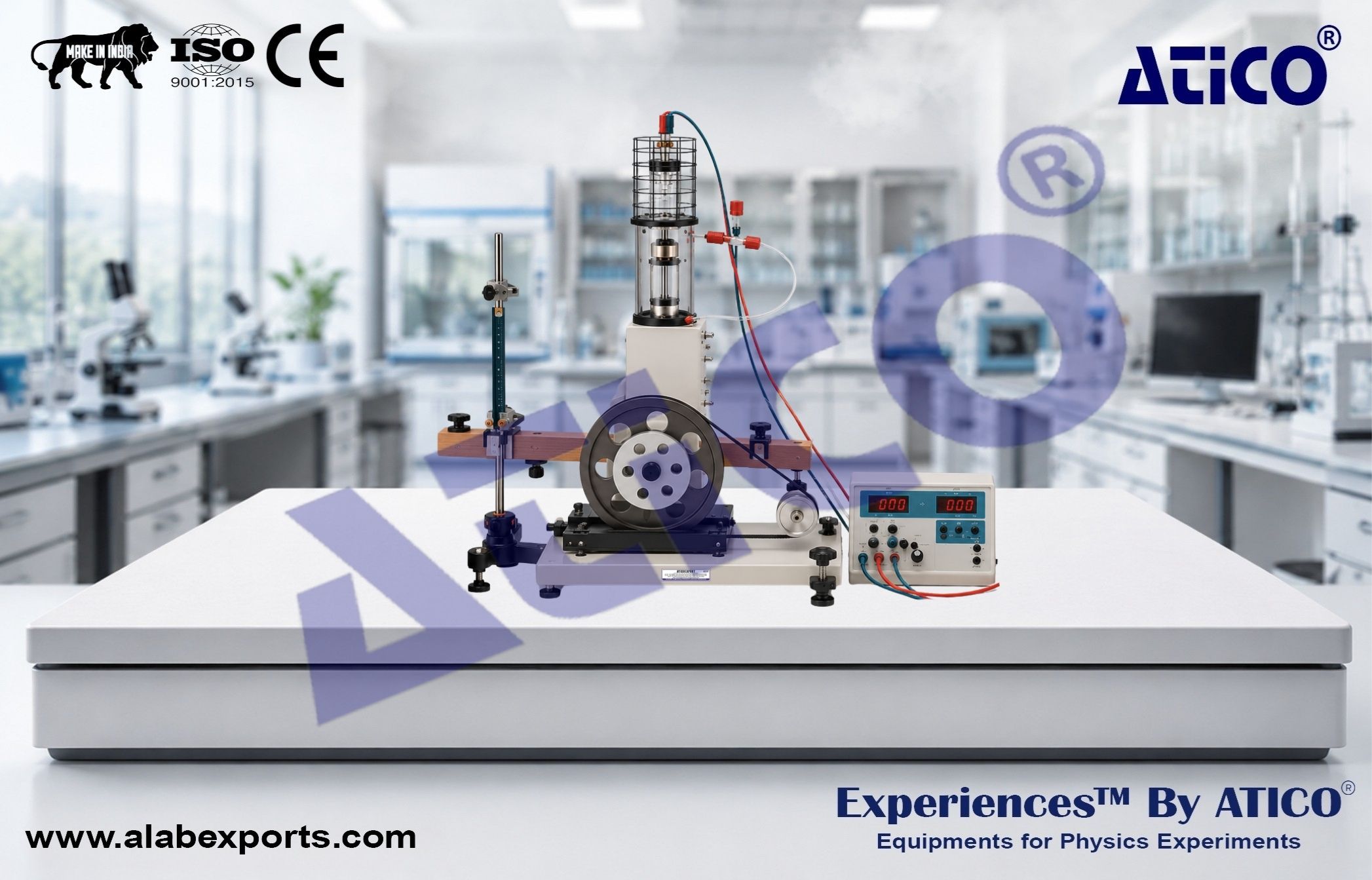
+91 98967 93832The Hot-Air Engine Efficiency Experiment is designed to determine the thermal efficiency of a hot-air engine by comparing the mechanical work produced with the heat transferred during operation. The engine is loaded using a dynamometric brake, allowing the output torque and rotational speed to be measured accurately. The heat rejected is determined from the temperature rise of the cooling water, enabling students to evaluate the efficiency of the engine as a heat engine. Manufactured by Atico Export India.
Principle
The experiment is based on the conversion of heat energy into mechanical work. The mechanical work produced by the hot-air engine is calculated from the braking torque applied by a dynamometric brake and the rotational speed of the engine. The heat rejected by the engine is determined from the temperature increase of the cooling water. By comparing the mechanical work output with the thermal energy involved, the efficiency of the hot-air engine can be determined.
Objectives
System Components
Hot-Air Engine :
Power Measurement Accessories :
U-Core with Yoke :
Clamping Device with Spring Clip :
Mains Coil :
Low Voltage Coil :
Electronic Counter :
Fork-Type Light Barrier :
Multi-Core Cable :
Analog Multimeter :
Mechanical Hand-Held Stopwatch :
Precision Dynamometer :
Thermometer :
V-Shaped Stand Base :
Stand Rod :
Stand Rod :
Right-Angled Stand Rod :
Multi Clamp :
Plastic Beaker :
Weights :
Connecting Leads :
Connecting Leads :
Immersion Pump :
Low Voltage Power Supply :
Silicone Tubing :
Wide-Mouthed Can :
Hot-Air Engine System :
Dynamometric Brake :
Speed Measurement :
Cooling Water Measurement :
Complete Experimental Setup :
Educational Design :