
Loading product…
Loading product…
Need Help?
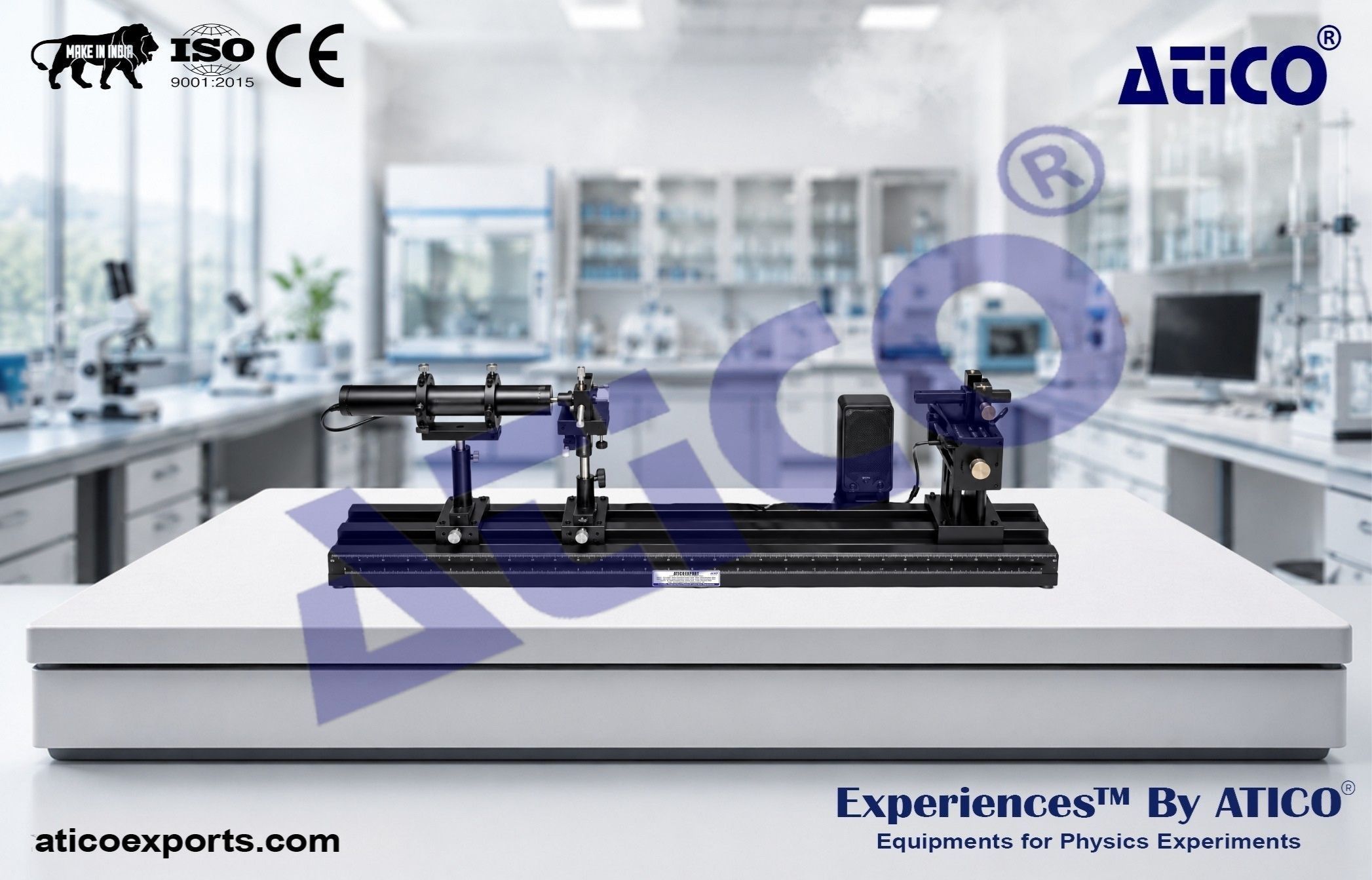
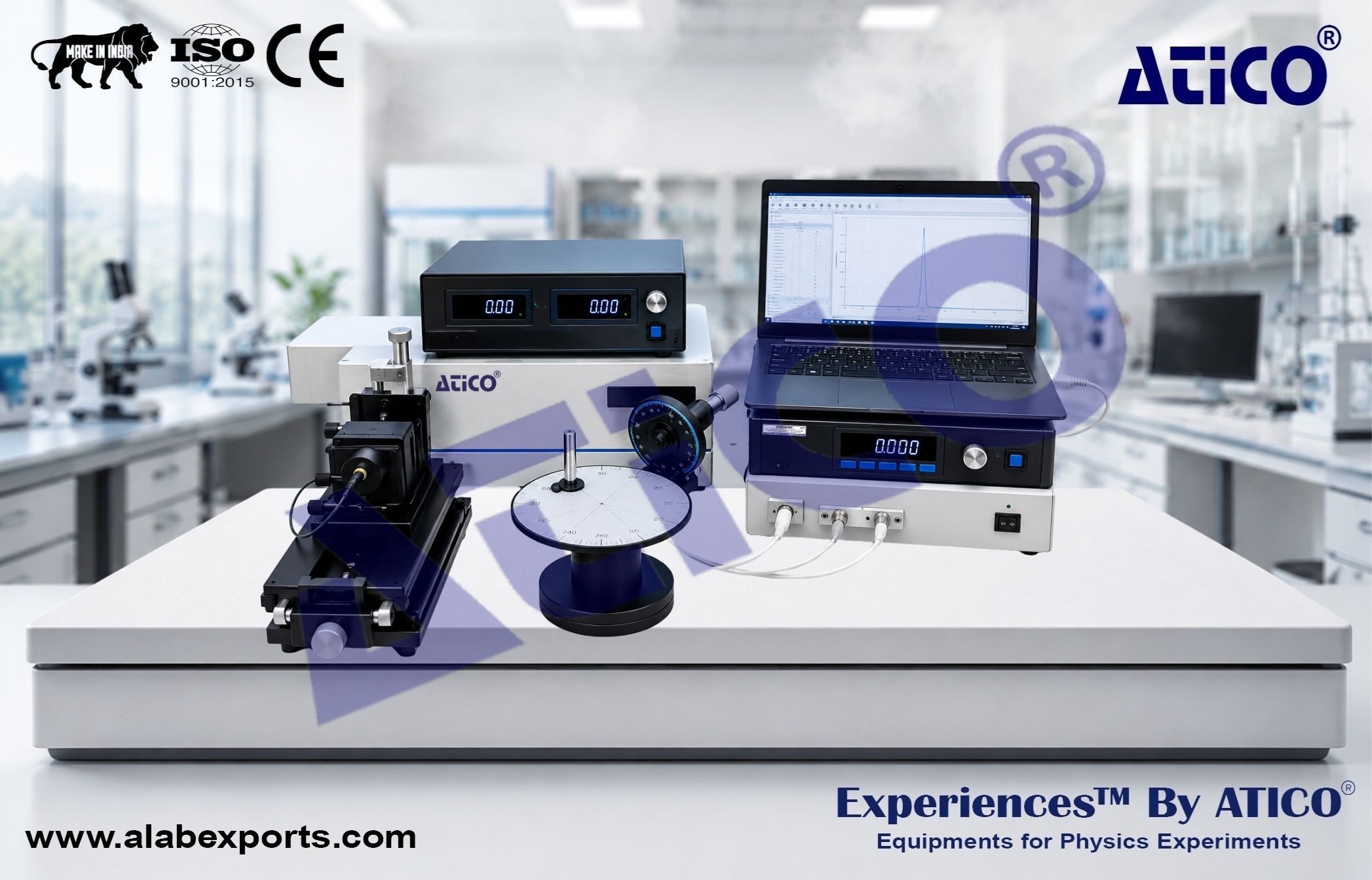
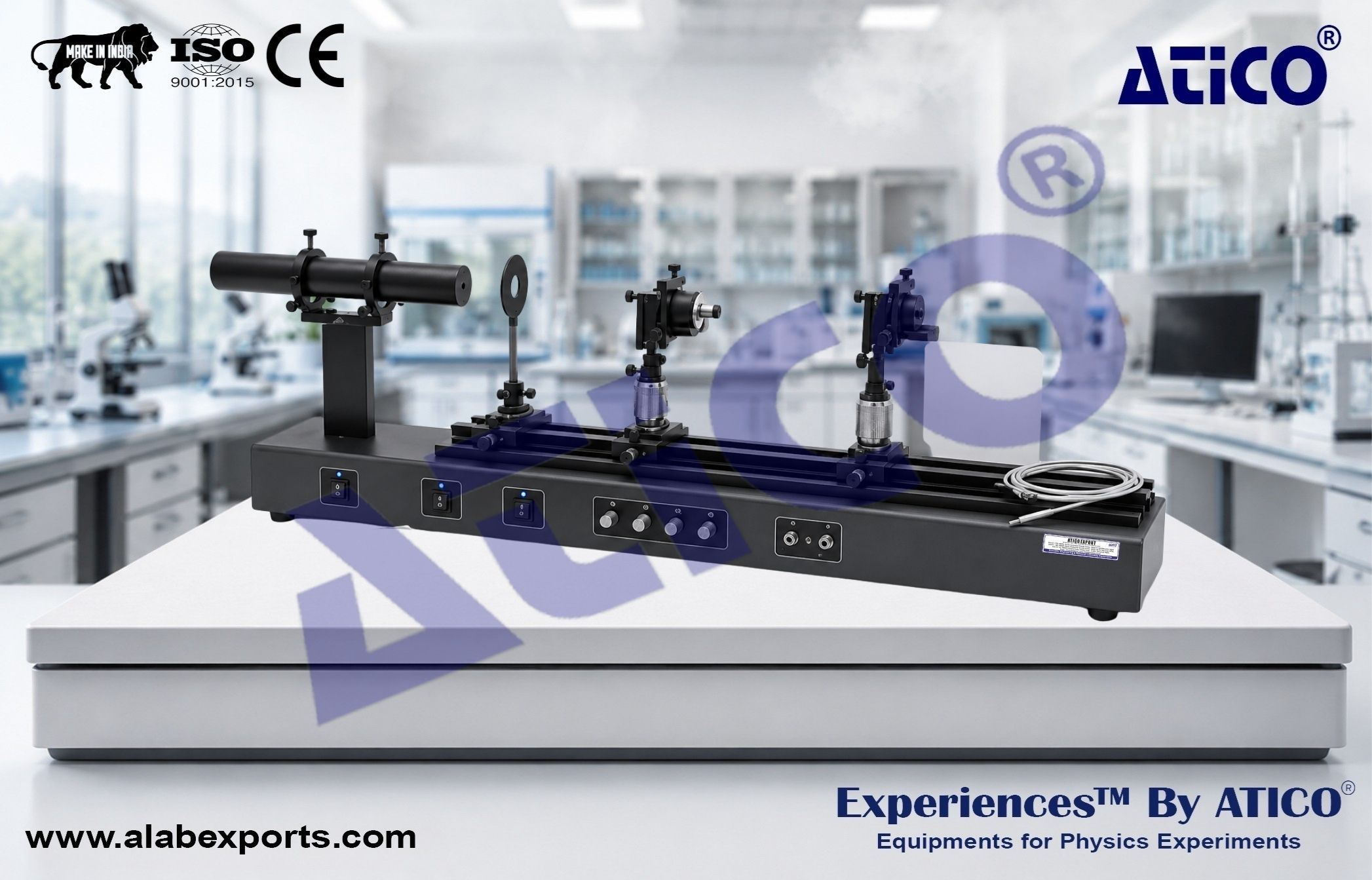
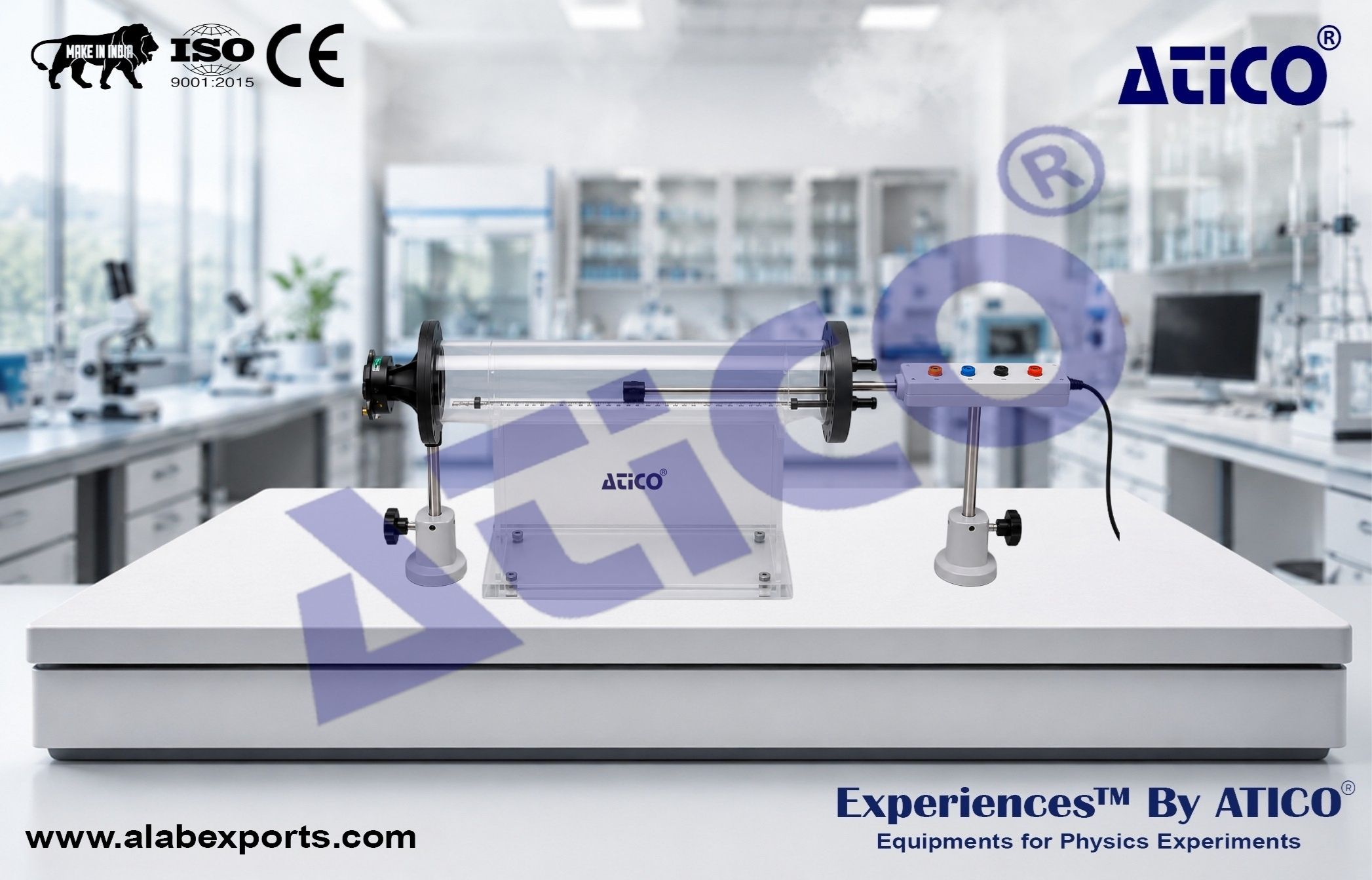
+91 98967 93832The Velocity of Sound in Different Gases Experiment is designed to measure and compare the velocity of sound in carbon dioxide, helium, and neon. The experiment demonstrates how the speed of sound varies with the physical properties of different gases, particularly their density. Software-based data acquisition enables accurate measurement, analysis, and comparison of experimental results, helping students understand the relationship between sound propagation, gas density, and the adiabatic coefficient. Manufactured by Atico Export India.
Principle
The velocity of sound in a gas depends primarily on its density and adiabatic coefficient. In this experiment, the speed of sound is measured in carbon dioxide, helium, and neon using a controlled sound propagation setup. The experimental results show that the significant differences in sound velocity are mainly due to variations in gas density, while the differences in the adiabatic coefficients are comparatively small.
Objectives
System Components
Apparatus for Sound Velocity :
Stand for Tubes and Coils :
Tweeter :
Multi-Purpose Microphone :
Data Acquisition Interface :
Data Analysis Software :
Timer Box :
Carbon Dioxide Gas Canister :
Helium Gas Canister :
Neon Gas Canister :
Fine Regulating Valve :
Silicone Tubing :
Rubber Tubing :
Tubing Connector :
Saddle Base :
Metal Rule :
Connecting Leads :
Connecting Leads :
Additional Requirement
Computer :
Software-Based Data Acquisition :
Accurate Sound Measurement :
Stable Sound Source :
Gas Comparison Study :
Educational Design :