Discovering Phenomena Related to Heat:
- Students explore heat through simple and engaging experiments
- Learn to:
- Distinguish between good and poor conductors of heat
- Observe heat flow from one place to another
- Compare heat absorption of black and white surfaces
- Understand the importance of heat insulation in daily life
Introduction to the World of Measurement:
- Highlights the limitations of human perception of temperature
- Students learn scientific measurement by:
- Studying expansion of liquids, solids, and air when heated
- Creating and calibrating a thermometer scale
- Understanding practical temperature measurement methods
Safe Heat Source:
- Tea candles are used as a simple and effective heat source
- A fireproof base (category B1) ensures safe experimentation
Multi-functional Storage Case:
- Storage case can be turned upside down to act as a stand
- Threaded hole allows secure attachment of a stand rod
- Enables flexible experimental setups
Contents:
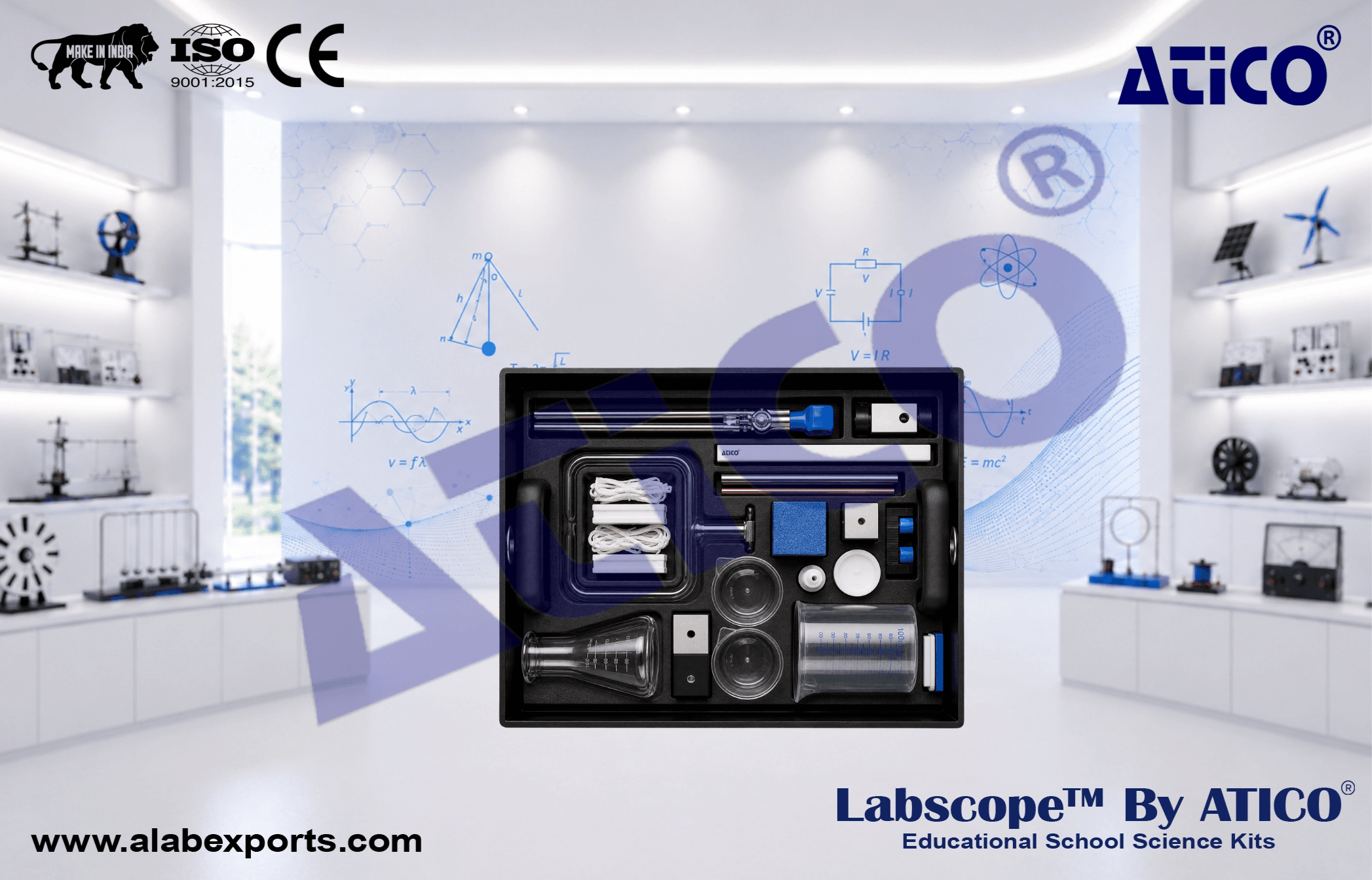
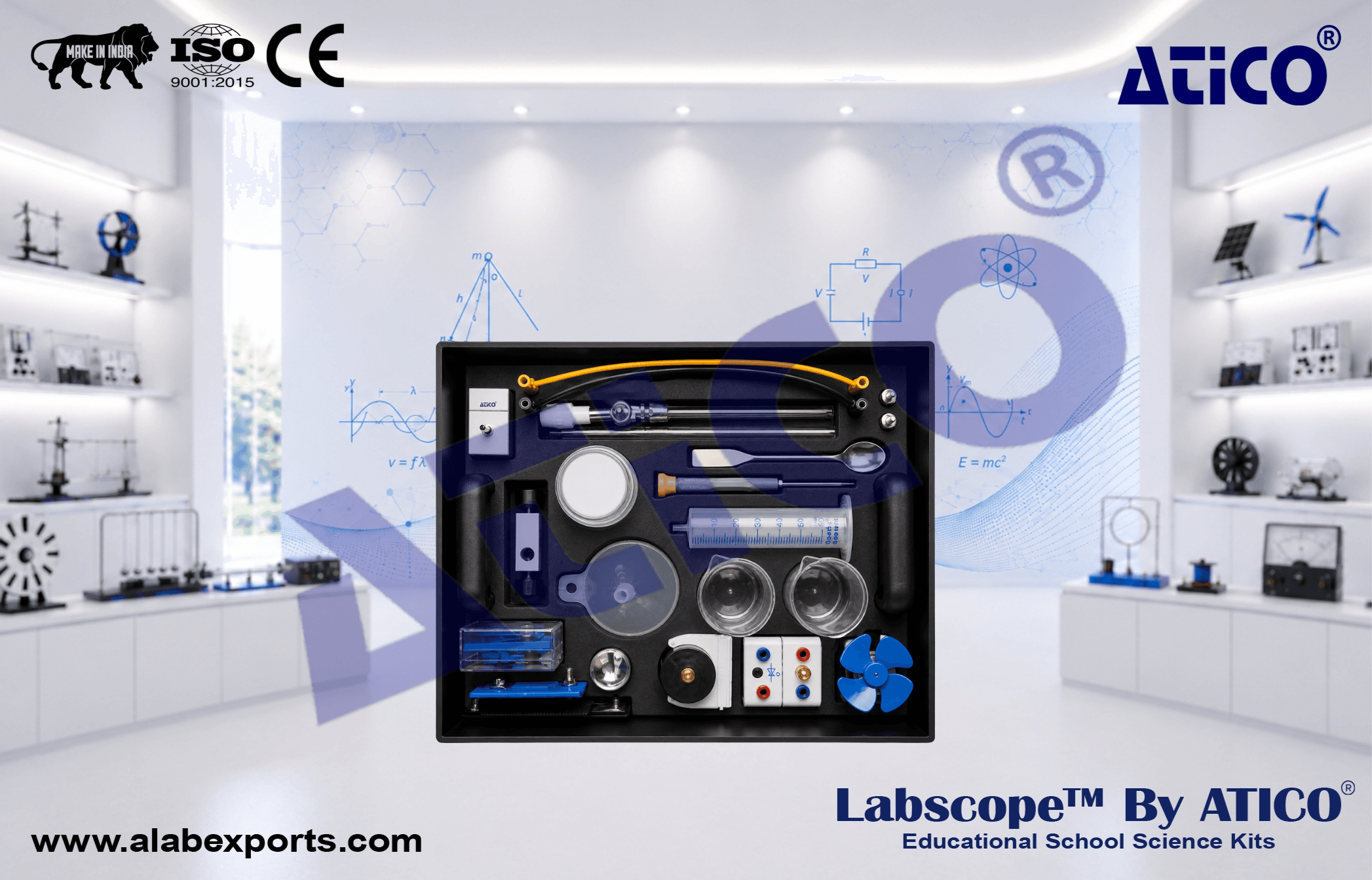
- 1 × Storage case
- 1 × Inlay with cut-outs (H1)
- 2 × Digital thermometers (–40°C to +70°C)
- 1 × Plastic beaker, 250 ml
- 2 × Plastic beakers, 100 ml
- 1 × Bosshead clamp
- 1 × Mounting block
- 1 × Support block
- 1 × Aluminium rod, long
- 1 × Pointer
- 1 × Bimetal strip
- 1 × Thermometer (without scale)
- 1 × Erlenmeyer flask
- 1 × Rubber stopper with hole
- 1 × Hose connector
- 1 × Silicone tube (7 mm × 500 mm)
- 1 × Copper rod
- 1 × Aluminium rod
- 1 × Plastic rod
- 1 × Convection tube
- 1 × Insulating box with cover
- 1 × Tea candle
- 1 × Stand rod
- 1 × Fireproof base
- 1 × Stand clamp
- 1 × Woollen cloth
- 1 × Aluminium cube, white
- 1 × Aluminium cube, black
- 2 × Aluminium cubes
Experiments:
- Subjective perception of heat
- Expansion of liquids
- Calibration of a liquid thermometer
- Expansion of air
- Expansion of solids
- Working of a bimetallic strip
- Heat transfer mechanisms
- Conduction of heat
- Convection of heat
- Heat absorption of black and white bodies
- Heat insulation (Part 1 & 2)
- Effect of salt on ice
- Structure of a flame
- Brownian motion