
How to Choose a Soil Testing Lab Equipment Manufacturer, Supplier and Exporter
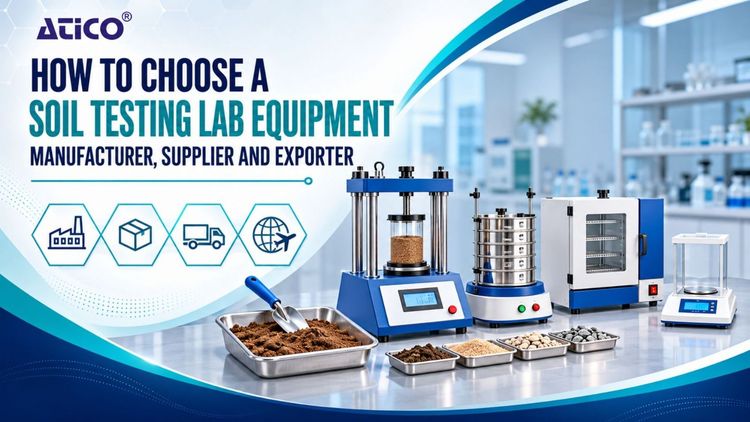
Learn how to choose the right soil testing lab equipment manufacturer, supplier and exporter. Explore essential factors such as product quality, equipment specifications, technical support, pricing and delivery before selecting a reliable supplier for your laboratory.
It is important to choose the right Soil Testing Lab Equipment Manufacturer, Supplier and Exporter for your laboratory. Advanced laboratories today require high quality and dependable lab instruments for accurate measurements and results. If you are establishing a new geotechnical laboratory, setting up a civil engineering college lab, or purchasing equipment for construction quality testing, you must evaluate the manufacturer’s technical capabilities, product range and support services before placing an order. This is because the lab equipment supplier you choose can affect your laboratory's efficiency and testing capabilities.
How to Choose a Soil Testing Lab Equipment Manufacturer and Exporter
Choosing the right Soil Testing Lab Equipment Manufacturer, Supplier and Exporter is an important decision for civil engineering colleges, geotechnical laboratories, construction companies, research institutions and infrastructure testing facilities. If you are upgrading your existing civil engineering facility or purchasing equipment for an international project, it is important to choose a reliable Soil Testing Lab Equipment exporter.
A suitable Soil Testing Lab Equipment Supplier should understand your testing requirements and help you identify the laboratory equipment that is suitable for your advanced laboratory. For international purchases, ensure that the Soil Testing Lab Equipment exporter you are selecting is trained and experienced with international shipping, export related packaging, export documentation and takes the delivery responsibilities positively.
Below is a complete guide on how to choose a Soil Testing Lab Equipment Manufacturer, Supplier and Exporter.
Understand Your Soil Requirements
Before contacting a Soil Testing Lab Equipment Manufacturer, identify all the tests your laboratory needs to work on. Soil testing labs serve different purposes, including geotechnical investigations, construction quality control, academic experiments and soil classification. You will need to choose the Soil Testing Lab Equipment that satisfies your laboratory requirements and purpose.
Prepare a list of the applications your laboratory serves and then decide the tests that will be performed. These can include soil classification, grain size analysis, liquid and plastic limit testing, compaction testing, permeability testing, strength and density testing. Once this list is prepared, you can contact a soil testing lab equipment supplier to provide you with the list of lab instruments suitable for your laboratory and then decide what you need and what feels unnecessary. This will help you invest your money mindfully in the right civil engineering lab equipment for your laboratory.
Check Manufacturers' Soil Testing Equipment Range
A reliable soil testing lab equipment manufacturer will understand the client requirements very well. Share your laboratory applications and intended tests so the manufacturer can recommend a suitable configuration. Depending on your laboratory requirements a basic Soil Testing Lab Equipment kit may include the following instruments:
- Sieve Analysis Apparatus
- Liquid Limit Apparatus
- Plastic Limit Testing Equipment
- Standard and Modified Proctor Compaction Apparatus
- California Bearing Ratio (CBR) Testing Equipment
- Direct Shear Apparatus
- Triaxial Testing Systems
- Consolidation Apparatus
- Permeability Testing Apparatus
- Laboratory Soil Sample Extruders
- Soil Sampling Equipment
- Field Density Testing Equipment
- Moisture Content Testing Equipment
- Pycnometers and Specific Gravity Apparatus
- Soil Sample Preparation Tools
But don't blindly approve of all the lab equipment in the list. Review the equipment list against your laboratory's actual requirements. If you are operating an educational laboratory, you will need lab instruments more focused on fundamental soil mechanics but if you run a professional geotechnical laboratory for investigations, you will need specialised systems for strength, deformation, and permeability measurements.
Ask your Soil Testing Lab Equipment Supplier for product catalogue and technical datasheets.
Evaluate The Technical Specifications And Quality
Before placing an order, ensure that you have analysed all the technical specifications properly. Don't just rely on the general descriptions such as ‘premium quality’ and ‘high performance advanced soil laboratory equipment’. Request the datasheet for the exact model being quoted and confirm that its specifications match your intended test method.
Important technical specifications to check include:
- Testing capacity and measurement range
- Dimensions of moulds, specimens, and accessories
- Loading capacity and loading mechanism
- Measurement resolution and accuracy, where applicable
- Material of construction
- Digital or manual operating features
- Power supply requirements for powered equipment
- Included accessories and fixtures
- Installation and operating requirements
Ask the Soil Testing Lab Equipment manufacturer for customisation if you need it. Also, don't just rely on generic ‘satisfies all the national and international quality standards’ without checking the applicable standard, product specific evidence and supporting documentation.
Verify Quality Control and Applicable Standards
Quality control is an important step that must be followed by the supplier before an order is dispatched. When discussing your requirements with the Soil Testing Lab Equipment Supplier, understand the procedure they follow before delivering your order to your space. Ask them about the inspection process they follow and what evidence can be provided along with your order. Depending on the equipment, this may include dimensional checks, functional testing, inspection records and calibration documents where applicable.
Also, check the scope of any quality certification claimed by the manufacturer. For international purchases and tenders, request the relevant quality management system certificates before finalising the order. Confirm which standards apply to each instrument and ask the supplier to identify any deviations from your requirements.
Check Manufacturer and Exporter Details
Some civil engineering lab equipment manufacturers design and manufacture the lab instruments in their own space while sourcing other products from third parties. This is not a disadvantage, but it is always better to have clarity about the party you are dealing with. Ask your Soil Testing Lab Equipment Supplier about:
- Which equipment is manufactured or assembled in house?
- Which products are sourced from other manufacturers?
- Who is responsible for quality checks and warranty claims?
- Can the supplier provide product specific technical documentation?
- Is customisation available for the required configuration?
- Who will handle spare parts and technical support?
For your order, choose the supplier based on the equipment, order size, technical requirements, and support arrangements.
For your international order, checking the experience of the Soil Testing Lab Equipment exporter is equally important. Before placing an order, discuss:
- Export documentation
- Protective packaging
- Shipping terms
- Delivery schedule
- Import requirements
- Hidden charges
A capable lab equipment exporter will be able to explain the shipping process clearly and identify which document and services are included in the quotation. Confirm which costs and responsibilities belong to the buyer and which belong to the seller.
Compare Warranty and After Sales Support
Soil Testing Lab Equipment may require proper maintenance, replacement parts, calibration or technical assistance during its service life. So, the purchase decision must be based on multiple factors other than just pricing and quotation. From the dealer, confirm:
- Warranty duration and coverage
- Components or parts excluded from the warranty
- Availability of spare parts
- Technical support arrangements
- Maintenance instructions
- Calibration or recalibration options, where applicable
- Installation and commissioning requirements
- Operator training, if required
- Procedure for reporting damaged or defective goods
For overseas buyers, confirm with the civil engineering lab equipment exporter about their international after sales support. Ask them how the support requests will be handled across countries and whether replacement parts will be shipped internationally. Avoid depending on verbal promises and get all the conditions and promises documented in writing and signed.
Compare Quotations
While comparing the quotation, don't just compare the final price to be paid. A lower total cost may not always be a good investment in the long term. When comparing the quotation provided by the different suppliers, check the following pointers:
- Equipment price
- Technical specifications
- Accessories
- Documentation
- Warranty
- Installation
- Shipping
- Import expenses
- Maintainance
- Delivery
You must always demand an itemised quotation. This makes it easier to compare equivalent products. If the supplier follows an alternative pattern of quotation, you can always demand according to your needs and comfort.
Testimonials
The previous experience of the Soil Testing Lab Equipment supplier you are planning to choose can bring more confidence to your decision. A supplier’s previous successful project which had similar requirements as yours will help you in assessing whether the lab equipment supplier will be able to handle your order perfectly or not. Where available, review genuine customer testimonials, relevant project examples or references that the supplier is authorised to share.
Customisation Options
Some buyers often need an individual lab instrument while others need a complete kit to set up their laboratory. Discuss your needs with the lab equipment manufacturer and supplier beforehand. Ask for the customised plan as per your requirement.
Why Choosing The Right Soil Testing Lab Equipment Supplier Matters?
Soil testing is an important part of geotechnical engineering, construction planning, foundation design, civil engineering projects and soil mechanics education. Therefore, engineers and researchers perform different civil engineering tests on soil to understand its classification, characteristics, sheer strength, compressibility and other properties. Therefore, one must choose the right lab equipment to perform the required tests successfully.
However, not every soil testing laboratory performs the same test. A university laboratory may focus on practical demonstrations and student experiments, while a commercial geotechnical laboratory may require equipment for routine testing, reporting, and project specific investigations.
Choosing a supplier without reviewing the technical requirements can create several problems:
- Equipment may not support the intended test method.
- Required moulds, accessories, or loading arrangements may be missing.
- Measurement ranges may be unsuitable for the expected samples.
- Documentation may not meet institutional or project requirements.
- Installation and operating requirements may be overlooked.
- Spare parts or technical assistance may be difficult to arrange.
- Shipping costs and import responsibilities may not be clearly defined.
A structured purchasing process helps buyers identify these issues before placing an order. It also makes quotations easier to compare and supports better planning for laboratory operation and maintenance.
11 Questions To Ask Before Placing An Order
- Use the following checklist when evaluating a soil testing lab equipment exporter and supplier:
- Can you supply equipment for the specific soil tests listed in our requirements?
- Can you provide technical datasheets for each quoted model?
- Which testing standards and editions apply to the equipment?
- What accessories are included with each instrument?
- Are spare parts and technical support available?
- What inspection, calibration, or test documentation will be supplied?
- What is the warranty period, and what does it cover?
- What are the manufacturing or preparation lead time and estimated dispatch date?
- How will the equipment be packed for international shipment?
- Which export documents are included in the order?
- Which shipping terms and payment conditions apply?
The answers provided by the lab equipment manufacturer and exporter will help you analyse the situation better and make an informed decision.
Common Mistakes to Avoid When Choosing a Soil Testing Equipment Manufacturer
Even experienced buyers can make mistakes while choosing a laboratory equipment supplier and overlook the important details when purchasing laboratory equipment. Use the following points as a final check before selecting a soil testing lab equipment manufacturer, supplier and exporter.
Choosing Only on Price The cheapest quotation may eliminate required accessories, documentation, or support. Compare equivalent specifications and the complete delivered cost before deciding.
Ordering Without Checking Specifications A product name does not guarantee compatibility with your test method. Review technical datasheets and confirm dimensions, capacity, and accessories in writing.
Assuming All Standards Are Covered Avoid relying on blanket claims that every instrument meets every national or international standard. Confirm the applicable standard and edition for each relevant test and product.
Overlooking Calibration Requirements Not every instrument needs the same calibration arrangements. Determine the requirements for each measurement system and confirm the documents or services needed by your laboratory.
Ignoring Spare Parts and Maintenance A low purchase price may become less attractive if routine maintenance or replacement parts are difficult to obtain. Clarify the support arrangements before ordering.
Failing to Check Export Costs Freight, insurance, duties, taxes, customs clearance, and local delivery can affect the total purchase cost. Confirm which expenses are included and which remain the buyer's responsibility.
Buying More Equipment Than Necessary A large catalogue may encourage buyers to order equipment they do not need. Prioritise the intended tests, planned workload, and future requirements.
Assuming Equipment Guarantees Accreditation Purchasing equipment alone does not establish laboratory accreditation. Laboratories must meet the applicable requirements for procedures, personnel, measurement traceability, records, quality assurance, and other relevant controls.
Accepting Unclear Delivery Commitments Request an estimated preparation time, dispatch schedule, and written confirmation of the agreed delivery terms. Clarify how delays or changes will be communicated.
Why Choose Atico Export For Soil Testing Lab Equipment?
Atico Export supplies laboratory equipment for educational institutions, engineering laboratories and technical applications. Buyers looking for equipment for a soil testing facility or civil engineering laboratory can begin by identifying their laboratory requirements. Share your intended tests, required specifications and project needs with the team to discuss suitable equipment options. Then as per your laboratory needs, you can review the available product range of soil testing lab equipment and civil engineering lab equipment available on the links below:
Soil testing lab equipment Civil engineering lab equipment
When a buyer approaches our team at Atico Export for a laboratory project, we follow a step by step procedure. We analyse your requirements from the request the buyer submits through our enquiry form. We then draft an itemised quotation, verify the availability of the lab instruments, mention all the detailed technical specifications and accessory details and provide the document to the client for analysis. We also discuss our documentation process, warranty conditions, shipping arrangements, and other important details with the client.
As a laboratory equipment exporter, Atico Export discusses export documentation, protective packaging, delivery terms and shipping arrangements with international clients before an order is confirmed. Confirm the documents, packaging and services applicable to your specific order with the team.
We understand that as a supplier and exporter, it is our responsibility to clearly explain what we offer, provide the relevant requirements documents and certificates, discuss customisation options, explain after sales support and be transparent about delivery terms and conditions. Our team aims to make the purchasing process clear by discussing these details with clients before an order is finalised.
Contact Atico Export to discuss your soil testing laboratory requirements and request an itemised quotation.
Frequently Asked Questions
How do I choose a soil testing lab equipment manufacturer? To choose a reliable lab equipment manufacturer, evaluate the lab instruments offered by the soil testing lab equipment manufacturer. Also evaluate the technical specifications of their product range, quality control procedures followed, documentation process, warranty conditions, availability of spare parts and more. Don't just rely on the quoted price alone, compare the complete specification and expected ownership costs.
What documents should I request from a soil testing equipment supplier? Depending on the equipment and purchase requirements, request technical datasheets, operating manuals, applicable inspection or test reports, calibration certificates where relevant, warranty terms, and itemised quotations. Export orders may also require commercial and shipping documentation.
Is the cheapest soil testing equipment supplier the best choice? Not necessarily. A lower initial price may exclude accessories, documentation, shipping, installation, or after sales support. Compare the complete specification and total expected cost before deciding.
What should international buyers check before ordering soil testing lab equipment? International buyers should confirm the exact specifications, included accessories, warranty, export documents, protective packaging, shipping terms, estimated dispatch date and responsibilities for freight, insurance, duties and customs clearance. Requirements can vary by destination and order, so confirm the arrangements in writing.
Can a manufacturer supply equipment for a complete soil testing laboratory? A manufacturer or supplier may be able to provide equipment across several testing categories. Confirm the available range, included accessories and whether any items are sourced from third parties before finalising your order.