Loading product…
Loading product…
Need Help?
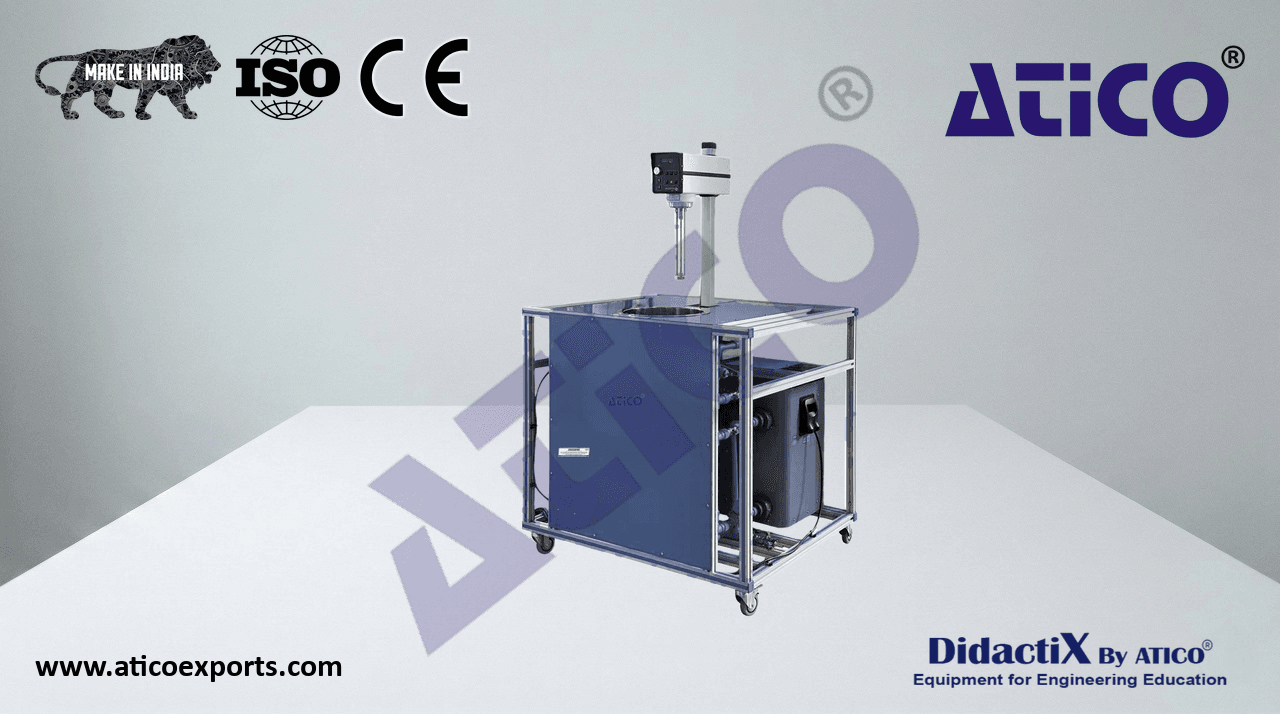
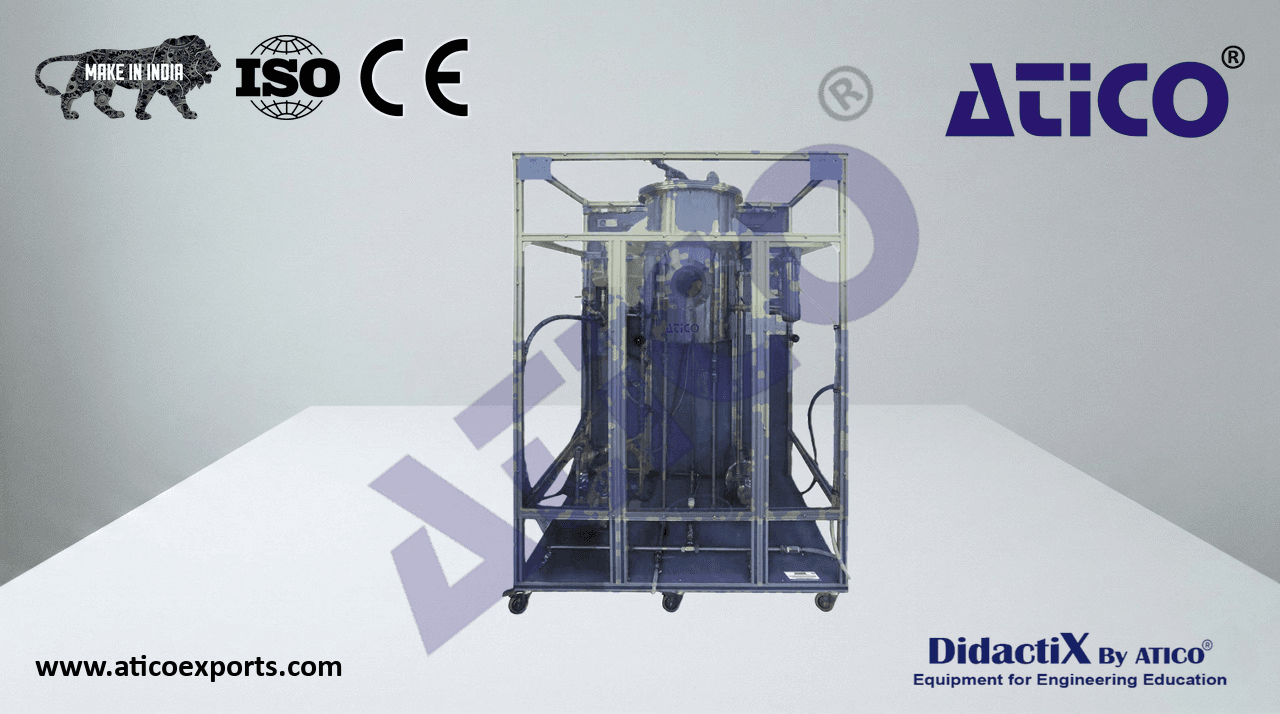
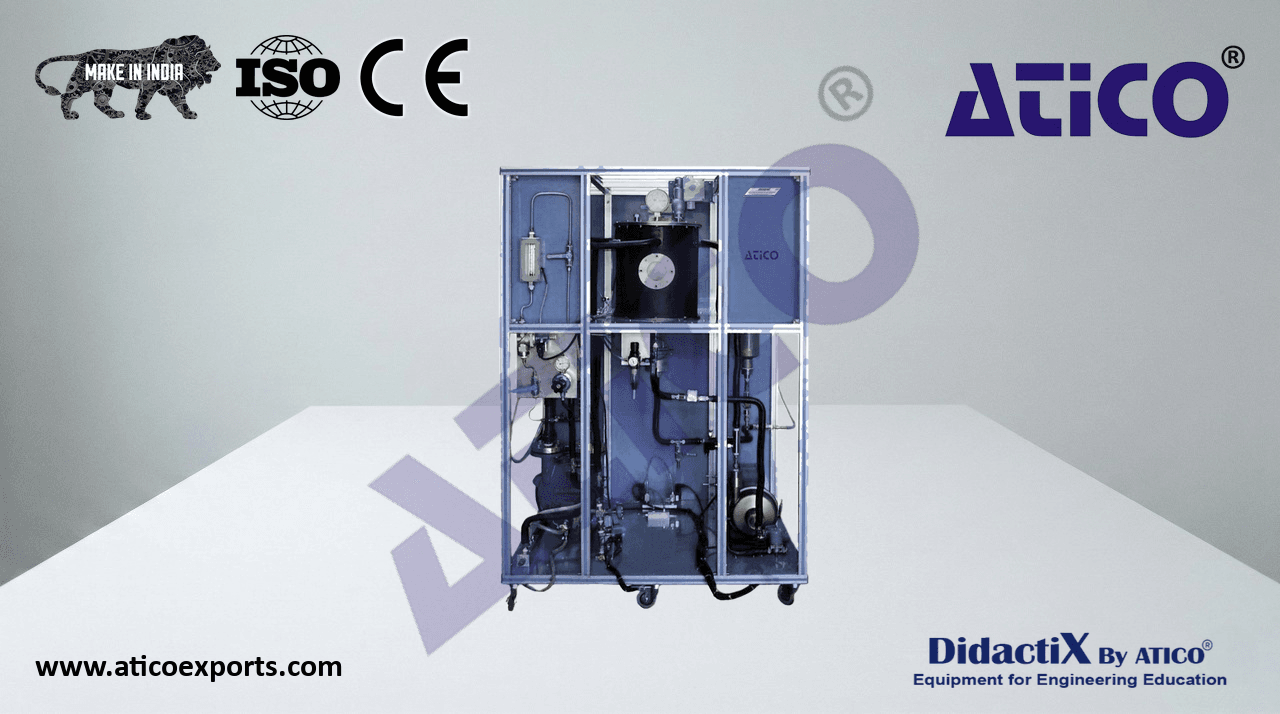
+91 98967 93832The Computer Controlled Hydrogenation Unit (PC), allows the study of the hydrogenation process in a discontinuous process, by adjusting the degree of saturation of edible oils.
(for main items)
With this unit there are several options and possibilities:
Main items: 1, 2, 3, 4, 5 and 6.
Optional items: 7, 8 and 9.
Let us describe first the main items (1 to 6):
1AEHC. Unit:
Anodized aluminum frame and panels made of painted steel.
The unit includes wheels to facilitate its mobility.
Main metallic elements made of stainless steel.
Diagram in the front panel with distribution of the elements similar to the real one.
All equipment in contact with the process fluid in stainless steel.
Stainless steel hydrogenation vessel (reactor):
Total volume: 30 l.
Working volume: 22 l.
Minimum working volume: 14 l.
Heating coil.
Cooling coil.
Maximum pressure: 6.3 bar. Maximum working pressure: 3 bar.
Stainless steel hydrogen diffuser.
Level switch.
Two visors.
Stainless steel exhaust valve rated at 4 bar of pressure.
Stainless steel rupture disc rated at 6.3 bar of pressure.
Variable speed agitator for the hydrogenation vessel: pneumatic agitator.
Stainless steel catalyst tank: volume: 6.5 l.
Variable speed agitator for the catalyst tank: pneumatic agitator.
Liquid ring vacuum pump:
It enables the suction of gases even in the presence of liquids.
Gas isothermic compression.
Gases are never in contact with lubricants.
Dry flow: 65m³/h. Wet flow: 87 m³/h. Unit: AEHC
Absolute pressure reached: 0.6 bar.
Oil pump, centrifugal type:
Flow (Q)= 100 l/min.
Maximum pressure: 2.75 bar.
Working temperature: 150 – 160 °C.
Filter.
Security H detector.
Sensors:
Six temperature sensors.
Two pressure sensors.
Flow sensor.
Three manometers.
Gas, water and air solenoid valves.
Security valves.
Flameproof electrical equipment. Safe zone controls. Accurate control of hydrogen addition.
For the design of this unit, security has been especially taken into account, thus, it contains a hydrogen
detector. In case of leak, the whole process is stopped and the input of hydrogen is cut off, the security
valve is rated at 4 bar and the rupture disc at 6 bar.
The complete unit includes as well:
Advanced Real-Time SCADA and PID Control.
Open Control + Multicontrol + Real-Time Control.
Specialized Control Software based on LabVIEW.
National Instruments Data Acquisition board (250 KS/s, kilo samples per second).
Calibration exercises, which are included, teach the user how to calibrate a sensor and the
importance of checking the accuracy of the sensors before taking measurements.
Projector and/or electronic whiteboard compatibility allows the unit to be explained and
demonstrated to an entire class at one time.
Capable of doing applied research, real industrial simulation, training courses, etc.
Remote operation and control by the user and remote control for technical support,
are always included.
Totally safe, utilizing 4 safety systems (Mechanical, Electrical, Electronic & Software).
Designed and manufactured under several quality standards.
Optional ICAI software to create, edit and carry out practical exercises, tests, exams,
calculations, etc. Apart from monitoring user's knowledge and progress reached.
This unit has been designed for future expansion and integration. A common expansion is
the Scada-Net (ESN) System which enables multiple students to simultaneously
operate many units in a network.
4
Complete Technical Specifications (for main items)
AEHC/CCSOF
Open software, allowing the teacher to modify texts, instructions. Teacher’s and student’s
passwords to facilitate the teacher’s control on the student, and allowing the access to different work
levels.
This unit allows the 30 students of the classroom to visualize simultaneously all the results
and the manipulation of the unit, during the process, by using a projector or an electronic
whiteboard.
5 Cables and Accessories, for normal operation.