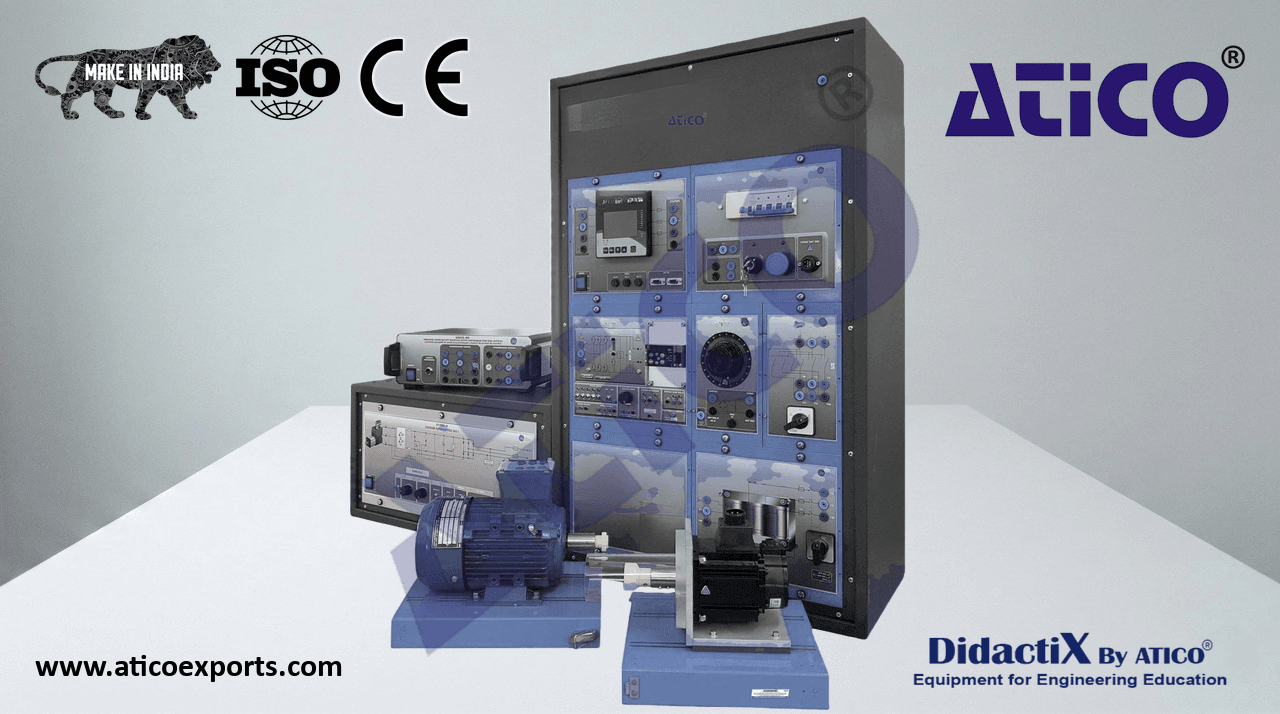
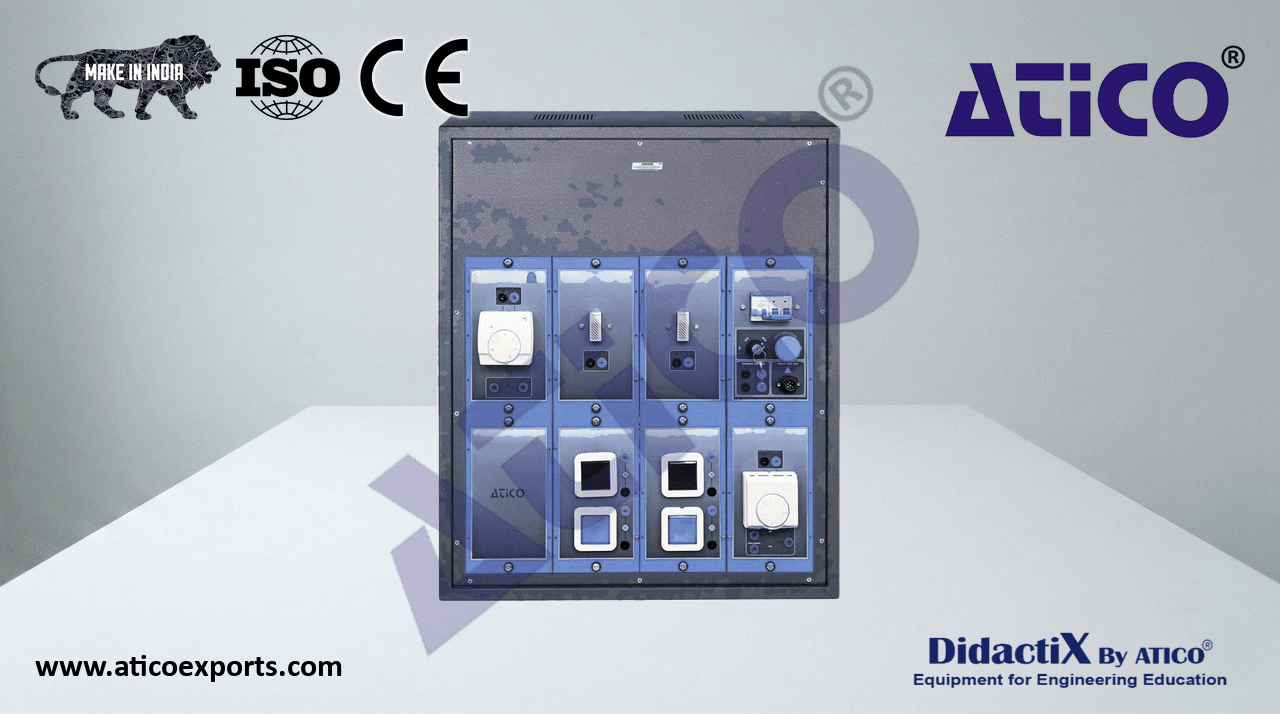
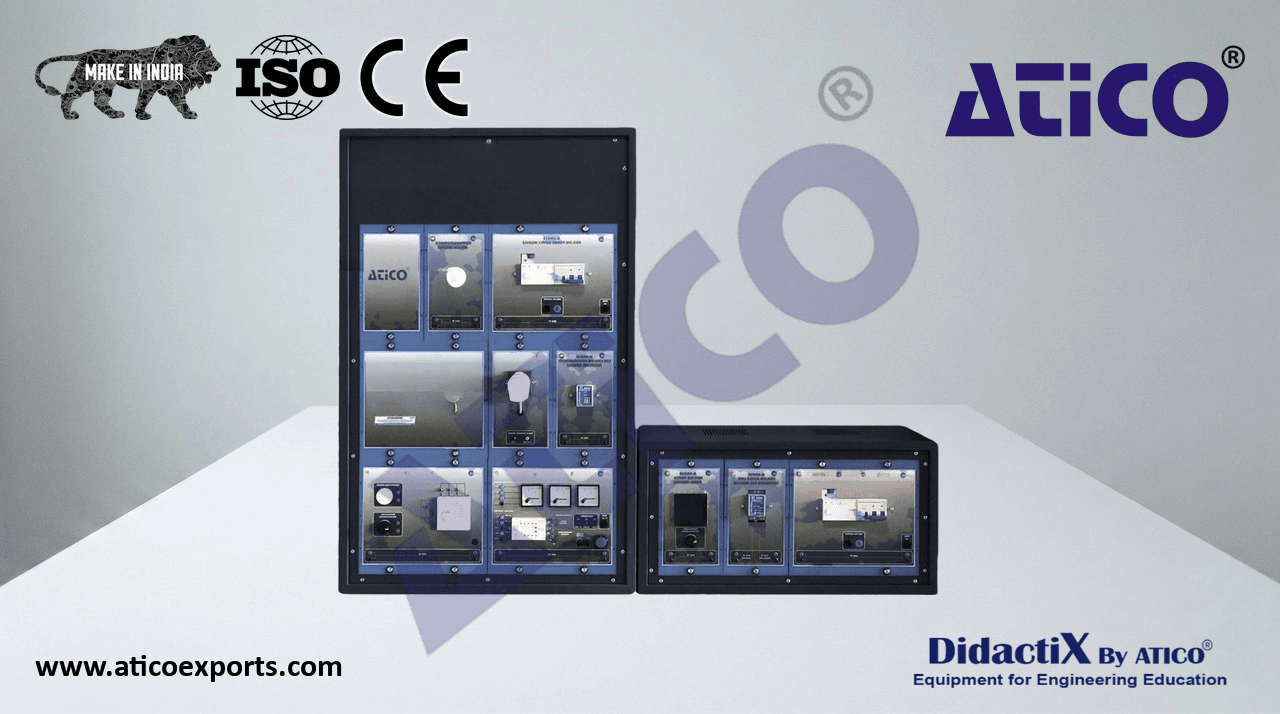
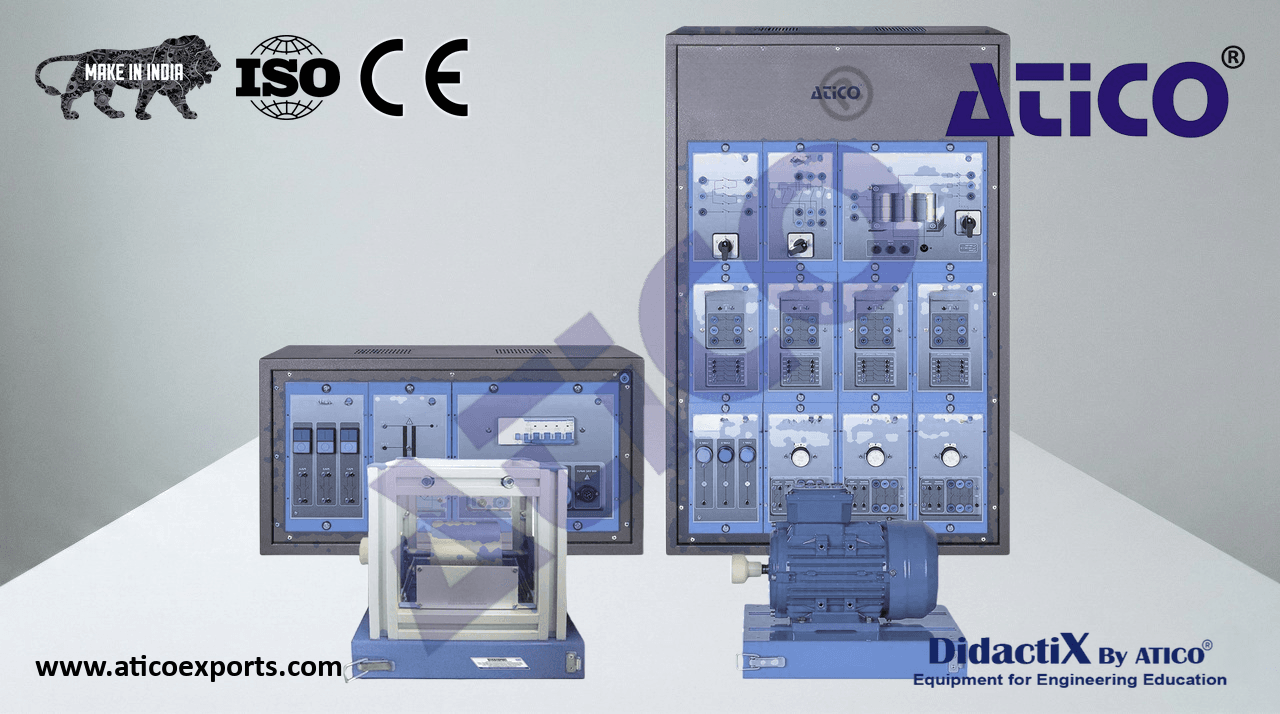
ATENG 11128. Control and Data Acquisition System Software for Electrical Machines.
Power supply: 230 VAC.
Input Signals:
Current signal (x2).
ATENG 11128
RMS current signal (x2).
Voltage signal (x2).
RMS voltage signal (x2).
Torque and speed signals.
Output Signals:
Torque and speed control signal for the servomotor control.
Speed control signal for the servomotor.
The three softwares are part of the SCADA system.
Compatible with actual Windows operating systems. Graphic and intuitive simulation of the process
in screen. Compatible with the industry standards.
Registration and visualization of all process variables in an automatic and simultaneous way.
Flexible, open and multicontrol software, developed with actual windows graphic systems, acting
simultaneously on all process parameters.
Management, processing, comparison and storage of data.
It allows the registration of the alarms state and the graphic representation in real time.
Comparative analysis of the obtained data, after the process and modification of the conditions
during the process.
Open software, allowing the teacher to modify texts, instructions. Teacher’s and student’s passwords
to facilitate the teacher’s control on the student, and allowing the access to different work levels.
This unit allows the 30 students of the classroom to visualize simultaneously all the results and the
manipulation of the unit, during the process, by using a projector or an electronic whiteboard.
N-VVCA. Advanced AC Motor Speed Controller.
Supply voltage: 230 VAC.
Nominal power: 0,75 kW.
PWM output voltage connections:
Three-Phases: 230 VAC.
Digital inputs control panel: 5 configurable digital inputs. N-VVCA
Analog inputs control panel:
0-10 V analog input for speed control.
4-20 mA analog input for speed control.
10 K, potentiometer for the induction motor control speed.
2 relay outputs for alarms configuration: 2 outputs NO/NC.
50 mA, 2 transistor outputs for alarms configuration.
Setting and visualization display of the machine parameters.
Transformer connection: YY0.
Start/stop commutator for instantaneous connection/disconnection of the grid transformer. N-TRANS03
Fuses: 3 x 5 A.
FLYW. Flywheel.
Weight: 2 kg.
Maximum recommended speed: 4000 rpm.
Moment of inertia: 0.0025 kgm ².
FLYW
N-SERV1K. 1 kW Servomotor Module.
Dynamic and static four-quadrant operation.
Speed and torque displays.
Four-quadrant monitor.
Thermal monitoring of the machine under test.
Testing for the presence of a shaft cover.
Connection voltage: 400 V.
Frequency: 50 Hz.
Maximum power output: 10 kVA.
Maximum speed: 4000 rpm.
Maximum torque 4 Nm. N-SERV1K
Temperature monitoring.
N-EALD. Electrical Network Analyzer Module with Oscilloscope and Data Acquisition.
The network analyzer module allows fulfilling measurements, displaying and analyzing all the parameters
ofthe AC electrical networks. It has an LCD screen and push-buttons for the navigation through the
different menus. It includes specific software for monitoring current and voltage curves, harmonics
display, tariffs programming, alarms programming and electrical parameters storage.
Features:
Multifunctional three-phase power meter:
Single and three-phase voltage. Up to 690 VAC L-L. N-EALD
Phase and line current. Current range up to 200%. Measurement from 0-10 A.
Active, reactive and apparent power.
Suitable frequencies: 25 Hz, 50 Hz, 60 Hz y 400 Hz.
Display of the V-I vector diagram.
Supply voltage: 85-265 VAC.
Energy quality control:
Current and voltage individual harmonics measurement. Up to the 40th harmonic.
THD voltage and current, TDD and K-factor.
Maximums and minimums display.
Waveforms display, 128 samples/sec.
Events and data storage.
Harmonics analyzer:
THD voltage and current, TDD current and K-factor, up to the 40th harmonic.
Current and voltage harmonic spectrum and angles.
Tariff programming:
Class 0.5S IEC 62053-22, active and reactive power in four quadrants.
Measurement of the total and per phase three-phase active, reactive and apparent powers.
Usage time, 4 energy/demand records of total tariffs.
8 tariffs, 4 seasons, 4 types of days.
Automatic daily report of energy consumption maximums and minimums.
Communications:
Modbus TCP communication protocol with Ethernet interface.
All necessary cables to realize the practical exercises are included.
Cables and accessories, for normal operation.