

How to Set Up an Engineering Testing Laboratory
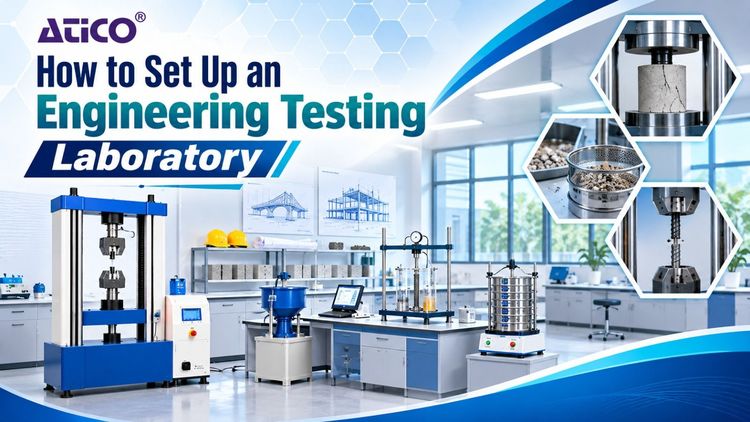
Planning an engineering testing laboratory? Explore this step-by-step guide covering laboratory infrastructure, material testing equipment, quality management systems, accreditation and essential setup requirements.
Setting up a Material Testing Lab is an important step for industries in construction, mining, and manufacturing. An Engineering Testing Laboratory Setup is just not about installing machines. It is about building a strong foundation for accurate testing, reliable results and quality assurance.
The Engineering Testing Laboratory Setup requires proper planning and technical knowledge. The equipments used in laboratory must satisfy national and international quality standards. If you want to start a new laboratory or want to upgrade an existing one, it is important to follow the structured process to avoid costly mistakes, delays and other issues.
This complete guide is made to help you set up an Engineering Testing Lab. It gives practical knowledge, step by step guidance, and advice to help you create a fully functional and efficient testing facility that meets modern quality and safety requirements.
From defining your testing requirements and planning laboratory infrastructure to selecting the right testing equipment, implementing quality management systems and managing laboratory operations, this guide covers the important stages of setting up an engineering testing laboratory. This guide will also provide you with the practical and real world solutions to help you make best decisions and avoid costly mistakes and delays.
What is an Engineering Testing Laboratory?
An engineering testing laboratory is a specially built space where materials, products, and systems are tested to check their physical, mechanical, chemical or electrical properties and performance. It has the right equipment and trained experts who carry out different types of tests. These tests are used to check strength, quality, safety, etc.
Engineering testing laboratories are used across several industries, including construction, mining, manufacturing, automotive, electrical engineering and infrastructure development. For example, a construction material testing laboratory examines the properties of cement, concrete, soil and aggregates. A mechanical testing laboratory evaluates the strength and performance of metals, plastics and other materials.
The primary objective is to ensure that materials and products meet the required technical specifications and applicable industry standards before they are used in practical applications.
Core Objectives of a Testing Laboratory
- Verify product quality and if it satisfies industry standards
- Identify material defects, structural weaknesses, or contamination
- Support research, innovation, and product development
- Provide certification and documentation for market approval
- Engineering laboratories serve as the backbone of quality assurance across industrial sectors
Why Setting Up an Engineering Testing Laboratory Requires Proper Planning
People think that setting up an Engineering Testing Laboratory is an easy task. But it needs a lot of practical study and precision. It is more than just buying space and equipment. A successful Engineering Testing Laboratory setup needs planning, designing, safety systems, staffing, budgeting and a lot more. Without proper planning and execution, many laboratories fail in long term operations and suffer significant losses.
Therefore, before starting the setup process, it is important to understand the common challenges and risks associated with laboratory planning.
Common Challenges in Lab Setup
Setting up an engineering testing laboratory comes with a number of technical, financial, and regulatory challenges. These challenges can easily become difficult to deal with without proper planning.
Many organisations ignore the complexity of the engineering lab setup process. They just assume that buying equipment and allocating space is enough to get started. But there is a huge list of challenges that follow. A few of them are listed below:
- Incorrect space allocation
- Poor laboratory layout planning
- Insufficient power load calculations and utility planning
- Selection of inappropriate or incompatible testing equipment
- Lack of clarity in the scope of testing services
- Insufficient documentation and quality management systems
- Lack of trained laboratory personnel.
- Inadequate safety arrangements.
- Budget overruns due to poor cost estimation.
- Delays in equipment installation and laboratory commissioning.
Addressing these challenges early helps prevent operational bottlenecks and rework.
Risks of Poor Laboratory Planning
If you have not done proper laboratory planning, then it can affect performance, reliability, and long term profitability. In the process of setting up an Engineering Testing Laboratory, you can not ignore factors such as infrastructure design, quality of the equipment, workflow, or documentation systems. These could lead to operational setbacks if not taken seriously. One of the most significant risks is failing to meet national and international quality standards and requirements.
Some potential risks of inadequate planning include:
Inaccurate Testing Results: Selecting unsuitable equipment or ignoring calibration requirements can affect measurement accuracy and the reliability of test results.
Operational Delays: Poor laboratory layouts, insufficient utilities and inadequate equipment arrangements can interrupt daily testing activities.
Higher Setup Costs: Incorrect space planning, incompatible equipment selection and unplanned infrastructure modifications can increase the overall investment.
Safety Concerns: Inadequate ventilation, electrical protection and equipment handling arrangements can create unnecessary risks for laboratory personnel.
Compliance Difficulties: Incomplete documentation, unvalidated testing procedures and poor quality management practices can make it difficult to meet applicable accreditation requirements.
A properly planned engineering testing laboratory helps reduce these risks and creates a reliable foundation for long-term operations.
Step by Step Engineering Laboratory Setup Process
Setting up an engineering testing laboratory requires a clear and organised approach. A structured setup process ensures accurate testing, smooth operations and long-term reliability.
Atico Exports supports buyers in exploring suitable laboratory equipment for different engineering and testing applications. From equipment selection to discussing product requirements, the team can assist institutions and businesses in identifying suitable laboratory equipment options.
Below is a practical step by step guide to help you establish a reliable and efficient engineering testing laboratory.
Step 1: Define Your Testing Scope and Objectives
The first step is to clearly define what your engineering testing laboratory will do.
You must decide the type of testing services you intend to offer. The equipment, infrastructure and technical requirements will depend on your selected testing scope.
These may include:
- Mechanical laboratory testing
- Civil engineering laboratory testing
- Electrical laboratory testing
- Material testing
- Aggregate testing
- Soil testing
- Concrete testing
- Cement and bitumen testing
- Chemical and material analysis
Next, identify the following:
Target Industries: Determine whether your laboratory will serve construction companies, manufacturing units, mining businesses, infrastructure projects, research institutions or other industries.
Testing Requirements: Prepare a list of materials, components and products that your laboratory will evaluate.
Applicable Testing Standards: Identify the relevant national and international testing standards for each intended test. Depending on the application, these may include applicable IS, ASTM, ISO or other recognised standards.
Testing Capacity: Estimate the number of samples you expect to test daily, weekly or monthly.
Accreditation Goals: Decide whether you intend to apply for laboratory accreditation and identify the applicable requirements.
Having a clear testing scope helps you avoid unnecessary expenses and ensures that your laboratory is designed for its intended purpose.
Step 2: Plan Infrastructure and Laboratory Layout
Once your testing scope is defined, the next step is infrastructure planning. The laboratory building and layout should be designed according to the equipment requirements, sample movement, testing procedures and safety considerations.
This includes allocating separate or suitably designated spaces for:
Testing areas Sample preparation rooms Equipment zones Material storage areas Chemical storage, wherever applicable Documentation and record-keeping rooms Administrative offices Staff facilities
A well-designed laboratory layout improves workflow, reduces contamination risks and increases productivity. For example, a material testing laboratory should have sufficient space for sample preparation, testing machines, storage and safe movement of materials.
Step 3: Select the Right Equipment
Equipment selection must align with your defined testing scope and required standards. Choose machines and instruments that:
- Meet technical specifications
- Satisfy national and international standards
- Offer accuracy and reliability
- Come with calibration support and service backup
Investing in certified, high quality equipment ensures consistent and defensible test results. Below are some important categories of engineering testing laboratory equipment.
1. Mechanical Testing Laboratory Equipment
Mechanical testing equipment is used to evaluate the strength, hardness, flexibility and performance of different materials. Common equipment includes:
- Universal Testing Machine.
- Tensile Testing Machine.
- Compression Testing Machine.
- Impact Testing Machine.
- Hardness Testing Machine.
- Torsion Testing Machine.
- Bend Testing Apparatus.
These machines help determine mechanical properties such as tensile strength, compressive strength, hardness, impact resistance and deformation behaviour.
2. Civil Engineering Testing Laboratory Equipment
Civil engineering testing laboratories evaluate construction materials used in buildings, roads, bridges and other infrastructure projects. Common civil engineering testing lab equipment categories include:
- Concrete Testing Lab Equipment.
- Cement Testing Lab Equipment.
- Soil Testing Lab Equipment.
- Aggregate Testing Lab Equipment.
- Bitumen and Asphalt Testing Lab Equipment.
- Rock Testing Lab Equipment.
- Surveying Lab Equipment.
These instruments help evaluate material properties, construction quality and the suitability of materials for different engineering applications.
3. Aggregate Testing Laboratory Equipment
Aggregate testing is important for evaluating the quality and performance of aggregates used in concrete and road construction. Common aggregate testing lab equipment includes:
- Aggregate Impact Testing Machine.
- Los Angeles Abrasion Testing Machine.
- Aggregate Crushing Value Apparatus.
- Flakiness and Elongation Index Apparatus.
- Sieve Shaker.
- Specific Gravity and Water Absorption Testing Equipment.
These instruments help determine aggregate strength, grading, shape and resistance to wear and impact.
4. Electrical Testing Laboratory Equipment
Electrical testing equipment is used to evaluate the performance and safety of electrical components and systems. Common electrical testing equipment includes:
- Digital Multimeter.
- Digital Storage Oscilloscope.
- Insulation Resistance Tester.
- Transformer Testing Equipment.
- Electrical Measuring Instruments.
- Power Supply Units.
- Circuit Testing Equipment.
The exact selection depends on whether the laboratory focuses on electrical component testing, electrical machine testing, power systems or general electrical measurements.
5. Material Testing and Analysis Equipment
Material testing laboratories may also require instruments for evaluating chemical composition, corrosion resistance, thermal behaviour and microstructural properties. On the basis of testing scope, equipment may include:
- Metallurgical Microscope.
- Digital Microscope.
- Laboratory Furnace.
- Spectrophotometer.
- Laboratory Balances.
- Hardness Testing Machines.
- Corrosion Testing Equipment.
- Sample Preparation Equipment.
The selection should be based on the materials being tested and the methods used.
As a leading Technical Educational Equipment Manufacturer, engineering testing laboratory equipment manufacturer, supplier, and exporter, we provide high-quality laboratory instruments at reasonable prices. Our professionals guide you in choosing the right equipment based on your scope, industry standards, and accreditation goals.
With Atico’s support, you can set up your laboratory smoothly, efficiently, and cost effectively. Connect with our team today to get expert assistance for your engineering laboratory setup.
Step 4: Implement a Quality Management System (QMS)
A strong Quality Management System (QMS) is essential for any engineering testing laboratory. You should:
- Develop a Quality Manual
- Create Standard Operating Procedures (SOPs)
- Establish document control systems
- Maintain calibration records
- Define corrective and preventive action processes
A proper QMS ensures consistency, traceability, and compliance.
Step 5: Apply for ISO/NABL Accreditation
After setting up infrastructure and implementing your QMS, the next step is accreditation. Check the following details:
- Quality documentation
- Equipment calibration certificates
- Staff qualification and competency records
- Test method validation reports
Accreditation strengthens your laboratory’s credibility and increases client trust.
Step 6: Conduct Trial Testing and Validation
Before officially launching services, perform trial testing. Trial runs allow you to identify gaps, correct errors, and improve efficiency before handling actual client samples. This step helps you:
- Verify measurement accuracy
- Review testing procedures
- Check documentation processes
- Assess staff competency
Types of Engineering Testing Laboratories Covered
This guide to setting up an engineering testing laboratory applies to different types of testing facilities across multiple industries. Below are the main types of engineering testing laboratories and what each requires.
Mechanical Testing Laboratory
A Mechanical Testing Laboratory checks the physical and mechanical properties of materials such as metals, plastics, and composites. Common Tests related to the Mechanical Testing Lab include:
- Tensile strength testing
- Compression testing
- Bending (flexural) testing
- Impact testing
- Hardness testing
To check the equipment required for the Mechanical Testing Laboratory, check Atico’s Mechanical Testing Laboratory Equipment
Civil Engineering Testing Laboratory
A Civil Engineering Testing Laboratory focuses on construction materials used in infrastructure and building projects. Choosing a reliable Civil Engineering Lab Equipment Manufacturer is important to ensure accurate testing, durability of instruments, and that the instruments are in accordance with national and international construction standards. Common labs under this category include:
- Aggregate Testing Lab Equipment
- Bitumen & Asphalt Testing Lab Equipment
- Cement Testing Lab Equipment
- Concrete Testing Lab Equipment
- Rock Testing Lab Equipment
- Surveying Lab Equipment
- Soil Testing Lab Equipment
To check the equipment required for the Civil Engineering Testing Laboratory, check Atico’s Civil Engineering Testing Laboratory Equipment
Electrical Testing Laboratory
An Electrical Testing Laboratory evaluates electrical equipment and systems for safety, performance, and compliance.
Common Items Tested:
- Cables and wires
- Transformers
- Switchgear
- Circuit breakers
- Electronic components
To check the equipment required for the Electrical Testing Laboratory, check Atico’s Electrical Testing Laboratory Equipment
Material Testing Laboratory
A Material Testing Laboratory may include both mechanical and chemical analysis. These labs evaluate:
- Material composition
- Corrosion resistance
- Heat treatment performance
- Durability and wear resistance
- Microstructural properties
To check the equipment required for the Material Testing Laboratory, check Atico’s Material Testing Laboratory Equipment
For more details, check out our website or contact our expert team.
Essential Infrastructure and Safety Requirements for a Testing Laboratory
Apart from selecting the right laboratory equipment, it is important to establish suitable infrastructure and safety arrangements. A well established laboratory often includes heavy machineries, electrical systems, chemicals, and sensitive material that need careful handling. Therefore, safety should be considered during the initial planning stage.
Some important consideration include:
Electrical Safety: Ensure that electrical installations, earthing, circuit protection and emergency shutdown arrangements are suitable for the equipment being used.
Fire Safety: Provide appropriate fire protection equipment and emergency procedures based on the laboratory's activities and applicable safety requirements.
Ventilation: Laboratories handling chemicals, heat-generating equipment or dust-producing materials may require specialised ventilation arrangements.
Personal Protective Equipment: Provide appropriate gloves, safety glasses, protective clothing, footwear and other safety equipment depending on the testing procedures.
Equipment Handling: Establish clear operating procedures and restrict access to specialised machinery where necessary.
Sample Storage: Provide suitable storage arrangements for raw materials, prepared samples and tested specimens.
Emergency Arrangements: Ensure that emergency exits, first-aid facilities and relevant safety instructions are available.
How to Choose the Right Engineering Laboratory Equipment Manufacturer and Supplier
Selecting the right Engineering Laboratory Equipment Manufacturer, Supplier and Exporter is an important part of establishing a testing laboratory. Before finalising a manufacturer or supplier, you must consider the following factors:
1. Product Range and Technical Expertise: Choose a supplier that understands different testing applications and offers equipment suitable for your laboratory requirements. If you are setting up a multi-disciplinary testing facility, a manufacturer with a wider product range may make equipment procurement more convenient.
2. Product Quality and Technical Specifications: Review the specifications of each instrument before placing an order. Check testing capacity, measurement range, accuracy, construction material, operating requirements and available accessories. Make sure the equipment is suitable for the testing methods and standards you intend to follow.
3. Documentation and Calibration Support: Ask for relevant technical documentation, operating manuals and calibration-related information. For laboratories planning accreditation, it is important to ensure that equipment selection and calibration arrangements support the applicable technical requirements.
4. Warranty and After-Sales Support: Enquire about warranty coverage, spare parts availability, servicing arrangements and technical assistance. A dependable supplier should provide clear information about the support available after the purchase.
5. Installation and Operating Guidance: Some testing machines require specific installation arrangements, foundations, electrical connections or environmental conditions. Discuss these requirements before purchasing to avoid unexpected modifications during installation.
6. Pricing and Delivery Arrangements: Compare quotations based on equipment specifications, accessories, quality and support rather than considering only the initial purchase price. For laboratories purchasing equipment from overseas, also review export documentation, packaging, shipping and delivery arrangements.
Why Choose Atico Exports for Engineering Testing Laboratory Equipment?
Setting up an engineering testing laboratory requires suitable instruments, technical understanding and careful procurement planning. Atico Exports is a leading laboratory equipment manufacturer, supplier and exporter based in Ambala, Haryana, India. The company offers laboratory equipment for educational institutions, engineering laboratories and technical applications. Businesses and institutions planning an Engineering Testing Laboratory Setup can explore different product categories according to their intended testing requirements.
Atico Exports offers equipment across different laboratory categories, allowing buyers to explore suitable options for their testing and technical requirements. Before placing an order, buyers can discuss their intended applications, equipment specifications and procurement requirements with the Atico team. If you are planning to establish a new testing laboratory or upgrade your existing facility, connect with Atico Exports to discuss your requirements and explore suitable engineering laboratory equipment.
Planning your Engineering Testing Laboratory Setup? Contact Team Atico to discuss your equipment requirements and explore suitable laboratory solutions.
Frequently Asked Questions About Engineering Testing Laboratory Setup
How much space is required to set up an Engineering Testing Laboratory? The space requirement depends on the testing scope, equipment dimensions, sample preparation activities, storage requirements and expected workload. A laboratory conducting heavy mechanical testing may require more space and specialised flooring compared to a smaller material analysis facility. It is advisable to prepare a laboratory layout after finalising the testing scope and equipment requirements.
Is NABL accreditation necessary for an Engineering Testing Laboratory? NABL accreditation is not automatically mandatory for every engineering testing laboratory. However, it may be required or commercially important depending on the testing services offered, client requirements and applicable regulatory or contractual conditions.
Can I set up a testing laboratory in phases? Yes. A laboratory can be established in phases according to its testing scope, budget and expected workload. You can begin with essential testing equipment and gradually introduce additional machines and instruments as the demand for testing services increases. However, the initial infrastructure and layout should consider future expansion to avoid unnecessary modifications.