ATENG 11494 — Photovoltaic Solar Energy Unit
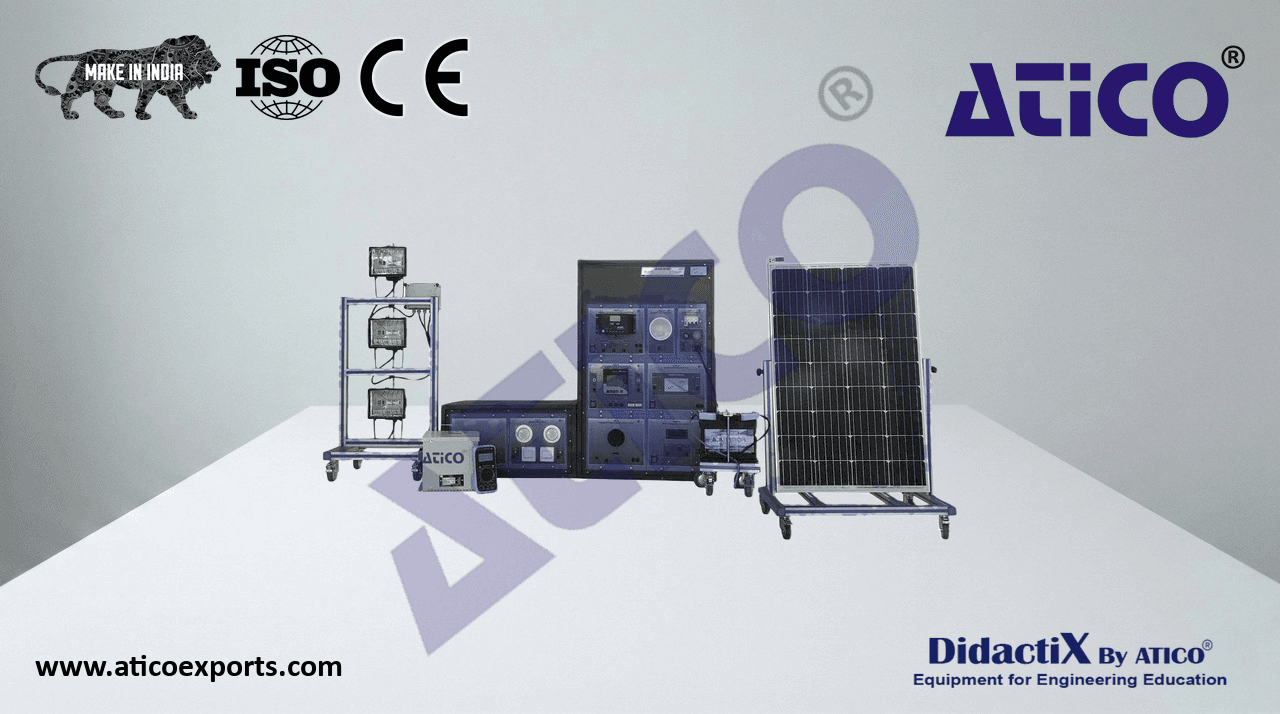
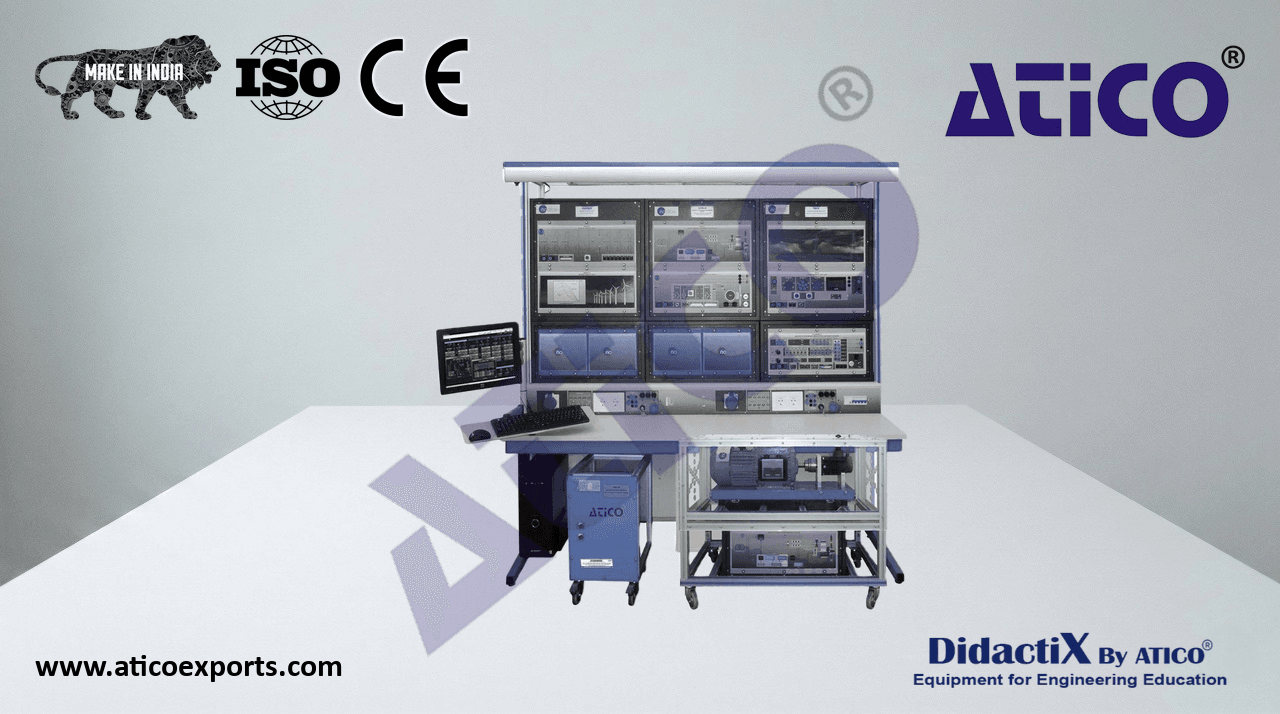
The “ATENG 11494” is an unit for the study of the conversion of solar energy into electric energy.
Anodized aluminum structure and panels in painted steel.
This unit includes wheels for its mobility.
Main metallic elements made of stainless steel.
Diagram on the front panel with similar distribution to the elements in the real unit.
- The unit includes:
- Two photovoltaic solar panels (polycrystalline):
Tempered glass modules with high level of transmissivity.
- Encapsulating material: modified ethylene-vinyl acetate.
- Output nominal power: 66 W.
- Area of the panel: 0.51 m².
- Maximum current: 3.76 A. Maximum voltage: 17.53 V.
- Thirty six cells, 156 x156 mm each.
ATENG 11494 detail
- Solar simulator composed of:
Aluminum frame.
Eight halogen lamps of 400 W each one, distributed into two independent voltage regulated circuits.
Electrically safe.
- Ventilation system that allows to analyze the temperature influence on the unit operation, formed by:
Four axial compact fans with plastic guards.
- DC load and battery charger regulator:
It regulates how power generated in the photovoltaic solar panels is distributed to and from the auxiliary battery and to the load. A
display informs about the state of the charge, operating parameters and fault messages. The functions of the electronic protection
- are:
Overvoltage disconnection, short circuit protection of load and module, overvoltage protection at module input, over-temperature
and overload protection, and battery overvoltage shutdown.
- Auxiliary battery charger:
It carefully assesses the battery and then delivers the optimum charge required.
- Battery:
- Nominal voltage: 12 V. Nominal capacity (20 hours rate): 24 Ah.
- DC loads module:
Metallic box with diagram on the front panel.
- Two 24 V lamps.
- DC motor: Voltage: 36 V, power: 5 W.
Rheostat of 500 W.
- Independent connection for every load with the help of the four positions selector:
Solar panels work at open-circuit.
Rheostat and lamps are connected directly to the solar panels. These loads can be connected individually or in parallel with the
aid of manual switches.
The DC motor is directly connected to the solar panels.
The DC load is disconnected and the solar panels are directly connected to the charge regulator.
- Sensors:
Solar radiation sensor to study the behaviour of solar photovoltaic panels.
Three “J” type temperature sensors to measure the environmental temperature, the temperature in the solar panel n° 1 and the
temperature in the solar panel n° 2.
DC current sensor and DC voltage sensor.
The unit includes four blinds to reduce a direct visual contact with the halogen lamps and to reduce the direct contact with the
photovoltaic solar panels when the unit is working.
- Electronic console:
Metallic box.
Connector for the solar radiation sensor. Digital display for the solar radiation sensor.
Connectors for the temperature sensors. Digital display for the temperature sensors. Selector for temperature sensors.
Connectors for the DC current and voltage sensor. Digital display for the current (DC). Digital display for the voltage (DC).
Two switches for the lamps of the two independent circuits.
Two regulators for the light intensity of lamps of the two independent circuits.
Switch for the ventilation system.
Switch to connect the solar panels in parallel or series.
Cables and accessories, for normal operation.