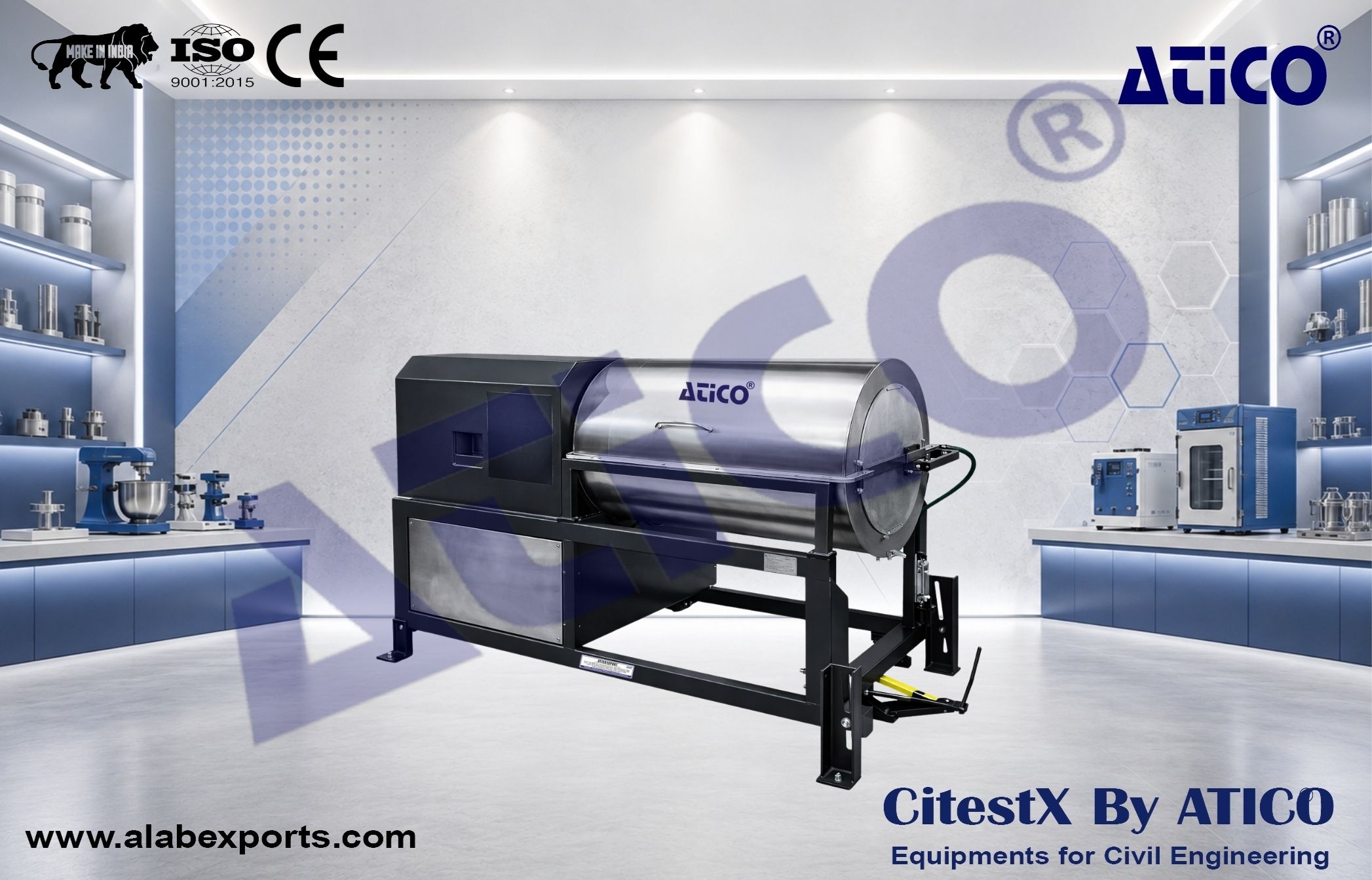
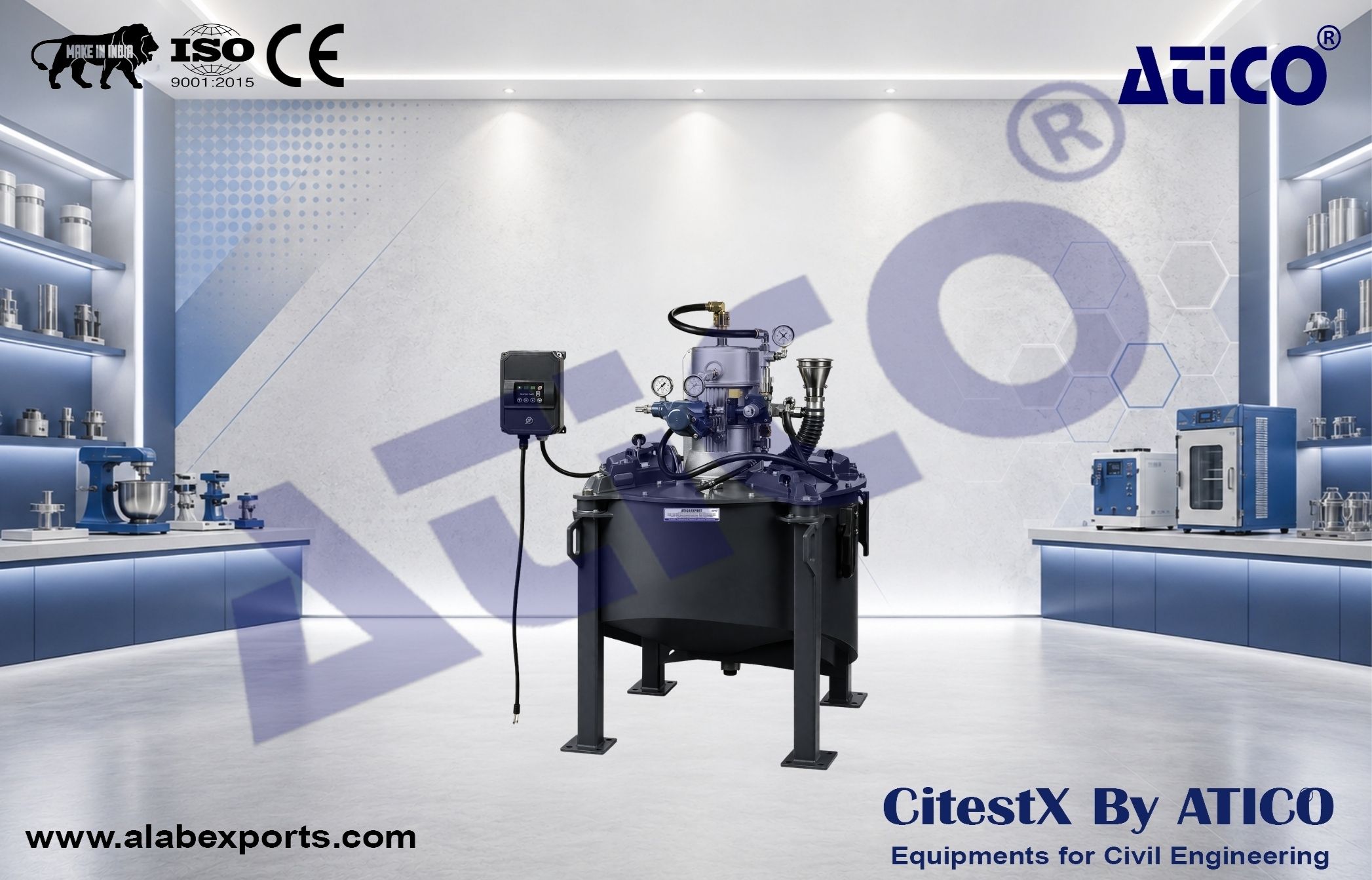
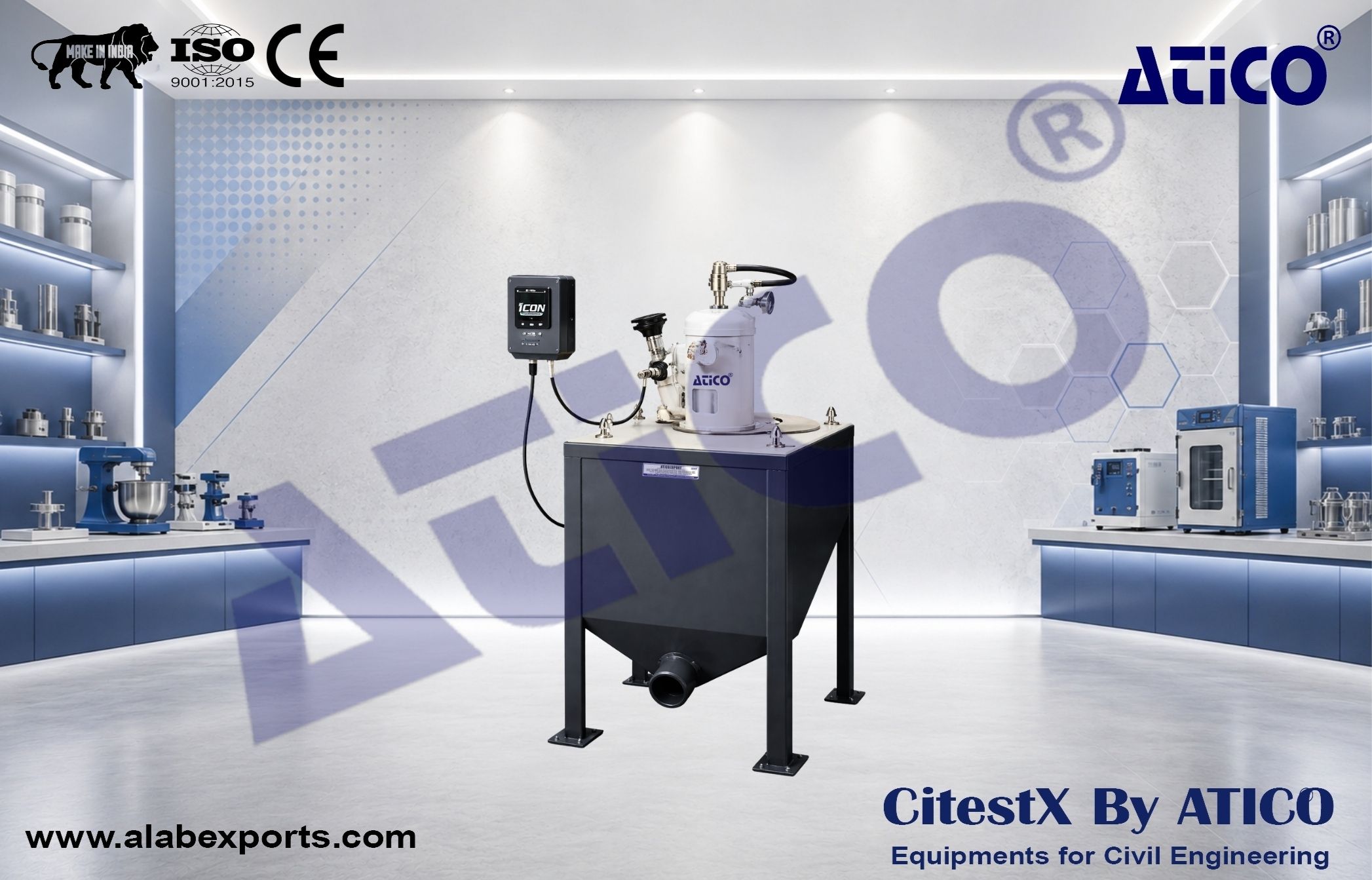
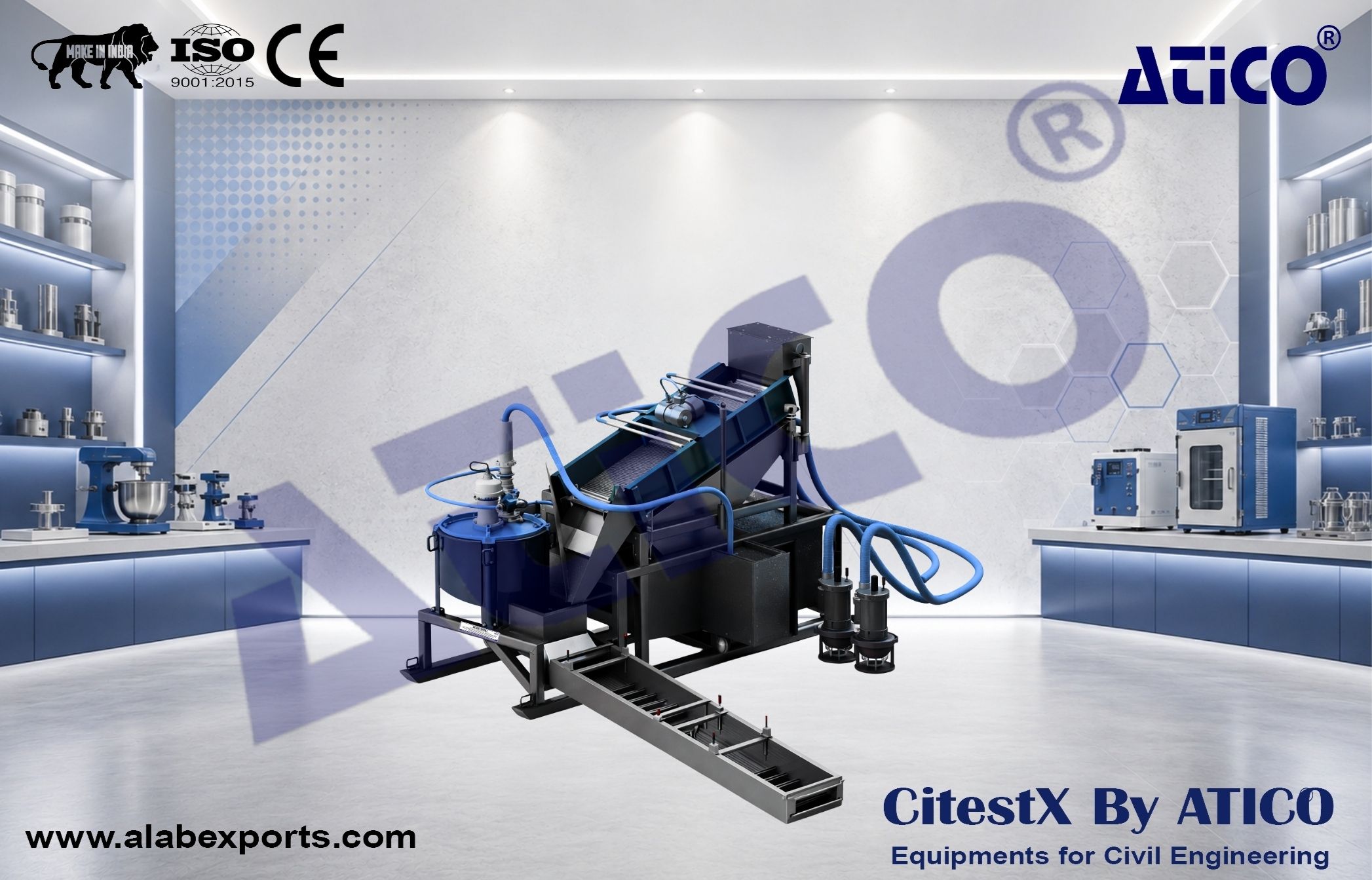
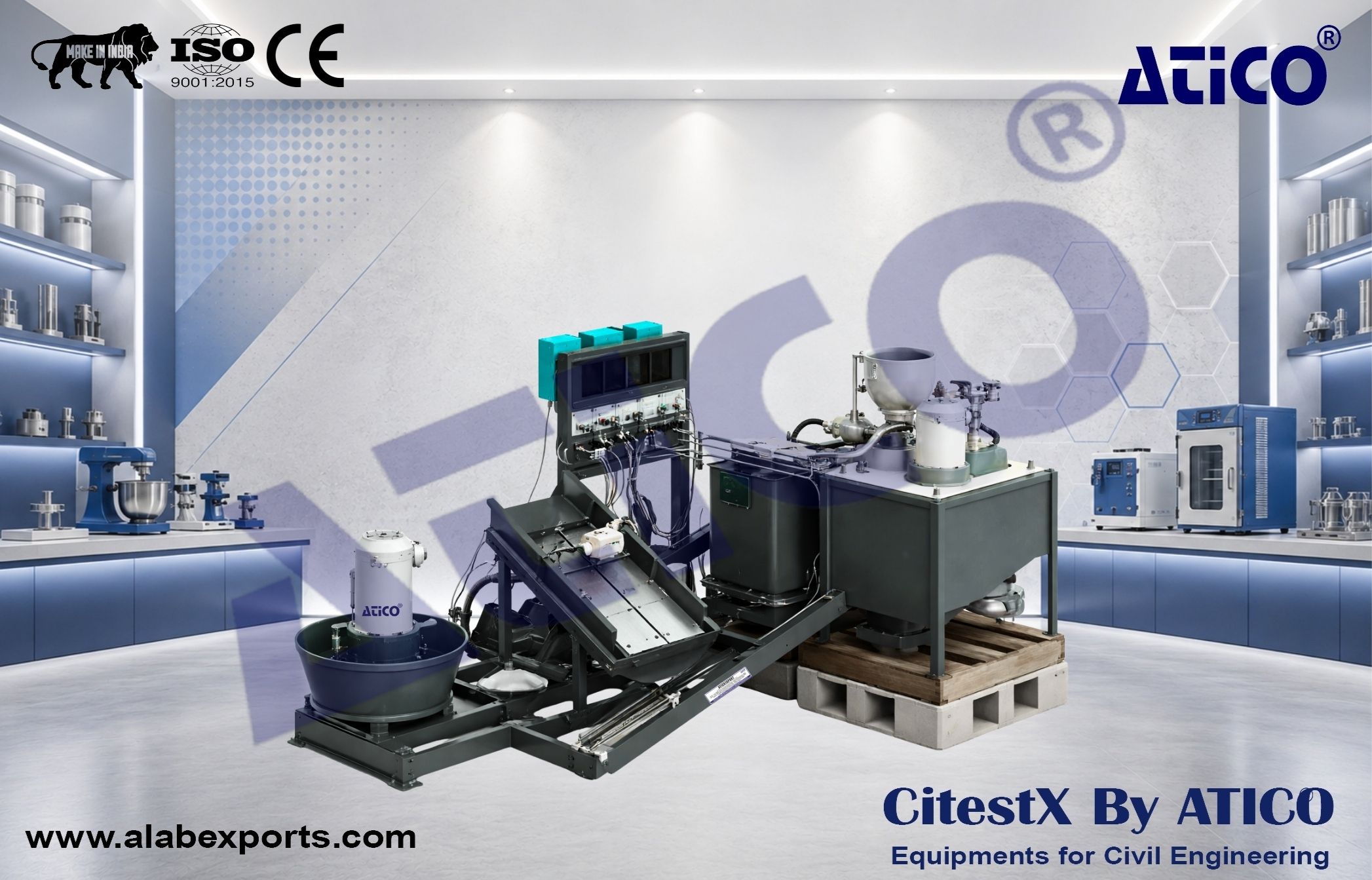
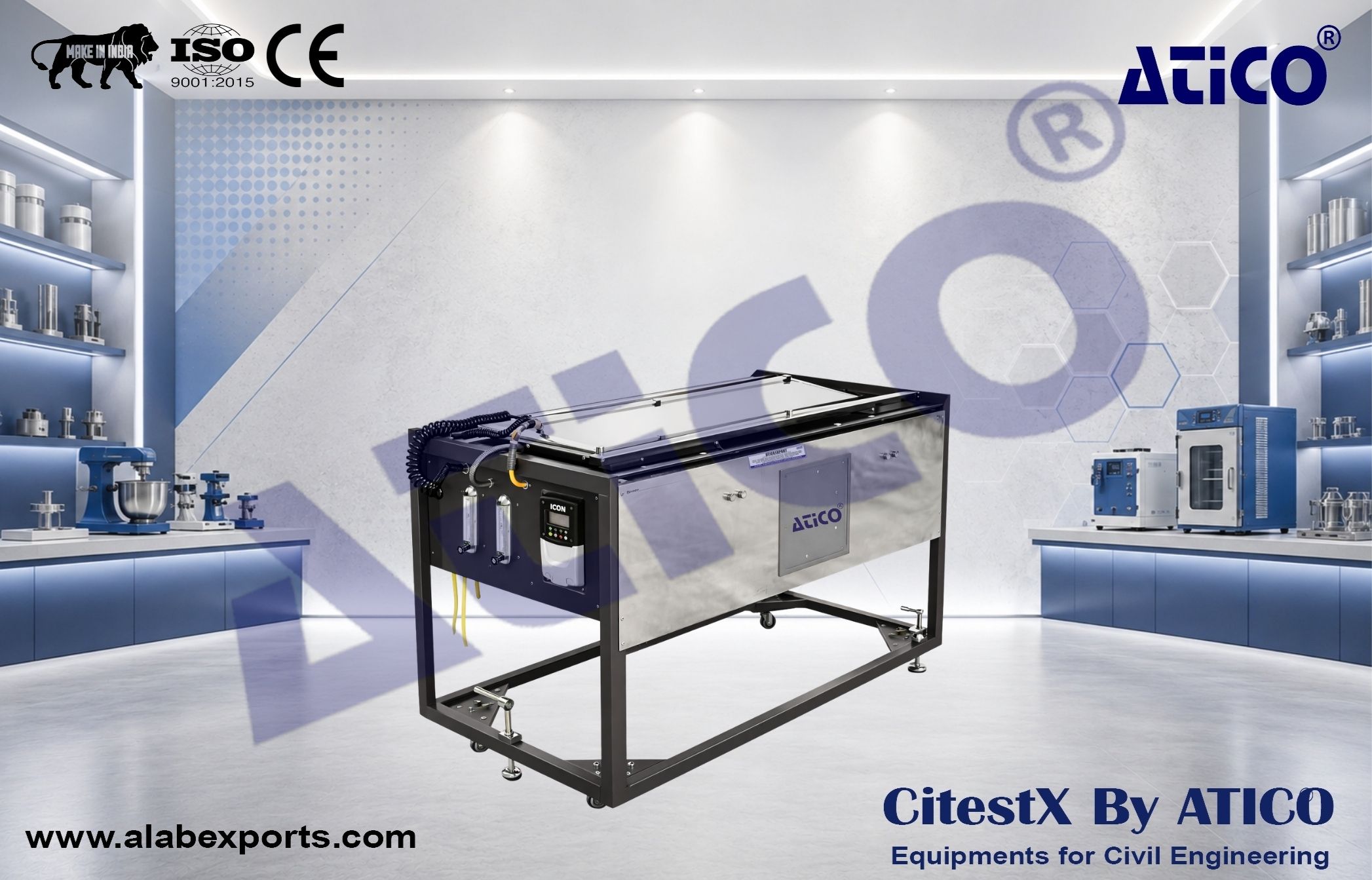
The Laboratory Shaking Table (Gravity Concentration Table) is a laboratory-scale gravity separation device used to separate minerals based on differences in specific gravity (density).
It is widely used in mineral processing, metallurgical testing, and research applications. The table separates materials by combining reciprocating motion and water flow, allowing heavier particles to concentrate while lighter particles are washed away.
It is suitable for both coarse and fine particle separation, depending on the type of deck used.
WORKING PRINCIPLE
The shaking table operates using a combination of:
- Reciprocating motion (back-and-forth movement)
- Water flow across the deck
Process Flow:
- Slurry feed is introduced onto the table
- Water flows across the surface
- Table motion causes stratification:
- Heavy particles → move along one side
- Light particles → washed away
- Products are separated into:
- Concentrate
- Middlings
- Tailings
Key Concept:
- Separation occurs due to:
- Density differences
- Particle size
- Differential movement on deck
PERFORMANCE ADVANTAGES
- Accurate laboratory simulation of industrial gravity separation
- Effective for both coarse and fine particles
- Provides reliable data for:
- Process design
- Optimization
- Simple and robust operation
- High separation efficiency for dense minerals
DECK TYPES & FUNCTIONS
Sand Deck
- Particle size: 10–200 mesh
- Best for:
- General mineral separation
- Most industrial applications
Slime Deck
- Particle size: 100–325 mesh
- Used for:
- Fine particle separation
- Limitation:
- Surface tension of water reduces efficiency
LIMITATIONS
- Less effective for extremely fine particles (due to water surface tension)
- Requires proper feed preparation
- Performance depends on:
- Operator skill
- Correct parameter settings
INSTALLATION & OPERATION NOTES
Key Requirements:
- Stable platform (leveling via adjustable feet)
- Proper water supply
- Controlled feed rate
Operation Tips:
- Adjust stroke and slope during operation
- Maintain proper pulp density
- Monitor output streams for optimization